subliminals
Best Time to Listen to Subliminals: Sleep-Safe Swap
Best time to listen to subliminals without hurting sleep: a quiet swap from overnight loops to pre-sleep listening, naps, or daytime repeats.
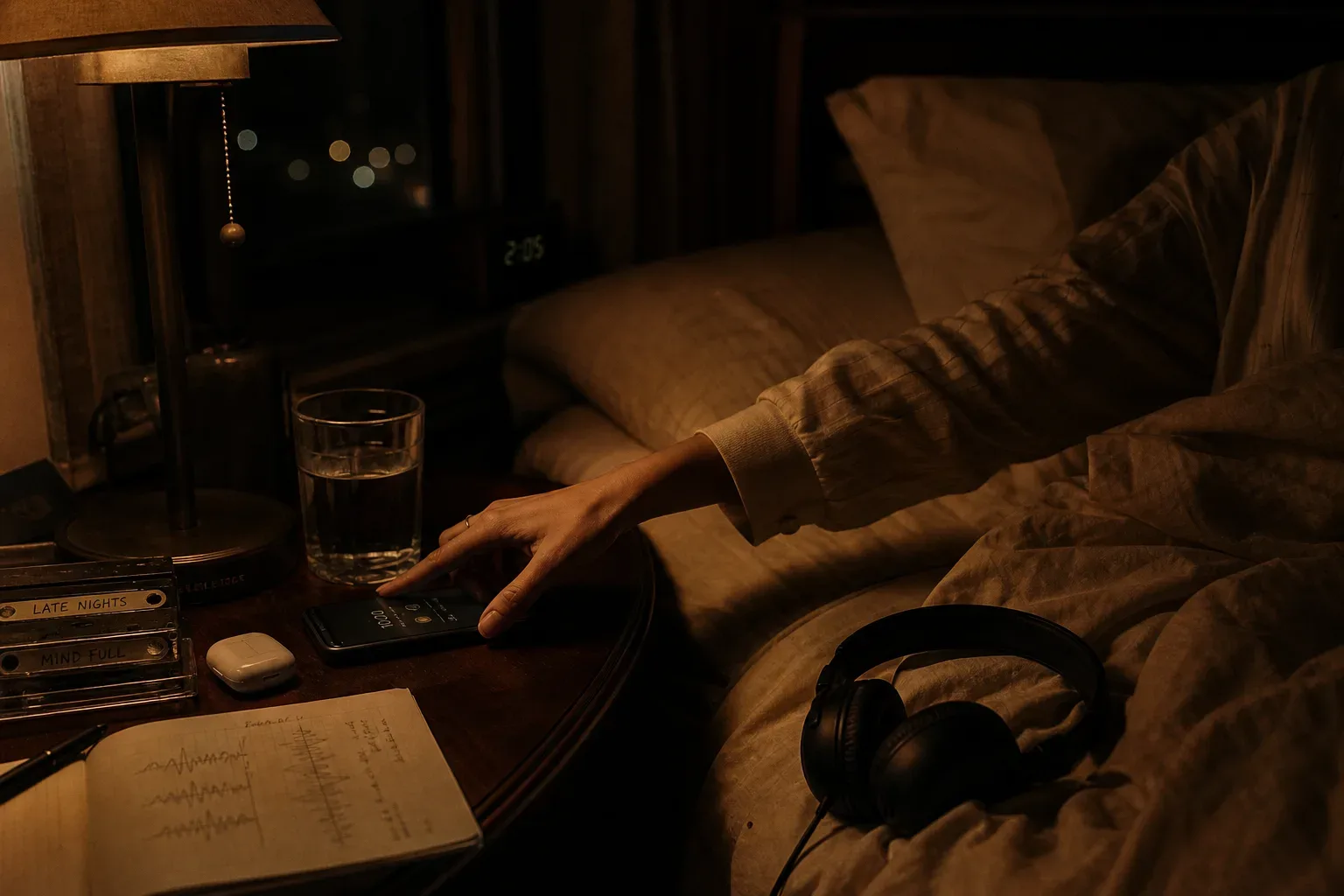
The best time to listen to subliminals is usually 10 to 30 minutes before sleep, not all night. That gives you repetition near a suggestible state without letting audio disturb sleep. If a track wakes you, irritates you, or leaves you foggy, move it earlier.
What is the best time to listen to subliminals without hurting sleep?
The best sleep-safe window is the last 10 to 30 minutes before bed, with the audio stopped before you fully sleep.
That answer is less dramatic than overnight looping, but it protects the thing you came to bed for. The National Sleep Foundation has long used 7 to 9 hours as the general adult sleep range, and most subliminal claims are not worth shaving quality from those hours. A subliminal is an affirmation you can’t consciously hear. That’s the whole trick, and the whole problem.
The safest swap is simple: listen before sleep, then let the room go quiet. If you like ritual, make the first 5 minutes about getting comfortable, the next 10 to 20 minutes about hearing the sound, and the final minute about stopping it. You still get repetition. You also avoid the common problems of all-night tracks: volume spikes, headphone pressure, autoplay surprises, and light sleep from background sound.
Sleep researchers often describe the period before sleep as a transition, not an on-off switch. In standard sleep staging, N1 sleep is light and brief, often only 1 to 5 percent of total sleep in healthy adults. That is exactly why a short pre-sleep session makes sense. You are still aware enough to choose the input, but tired enough to stop arguing with every line.
Here is the swap I use when testing a new track:
- Choose one subliminal, not a playlist of 12.
- Play it for 10 to 30 minutes before sleep.
- Keep the volume low and steady.
- Stop the audio with a timer.
- Track sleep for 14 nights before deciding.
The last ten minutes before sleep are suggestible. Choose what goes in.
Why not loop subliminals all night?
All-night subliminals can work as a habit cue for some people, but they can also fragment sleep.
Your sleeping brain does not fully shut out sound. A 2019 review in Frontiers in Neuroscience described how the brain continues to monitor the environment during sleep, especially for meaningful or changing sounds. That is useful if a smoke alarm goes off. It is less useful if your affirmation track has sudden music swells at 3:12 a.m.
This is where the internet overreaches. The research on priming and sleep learning is real but modest. Studies on targeted memory reactivation, including work reviewed by Northwestern sleep researchers, suggest that cues during sleep may strengthen already learned material. That is not the same as proving that a masked YouTube track can rewrite your self-image while you sleep. YouTube claims are not the research.
The practical issue is not belief. It is sleep hygiene. The American Academy of Sleep Medicine notes that insomnia symptoms affect a large share of adults at least occasionally, and noise is one of the easier variables to remove. If a method costs you sleep, it costs more than it gives.
Use this table as a quiet check:
| Listening time | Best for | Main risk | Sleep-safe adjustment |
|---|---|---|---|
| Morning | Clear attention | Forgetting the habit | Pair with brushing teeth |
| Afternoon | Low-pressure repeat | Multitasking | Use one 10-minute play |
| Before sleep | Calm repetition | Staying on phone | Start audio, screen down |
| All night | Strong ritual cue | Wake-ups and discomfort | Use a 20-minute timer |
| Nap window | Short reset | Grogginess | Keep it under 30 minutes |
Repetition is useful only if your nervous system can trust the routine. A track that makes bedtime feel like a test has already missed the point.
How do I make the sleep-safe swap step by step?
Move the subliminal from an overnight loop to a short pre-sleep session, then watch your sleep for two weeks.
Start with the track you already use. Do not change the audio, goal, headphones, bedtime, and volume all in one night. In behavior research, too many changes make the results unreadable. A 2009 paper in the European Journal of Social Psychology found that habit formation varied widely, with an average near 66 days for automaticity. For this swap, you do not need 66 days to notice sleep effects, but you do need more than one night.
For the first 14 nights, use a boring test. Boring is good. It keeps your notes clean.
- Night 1 to 3: notice comfort, volume, and whether you reach for your phone after the track.
- Night 4 to 7: notice wake-ups and morning mood.
- Night 8 to 14: notice whether the target idea comes to mind during the day.
If you want a clean bedtime, use the Sleep cycle calculator tool before you start the audio, not after. Pick a wake time, work backward, then protect the last half hour from scrolling. Screens are not evil, but they are sticky. Pew Research Center reported in 2021 that 31 percent of U.S. adults said they were online almost constantly; bedtime does not need another hook.
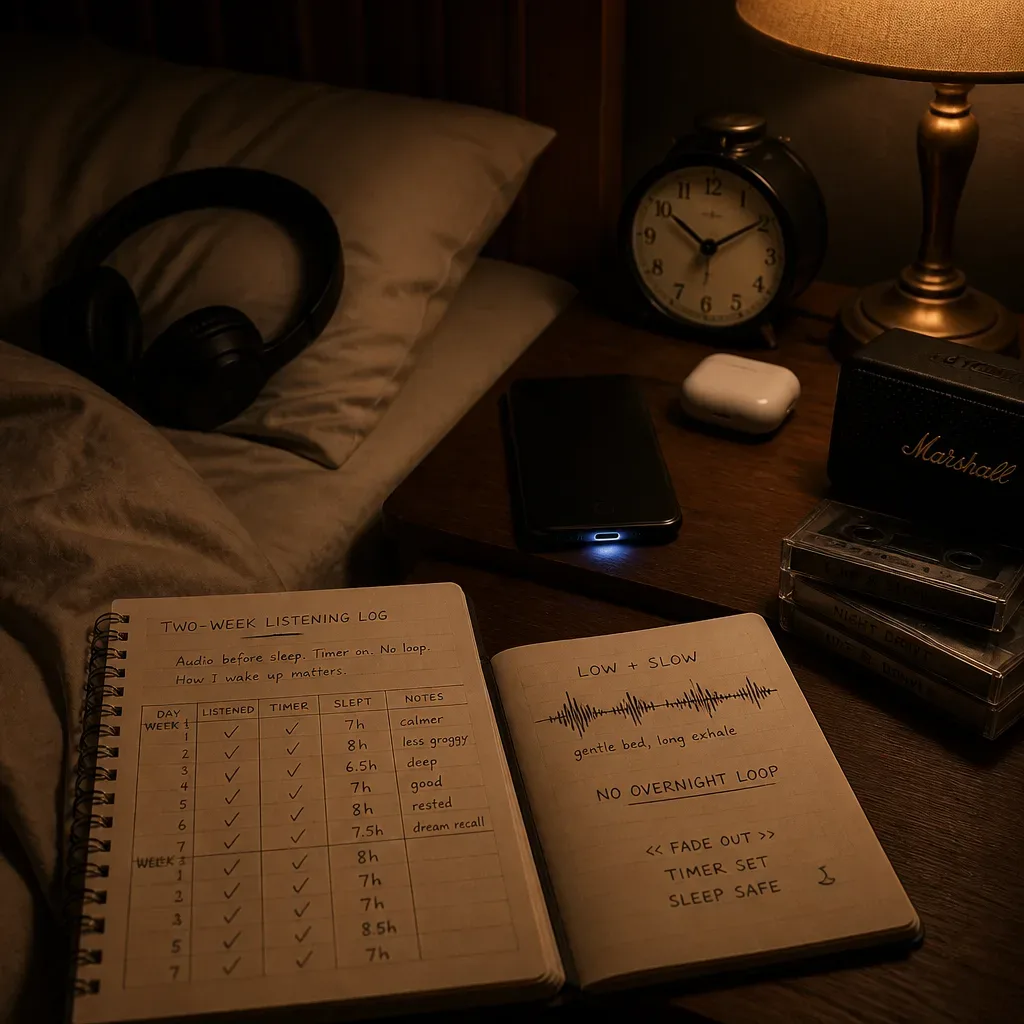
Here is the 20-minute version I recommend:
- Two minutes: set alarm, sleep timer, and room temperature.
- Three minutes: wash up, dim lights, put the phone face down.
- Ten to fifteen minutes: play the subliminal once.
- One minute: stop the track if the timer did not, then sleep in quiet.
Keep the test honest. If you sleep better with no audio at all, that is data, not failure.
Should I listen in the morning, before sleep, or during a nap?
Choose the time that gives you repeat listening without stealing attention or sleep.
Morning listening is underrated. Your mind is not yet full of other people, and a 5 to 10 minute track can fit beside coffee, stretching, or a shower. The limitation is noise. If your morning is rushed, the track becomes wallpaper. Wallpaper can still cue a habit, but it is not the same as listening.
Before sleep has a different strength. The house is quieter. The body is already lowering its pace. Dr. Andrew Huberman often talks about light timing, caffeine timing, and consistent wake time as anchors for sleep physiology; audio is softer than those levers, but it can sit beside them. If your bedtime is 11:00 p.m., a 10:30 p.m. subliminal is more sleep-safe than a loop that ends at dawn.
Nap listening can work if you are careful. Keep it short. Many sleep clinicians suggest 20 to 30 minutes as a common nap range because longer naps can bring sleep inertia, the heavy feeling that follows waking from deeper sleep. A subliminal during a 20-minute rest may feel calming, but do not use naps to compensate for a track that ruined the night.
If your subliminal goal is close to language, confidence, or self-talk, you may also want audible support. The Sleep affirmations pillar explains the more direct version: words you can hear, repeat, and revise. Audible words give you consent in real time. Hidden words ask for trust.
A simple rule helps: use mornings for focus, pre-sleep for softness, and naps for recovery. Do not use any of them as proof that more audio is always better.
How loud should subliminals be at night?
Set the volume low enough that it does not compete with sleep, breathing, or the room.
For masked subliminals, you may only hear rain, tones, music, or brown noise. Keep that audible layer gentle. If you are straining to hear whether words are underneath, you are no longer relaxing. If the sound is vivid enough to pull you back from drifting, it is too loud for bedtime. The World Health Organization’s 2018 environmental noise guidelines discuss night noise as a public health concern, with sleep disturbance becoming more likely as sound levels rise. Your bedroom does not need studio volume.
Headphones are another variable. Over-ear headphones can press into the jaw or ears. In-ear buds can irritate skin or fall out. Wired headphones can be unsafe during sleep. If you insist on overnight audio, a small speaker at low volume is usually kinder than wearing sealed headphones for 7 hours. If you share a bed, consent matters too. Your practice should not become someone else’s noise exposure.
Try this volume test:
- You can hear the top sound clearly when awake.
- You can ignore it within 2 minutes.
- It does not cover alarms, children, pets, or safety sounds.
- It has no ads, sudden bells, or spoken intros.
- It feels boring by the third night.
Boring is a compliment in sleep audio. The best night track is not the one that impresses you. It is the one that lets you forget it.
For a fuller primer on hidden-message audio, use the Subliminals pillar. It covers masking, volume, common claims, and the gap between priming research and online promises. That gap is where most disappointment begins.
What should I track for two weeks?
Track sleep quality first, then track the behavior your subliminal is meant to support.
You do not need a wearable, though it can help if you already use one. A paper note is enough. I like four columns: bedtime, audio time, wake-ups, and one sentence about the next day. In my own spreadsheet, three nights has almost never been enough. Seven nights catches irritation. Fourteen nights starts to show whether the routine can live in a real bedroom.
Use numbers where you can. The Pittsburgh Sleep Quality Index, a common research measure, looks at sleep over a 1-month interval, which is one reason single-night judgments are weak. You are not running a clinical trial, but you can borrow the humility. Sleep varies after alcohol, stress, travel, late meals, menstrual cycle changes, room temperature, and caffeine. One bad night is not a verdict.
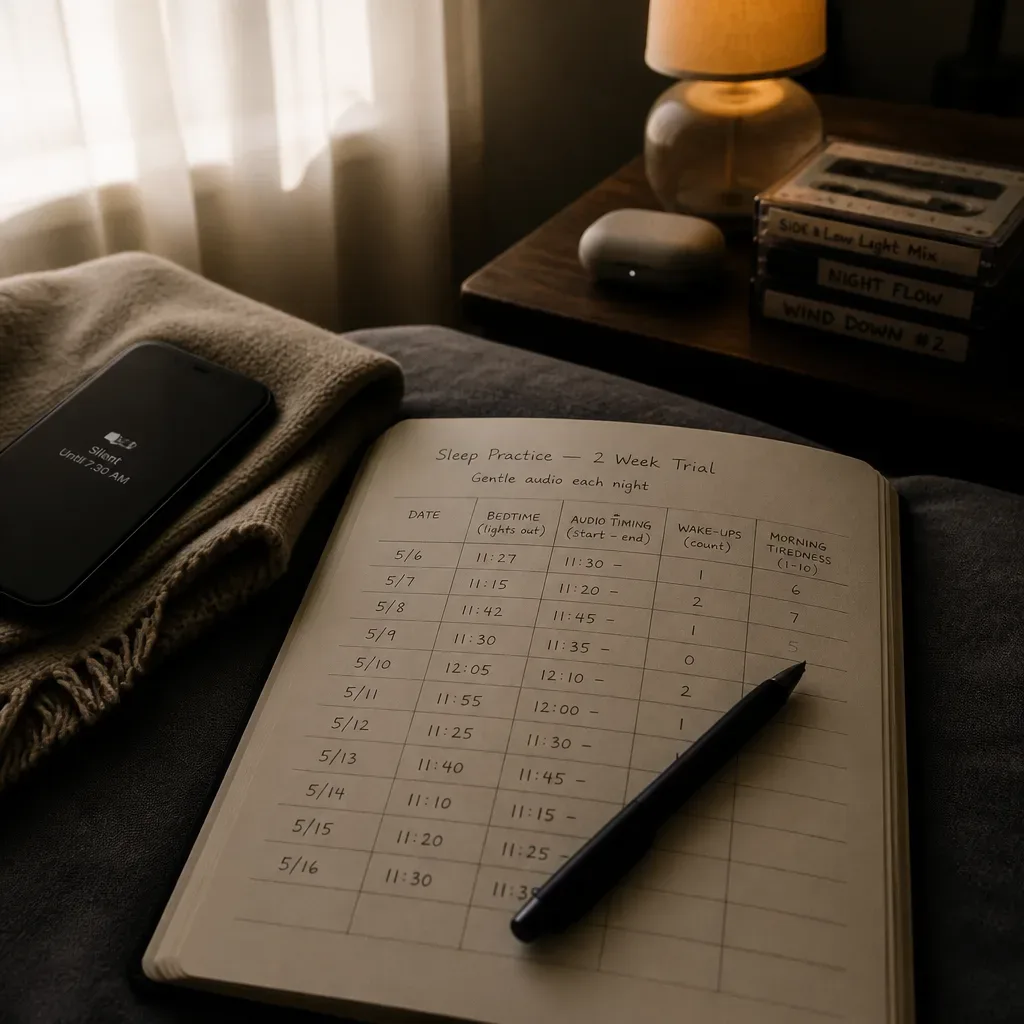
Here is a simple two-week log:
| Day | Audio timing | Sleep score 1-5 | Wake-ups | Target behavior noticed? |
|---|---|---|---|---|
| 1 | 20 min before bed | |||
| 7 | 20 min before bed | |||
| 14 | 20 min before bed |
Pick one target behavior. If the subliminal is for confidence, did you speak a little sooner in a meeting? If it is for calm eating, did you pause before the snack? If it is for study, did you sit down for 10 minutes without bargaining? The claim is not proved by a mood. It is supported by a small repeatable action.
Stop the test early if sleep worsens for more than 3 nights in a row. If insomnia is persistent or distressing, talk with a qualified health professional. Audio can be a ritual. It is not a substitute for care.
Where does the AYA Method fit if subliminals feel too hidden?
The AYA Method fits when you want personal audio you can actually hear, rather than masked suggestions you have to trust.
The AYA Method is a daily audio manifestation practice. Each day you listen to a short personalized recording — your Dream-Self Moment — narrated from the version of you who has already manifested the life you intend. Listening is the practice. Repetition is the work. The audio is the method.
That difference matters at night. With subliminals, the words are hidden under sound, so you may not know whether a line fits your values, your body, or your real life. With a Dream-Self Moment, the words are audible and personal. You can hear every sentence. You can notice resistance. You can decide whether the voice sounds like yours.
This is not an argument that subliminals are useless. Many people like them because they lower friction. You press play, the rain starts, and the conscious mind stops picking at every phrase. That can be kind. But if your concern is safety, consent, or clarity, audible personal audio gives you more control. Neville Goddard’s work emphasized imaginal rehearsal before sleep; Joe Dispenza often frames mental rehearsal as a repeated practice. The common thread is not hidden volume. It is repeated attention.
Use the same sleep-safe timing. Listen to the personal recording before bed, then let the night go quiet. The daily affirmation and Manifestation Board can support the practice, but they are complements. The audio is the method.
If you like comparing forms, read the Sleep affirmations pillar beside the Subliminals pillar. One lets you hear the sentence. One asks you to trust the mask. Both should leave your sleep intact.
What should I do tonight?
Tonight, choose one track, play it once before bed, and stop it before sleep.
Set a timer for 20 minutes. Put your phone out of reach after pressing play. Keep the volume low. If the track has ads, sudden intros, or aggressive music changes, do not use it for sleep. A 2020 consumer audio report from Edison Research found that spoken-word audio listening had grown steadily in the U.S.; more people are falling asleep near voices and tracks now, which makes good boundaries more important, not less.
If you are currently looping subliminals all night, do not make it moral. Just test the swap. For 14 nights, move the track earlier. If your sleep improves and you still like the practice, you have gained something simple. If nothing changes, you can decide whether the ritual is worth keeping. If your target behavior improves, keep the timing and resist adding five more tracks.
Your plan can be this plain:
- Use the Sleep cycle calculator tool to choose a realistic bedtime.
- Start your subliminal 20 minutes before that time.
- Use one play, low volume, no headphones if they bother you.
- Write down wake-ups and morning tiredness.
- Repeat for 14 nights.
Do less than the internet suggests. Do it more consistently than the internet does.
The right time is the one you can repeat without making sleep pay for it.
Sleep first. Let the words wait at the edge of it.