reality shifting
Lucid Dreaming vs Shifting: Sleep-Safe Audio
Lucid dreaming vs shifting explained gently: what each practice asks of sleep, where audio helps, and how to stay rested while you listen.
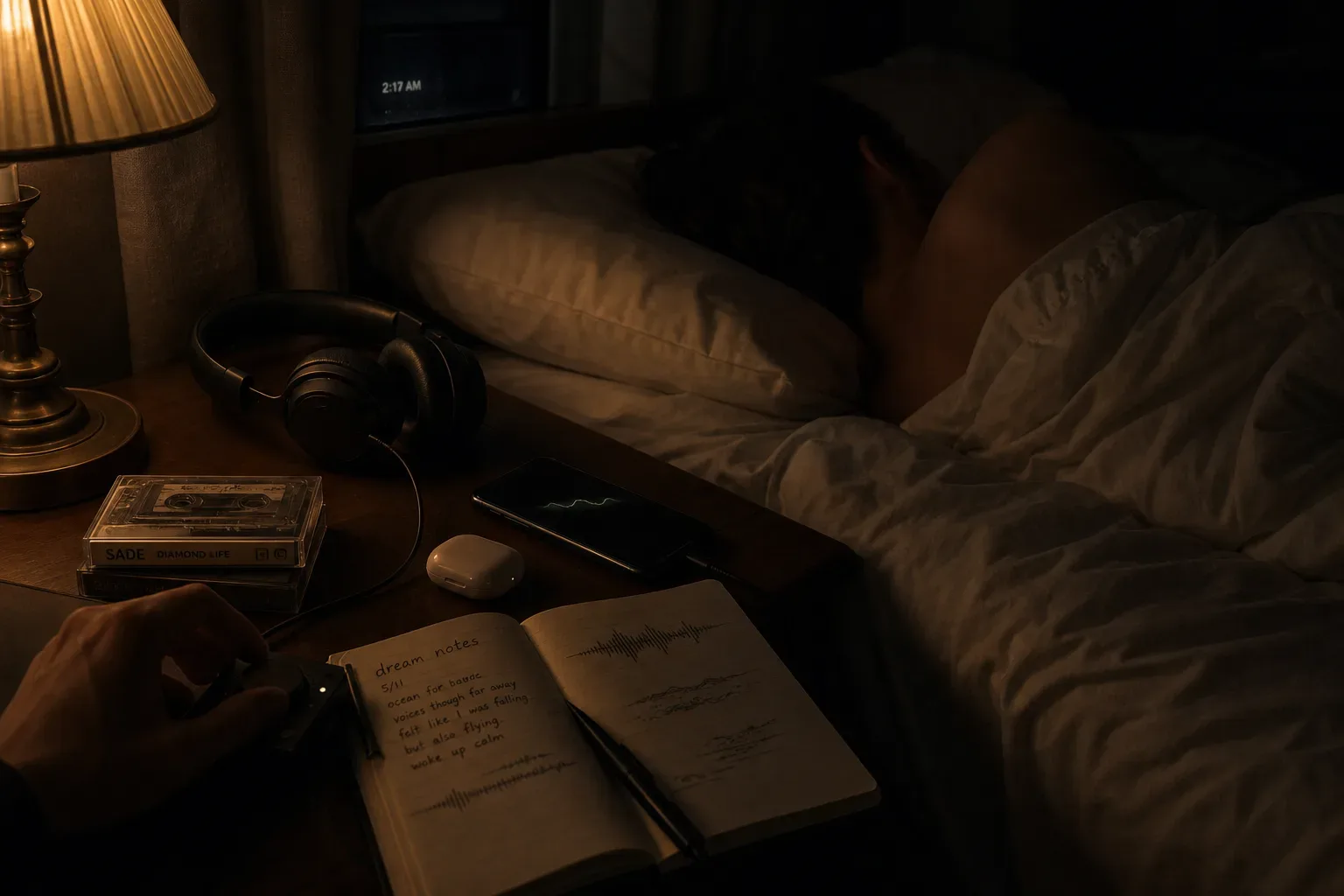
Lucid dreaming vs shifting comes down to this: lucid dreaming asks you to notice you’re dreaming, while shifting asks you to rehearse awareness toward a desired self or setting. Both can use nighttime audio, but the safer practice is the one that protects sleep first and treats results as secondary.
What is the real difference between lucid dreaming and shifting?
Lucid dreaming is dream awareness; shifting is intentional self-placement through imagery, scripting, and often audio.
A lucid dream happens when you know you’re dreaming while the dream continues. Sleep researchers usually place this in REM sleep, and classic work by Stephen LaBerge used pre-agreed eye movements to verify awareness during dreams in the 1980s. That doesn’t make every lucid dreaming claim clean or simple. It does mean the basic phenomenon has a research trail.
Shifting is newer as a named online practice. It often includes scripts, affirmations, counting methods, desired-reality scenes, and audio listened to before sleep. Pew Research reported in 2022 that 95% of U.S. teens use YouTube, which partly explains why shifting spread through audio platforms and short-form communities rather than journals. The culture grew where nighttime playlists already lived.
Here’s the plain comparison:
| Practice | Main aim | Common timing | Sleep risk | Best use of audio |
|---|---|---|---|---|
| Lucid dreaming | Notice the dream while dreaming | During REM or after wakeups | Can fragment sleep | Gentle intention cues |
| Shifting | Feel into a desired self or setting | Before sleep, during rest | Can create pressure | Spoken self-rehearsal |
| Dream-Self audio | Hear a future-self narration | Last minutes before sleep | Low if kept soft | Daily repetition |
The most honest phrase I know is this: a method that costs you sleep costs more than it gives. Some lucid dreaming methods, like wake-back-to-bed, ask you to wake after 4 to 6 hours. That can work for dream awareness, but it’s a real trade. Shifting methods are often quieter, but they can still keep you alert if you start checking for signs.
If you want a foundation before choosing, read the wider Subliminals pillar and compare hidden-word audio with audible practice. A subliminal can be soothing. It can also be vague. Sleep gets clearer when the words are clear too.
How does each practice affect sleep quality?
Lucid dreaming can disturb sleep when it relies on wakeups, while shifting can disturb sleep when it creates performance pressure.
Sleep is built in cycles of roughly 90 minutes, with REM periods generally lengthening later in the night. That’s why lucid dreaming guides often target early morning sleep. The logic is sound: more REM means more dream material. The cost is also obvious: alarms, journaling, and reality checks can make the night feel like a project.
I kept lucid dreaming notes for 31 nights in my twenties. My dream recall improved by week two, but my patience did not. On nights when I used a 5-hour alarm, I remembered more dreams and felt less rested the next day. That’s not lab evidence. It’s the kind of bedroom evidence that matters when you still have to answer email at 9 a.m.
Shifting can be softer because many methods start before sleep and don’t require waking later. But pressure can be its own alarm. If you lie there asking, “Did I shift yet?” every few minutes, your nervous system hears a test, not a lullaby. Dr. Andrew Huberman often repeats the basic sleep-hygiene point that light, timing, and arousal matter; you don’t need a perfect protocol to understand that monitoring keeps the mind awake.
A safer comparison looks like this:
- If you’re sleep deprived, don’t use alarm-based lucid dreaming.
- If you’re anxious, don’t use shifting scripts that make tonight feel like a pass-or-fail event.
- If you’re curious, use audio that allows sleep to win.
- If a track makes you tense, stop it for 7 nights and notice what changes.
The best nighttime practice doesn’t demand proof at midnight. It gives the mind a place to rest, then lets the body sleep.
For timing, the Sleep cycle calculator tool can help you choose a bedtime that respects full cycles. It won’t make you lucid or shifted. It just reduces the avoidable mistake of cutting sleep short before asking the mind to do delicate work.
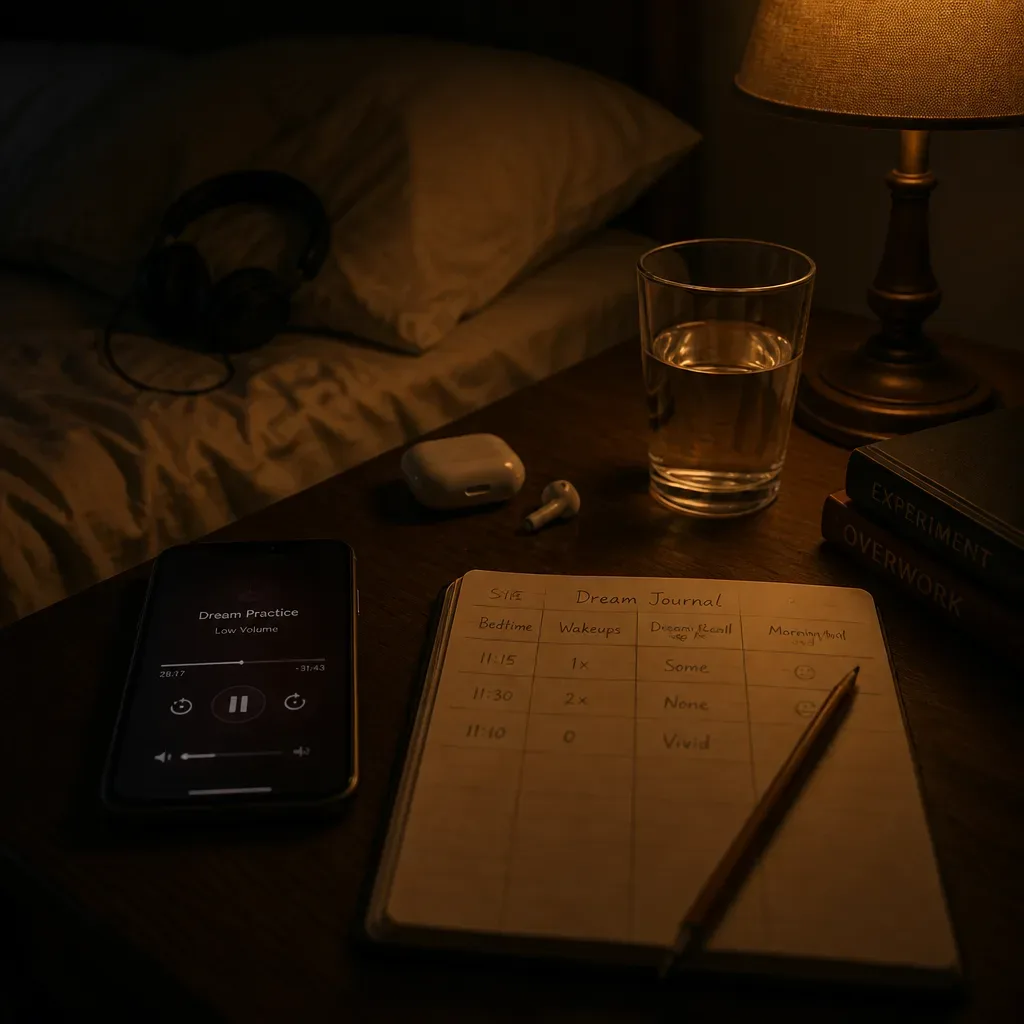
Where does Dream-Self audio fit between lucid dreaming and shifting?
Dream-Self audio sits between the two because it uses spoken identity rehearsal without requiring dream control or sleep interruption.
This is where I’d place the AYA Method in the comparison. The AYA Method is a daily audio manifestation practice. Each day you listen to a short personalized recording — your Dream-Self Moment — narrated from the version of you who has already manifested the life you intend. Listening is the practice. Repetition is the work. The audio is the method.
That definition matters because it keeps the method simple. You’re not trying to force a lucid dream. You’re not trying to prove a shift before morning. You’re listening to words you can hear, in a form that rehearses identity. The daily affirmation and Manifestation Board can support the practice, but they’re not the pillars. The audio is the method.
There’s modest evidence that repeated mental rehearsal can change behavior and attention. In a 2005 study in the Journal of Behavioral Medicine, implementation intentions were linked with better health-behavior follow-through across multiple contexts. That’s not proof that a bedtime recording creates a new life on command. It is support for a quieter claim: repeated, specific cues can help you behave more like the person you’ve rehearsed being.
Neville Goddard called attention to the drowsy state before sleep. Joe Dispenza speaks often about rehearsing a future self. I’d keep both names in the “practice language” drawer, not the “guaranteed outcomes” drawer. The last ten minutes before sleep are suggestible. Choose what goes in.
Compared with subliminals, Dream-Self audio has one clean advantage: you can hear every word. Compared with many shifting methods, it asks less from the night. You listen, you repeat, you return. If sleep arrives after three minutes, that counts as the body doing its job.
Which audio style is best for lucid dreaming vs shifting?
The best audio style is low, clear, and boring enough to sleep through.
For lucid dreaming, audio can be used as a cue: “I’m dreaming,” “Notice the dream,” or a soft bell embedded at intervals. Some studies have explored sound or light cues during REM, but the results are mixed and usually small. A 2014 study in Nature Neuroscience drew attention for using brain stimulation during sleep to increase lucid awareness, but that isn’t the same as a YouTube track promising instant lucidity. The research is interesting. The claims online are often louder than the data.
For shifting, audio usually works as atmosphere plus suggestion. That can mean rain under affirmations, a script read slowly, or a first-person narration of the desired self. If the words are hidden, you’re closer to subliminals. If the words are audible, you can consent to them. A subliminal is an affirmation you can’t consciously hear. That’s the whole trick, and the whole problem.
Use this 5-step filter before playing any sleep track:
- Check the words. If you can’t find the script, be cautious.
- Set the volume low. Aim for a level you can ignore, often around 20% to 30% on a phone speaker.
- Choose one track for 14 nights. Changing nightly ruins your own data.
- Avoid sudden cues. Bells, whispers, and volume jumps can wake you.
- Track morning state. Rested matters more than “worked.”
If you use Sleep affirmations pillar practices, keep the phrasing gentle. “I can rest now” is often more sleep-safe than “Tonight must change everything.” The body hears pressure faster than grammar.
My own rule is simple: if I wouldn’t play it for a tired friend in the next room, I don’t play it for myself. Night audio should feel like a handrail, not a command.
How can you compare results without fooling yourself?
Compare results by tracking sleep, mood, recall, and behavior for at least 14 nights per method.
Three nights proves almost nothing. A new track often feels special because it’s new. That novelty can change attention for a short while, which psychologists have studied under expectancy and placebo effects for decades. Placebo isn’t an insult. In sleep, belief can lower friction. The honest question is whether the benefit stays when the novelty gets quiet.
Use a small table in your notes. Don’t make it precious. Mine started in a spreadsheet when I was 23, with columns for track, bedtime, wakeups, dream recall, and next-day steadiness. After 10 years, the unromantic columns were the ones that saved me from my own excitement.
Track these four numbers each morning:
| Metric | Scale | Why it matters |
|---|---|---|
| Sleep quality | 1 to 5 | Protects the main outcome |
| Dream recall | 0 to 3 | Shows lucidity-related change |
| Morning mood | 1 to 5 | Catches hidden sleep debt |
| Practice pressure | 0 to 3 | Shows whether the method is stressing you |
After 14 nights, look for patterns, not miracles. Did wakeups increase by more than 1 per night? Did recall improve without fatigue? Did the audio make you kinder to your morning self? The nervous system doesn’t care what the label promised. It cares what repeated nights taught it to expect.
You can also compare audible audio with hidden-word tracks through the Subliminals pillar. I’m not against subliminals. I’ve used them. But when I’m evaluating a method, I prefer knowing the exact sentence entering my sleep.
A practice becomes yours when the data and the feeling agree. Until then, keep your claims small and your bedtime protected.
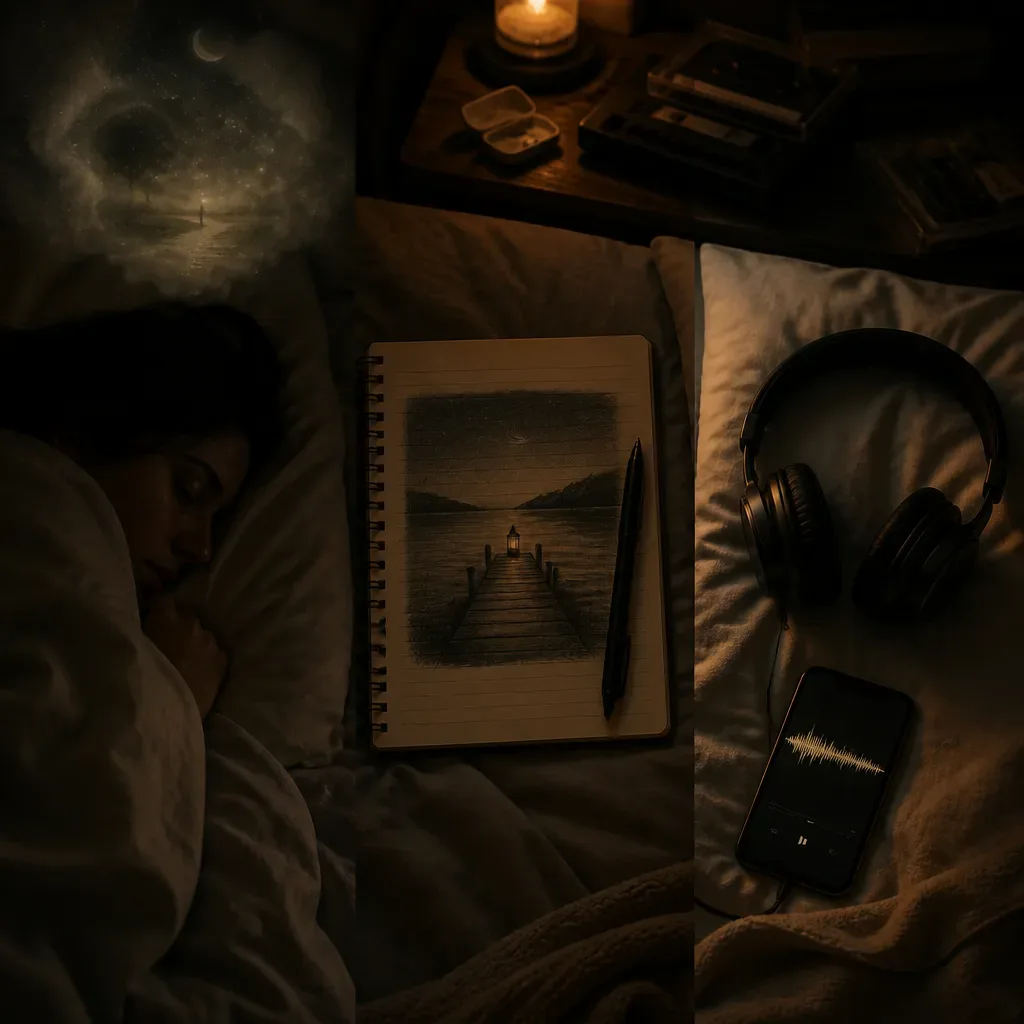
When should you choose lucid dreaming, shifting, or Dream-Self audio?
Choose lucid dreaming for dream awareness, shifting for imaginative self-placement, and Dream-Self audio for daily identity rehearsal that doesn’t need sleep disruption.
If your goal is to study dreams from inside them, lucid dreaming is the cleanest fit. Start with dream journaling and daytime reality checks before using alarms. The International Classification of Sleep Disorders recognizes that sleep disruption can worsen insomnia symptoms; you don’t need a diagnosis to take the hint. If you already struggle to fall asleep, don’t add a 5 a.m. experiment first.
If your goal is comfort, story, or feeling close to a desired self, shifting may fit better. Keep it warm and non-urgent. Scripts can be helpful because they move vague wanting into specific language. But be careful with rules that say you failed if you moved, swallowed, doubted, or fell asleep. Falling asleep is not failure. Falling asleep is the assignment.
If your goal is a steady nightly rehearsal, Dream-Self audio is the gentlest of the three. It can borrow the intimacy of shifting without requiring proof of arrival. It can borrow the suggestible edge of lucid dreaming without waking you mid-cycle. For a broader practice map, the Sleep affirmations pillar pairs well with audible recordings, as long as you remember that short affirmations are complements, not the whole method.
Here’s my quiet recommendation:
- Pick lucid dreaming if curiosity about dreams matters more than perfect sleep for a short test.
- Pick shifting if narrative, comfort, and desired-self imagery help you soften before bed.
- Pick Dream-Self audio if you want repeatable words, audible consent, and a practice that can continue even when you fall asleep quickly.
- Pick no method for a week if your sleep is getting worse.
If insomnia, panic, nightmares, or daytime impairment are present, speak with a qualified clinician. Sleep is not a place to prove toughness.
The night doesn’t need to become a test to be meaningful.