reality shifting
Estelle Method Shifting: A Sleep-Safe Audio Routine
Estelle method shifting uses music, counting, and intention before sleep. Try a quiet audio routine that protects rest and keeps claims honest.
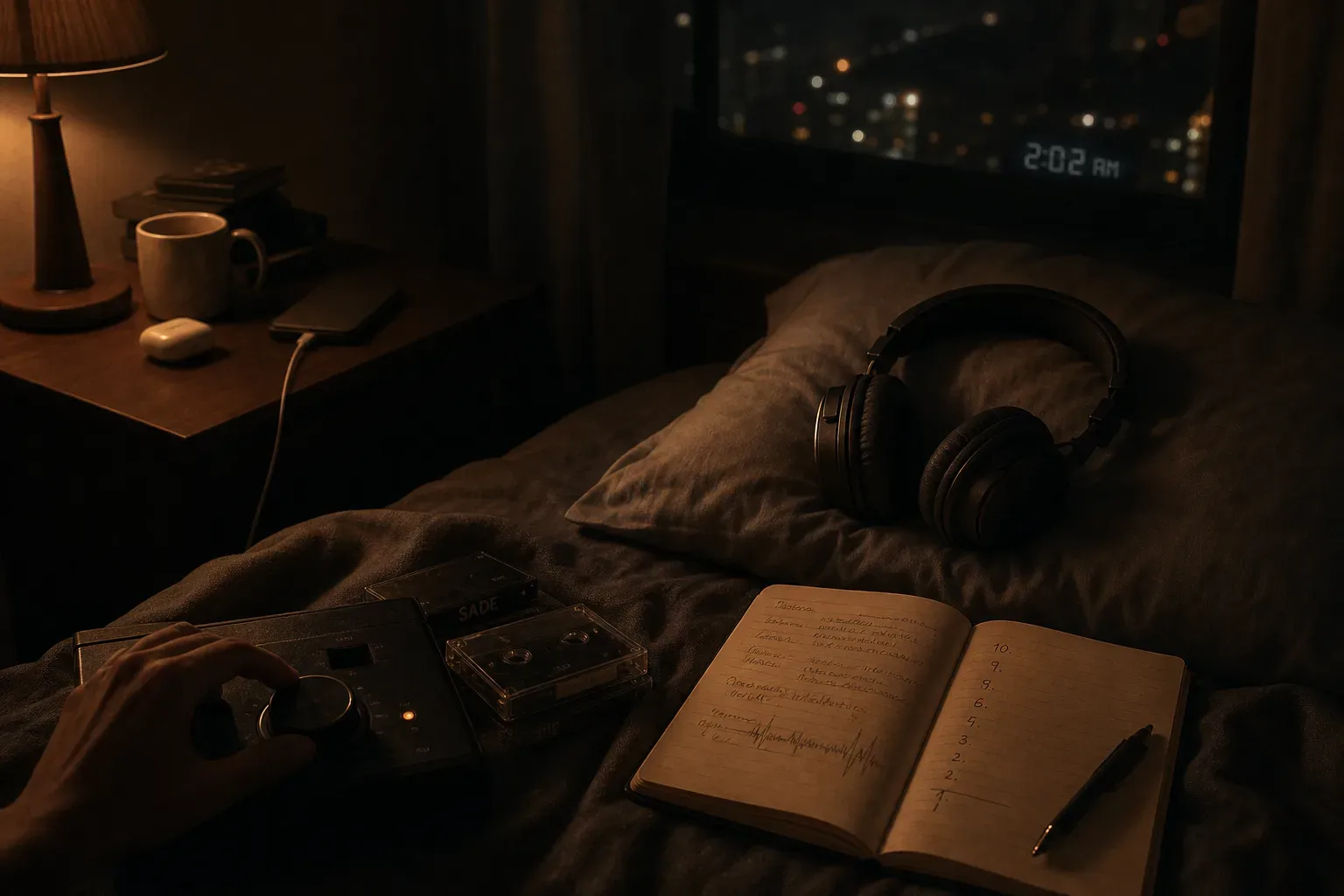
Estelle method shifting is a bedtime shifting practice that pairs music, counting, and a desired-reality scene as you fall asleep. The safest version keeps the audio low, the routine under 25 minutes, and the promise modest: you rehearse a chosen inner scene without sacrificing sleep.
What is the Estelle Method, exactly?
The Estelle Method is a reality shifting routine built around music, counting, and emotional focus before sleep.
In most community versions, you choose a song that feels connected to your desired reality, lie down, count slowly, and picture a specific scene until your body gets heavy. The method is often shared on TikTok, Reddit, Amino, and YouTube, where shifting guides became especially visible around 2020. Pew reported in 2021 that 48% of U.S. adults ages 18 to 29 used TikTok, which helps explain why short shifting scripts spread so quickly.
The name is usually traced through shifting communities rather than a formal teacher or clinical source. That matters. There is no peer-reviewed paper proving that the Estelle Method causes reality shifting. There is, however, a long research record showing that imagery, music, expectation, and presleep thought can change how sleep feels. A 2018 review in Frontiers in Psychology described mental imagery as more emotionally loaded than verbal thought for many people.
A fair definition is this: Estelle Method shifting is a structured way to fall asleep while rehearsing one desired scene with sound. You don’t need to believe every claim online to use the routine carefully. You can treat it as a night practice that gives your attention somewhere soft to land.
A shifting method does not become safer because it feels special. It becomes safer when it lets you sleep.
If you’re new to the wider practice, keep the distinction clear. Reality shifting communities talk about entering a desired reality. Sleep science talks about imagery, suggestion, expectation, and dreams. Those are not the same claim. Holding both in your hands is the honest position.
How can you make Estelle method shifting sleep-safe?
You make it sleep-safe by giving the method a beginning, an ending, and a volume that would not wake someone beside you.
The first rule is time. Adults generally need 7 to 9 hours of sleep, according to the National Sleep Foundation’s widely cited recommendations. If your shifting routine pushes bedtime later by 45 minutes, the cost is not symbolic. It is sleep pressure, morning mood, attention, and the quiet patience you need the next day.
Set a 20 to 25 minute container. That is long enough to settle, count, and repeat a scene, but short enough to protect the night. Dr. Andrew Huberman often describes sleep timing and light exposure as high-leverage basics; you do not need to copy every protocol to respect the principle. The basics come first.
Use this order:
- Put your phone on Do Not Disturb.
- Set one playlist or one track, not a queue of ten.
- Lower the volume until the music is clear but not interesting.
- Lie down in the position you can actually sleep in.
- Begin the count and scene.
- When the audio ends, stop doing the method.
The stopping point is not optional. Many shifting guides accidentally teach people to monitor themselves: Did I feel symptoms? Did I see lights? Did I float? Monitoring raises arousal. In insomnia treatment, stimulus control often asks people to reduce wakeful effort in bed because the bed can become linked with trying instead of sleeping.
A sleep-safe routine is boring on purpose. It repeats. It ends. It does not punish you for drifting off. If you fall asleep halfway through, that is not a failed attempt. That is your body accepting the night.
What audio should you use for the Estelle Method?
Use audio that supports drowsiness first and shifting second.
A common mistake is choosing the most emotionally intense song connected to a character, place, or plot. It may feel right at 9 p.m. and keep you awake at 1 a.m. Research on music and sleep is mixed but useful: a 2021 review in Sleep Medicine Reviews found that music may improve subjective sleep quality for some people, while effects vary by person and study design. Translation: music can help, but the track matters.
For the Estelle Method, look for low contrast. Avoid sudden volume jumps, sharp percussion, and lyrics that make you want to perform the scene rather than rest inside it. If you use headphones, keep the volume conservative. The World Health Organization has warned that unsafe listening levels can harm hearing; for bedtime, you want softer than daytime listening, not equal to it.
| Audio choice | Better for sleep | Risk at night |
|---|---|---|
| Soft instrumental loop | High | May feel plain after a week |
| Familiar acoustic song | Medium | Lyrics may pull attention |
| Cinematic soundtrack | Medium | Swells can wake you |
| Subliminal under rain | Depends | You may not know what is being repeated |
| Loud edit or playlist | Low | Too stimulating and hard to stop |
If you’re curious about hidden-word tracks, read the Subliminals pillar before using one all night. A subliminal is an affirmation you can’t consciously hear. That’s the whole trick, and the whole problem. The evidence for priming is real but modest; YouTube titles promising overnight certainty are not the evidence.
Audible words are easier to consent to. That is why I often prefer spoken sleep audio, including Sleep affirmations pillar, for people who get anxious around subliminals. You can hear the sentence, reject it, edit it, or keep it. Your sleeping room should not become a place where unknown words enter by default.
How do you do the routine step by step?
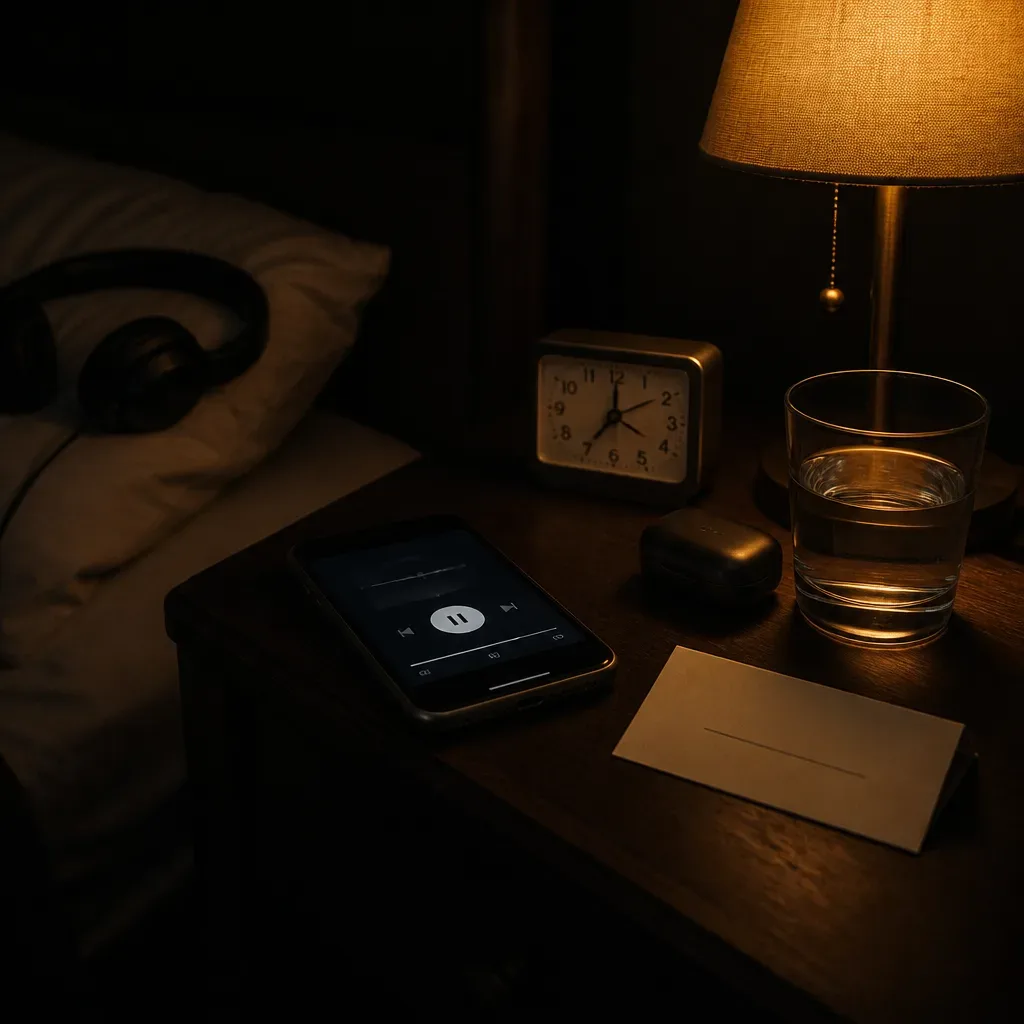
Do the Estelle Method as a short presleep sequence: prepare the room, start one soft track, count, picture one scene, then let sleep take over.
Here is the version I would give a friend who wanted to try it without wrecking her week. It takes about 25 minutes. If you share a bed, use a speaker at a low level or one sleep earbud, not loud closed-back headphones. The American Academy of Sleep Medicine has repeatedly emphasized regular sleep timing as a core sleep-health behavior; your method should fit the bedtime you already need.
The 25-minute Estelle routine
- Minutes 0 to 3: settle the room. Dim the light, plug in your phone away from your hand, and open the track. If you need a wake time, set it first. The Sleep cycle calculator tool can help you choose a bedtime that respects roughly 90-minute sleep cycles, a common estimate used in sleep education.
- Minutes 3 to 5: choose the scene. Pick one moment only. A doorway. A bedroom ceiling. Someone saying your name. Specific beats vague.
- Minutes 5 to 15: count slowly. Count from 1 to 100 or 100 down to 1. If you lose your place, restart at the nearest number you remember. This is attention training, not a test.
- Minutes 15 to 22: repeat the intention. Use one sentence: I fall asleep safely and wake where I intend. Keep it quiet inside your head.
- Minutes 22 to 25: release the method. Let the scene blur. Let the music end. If you are awake, roll over normally.
Do not chase symptoms. Tingling, heaviness, floating, flashes, and dreamlike fragments can happen during ordinary sleep onset. Hypnagogic imagery is well documented; sleep researchers use the term for perceptions that arise as waking loosens into sleep. It does not prove anything by itself, and it does not need to.
The sign that matters most is not tingling. It is whether you can return to the practice tomorrow without losing sleep tonight.
If you want a more personal audible practice beside shifting, the AYA Method is a daily audio manifestation practice. Each day you listen to a short personalized recording, your Dream-Self Moment, narrated from the version of you who has already manifested the life you intend. Listening is the practice. Repetition is the work. The audio is the method. The daily affirmation and Manifestation Board can support it, but they are not the center.
What should you expect in the first two weeks?
Expect the routine to feel interesting for a few nights, uneven by night five, and clearer by the second week if it suits you.
Novelty is real. The first two or three nights of any new bedtime practice can feel unusually vivid because you are paying close attention. That does not mean the method is working or failing. In sleep diaries used in cognitive behavioral therapy for insomnia, clinicians often look for patterns across 1 to 2 weeks rather than one night because single nights are noisy.
Track only three things. More tracking becomes another form of checking.
- Bedtime and estimated sleep time
- Morning rest rating from 1 to 5
- One line about the scene or dream content
By night seven, ask a plain question: am I sleeping at least as well as before? If the answer is no, soften the routine. Shorten the track. Remove lyrics. Count fewer numbers. If the answer is still no after several nights, stop. A method that makes you dread bedtime is not your method.
By week two, the useful version usually becomes less dramatic. You may notice the song cues drowsiness faster. You may remember more dreams. You may feel more emotionally close to the desired scene. None of that proves a shift. It does tell you the routine is becoming familiar, and familiarity is one way bedtime practices work.
I keep a spreadsheet because memory lies after midnight. In eleven years of testing sleep routines, the ones that lasted were rarely the most intense. They were the ones I could do when I was tired, sad, skeptical, or bored.
The routine you can repeat gently is worth more than the ritual you can only perform on a perfect night.
How does the Estelle Method compare with affirmations, subliminals, and hypnosis?
The Estelle Method is more musical and scene-based than affirmations, more conscious than subliminals, and less formal than hypnosis.
That comparison helps you choose what to play at night. Sleep hypnosis usually uses a guided voice, progressive relaxation, and suggestion. Sleep affirmations repeat clear sentences. Subliminals hide or mask the words. The Estelle Method asks you to supply the scene yourself while music carries the mood.
Small studies on hypnosis suggest it may help some people with sleep, but effects vary. A 2014 paper in Sleep found that hypnotic suggestion increased slow-wave sleep in a small group of highly hypnotizable young women. That is interesting research, not a guarantee for every listener. The honest lesson is that suggestion can matter, and individual response matters too.
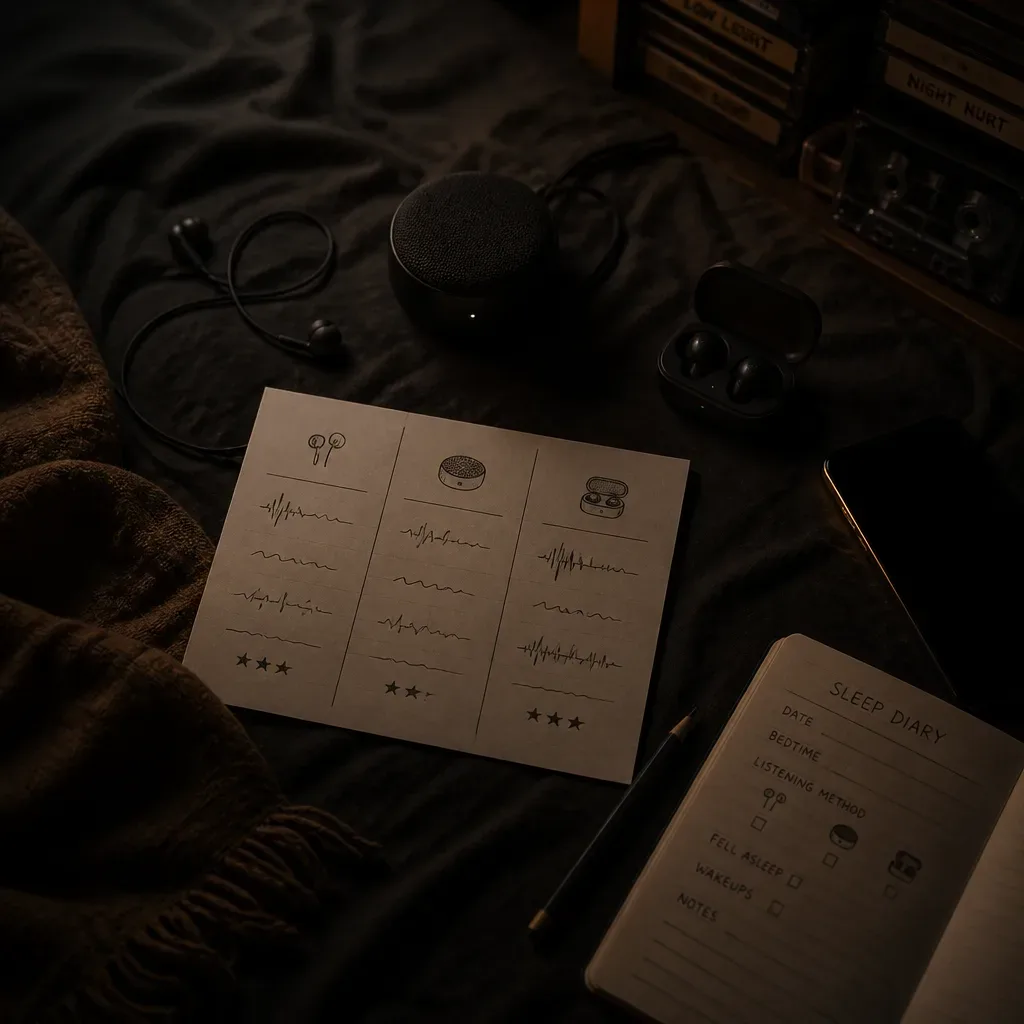
Here is the cleaner comparison:
| Practice | What you hear | Your role | Best use | Main caution |
|---|---|---|---|---|
| Estelle Method | Music, maybe no voice | Count and imagine | Desired-reality scene before sleep | Can become symptom-checking |
| Sleep affirmations | Clear repeated words | Listen and repeat mentally | Gentle belief rehearsal | Bad wording can irritate you |
| Subliminals | Masked words under sound | Mostly passive listening | Background suggestion | Hard to verify content |
| Sleep hypnosis | Guided voice | Follow instructions | Relaxation and suggestion | Voice may annoy or wake you |
| AYA Method | Personal audible recording | Listen daily | Future-self audio practice | Requires honest intake and repetition |
If words matter to you, choose words you can hear. If music matters to you, choose music that lets you sleep. If shifting matters to you, protect the body that has to wake up tomorrow.
There is no prize for using every method at once. Stacking subliminals, hypnosis, affirmations, binaural beats, and Estelle counting may feel thorough, but it often turns bedtime into a control panel. Keep one main audio practice for 7 nights. Then change one variable, not five.
When should you stop or change the method?
Stop or change the Estelle Method when it increases anxiety, shortens sleep, or makes your day worse.
The line is simple because tired brains negotiate badly. If you lose more than 30 minutes of sleep for two nights in a row because you are trying to force a shift, pause the method. If you wake at 3 a.m. to restart the song, pause it. If you feel guilty for falling asleep, pause it. Sleep is not the enemy of shifting practice. Sleep is the ground under it.
The Centers for Disease Control and Prevention has estimated that about 1 in 3 U.S. adults report not getting enough sleep. That number is already too high without adding voluntary bedtime pressure. Shifting communities can be kind, creative places, but any method can become harsh when it turns into proof-seeking.
Use these red flags:
- You delay bedtime to find the perfect track.
- You replay the audio after it ends because you feel you missed your chance.
- You check symptoms more than you feel the scene.
- You wake tired and call it dedication.
- You feel afraid to stop because stopping feels like failure.
If insomnia is persistent, or if sleep loss is affecting school, work, driving, mood, or safety, talk to a qualified health professional. That sentence is not meant to scare you. It is the ordinary care your nervous system deserves.
A softer change is often enough. Move the Estelle Method earlier, perhaps during a 15-minute rest before bed, then use plain sleep audio when the lights go out. Or keep the song but drop the counting. Or keep the scene and remove the song. The method is not a law.
If a method costs you sleep, it costs more than it gives.
Let the night stay on your side.