sleep science
Nap Length: Plan a Dream-Self Audio Reset
Find the nap length that lets you listen to Dream-Self audio, wake clear, and avoid the heavy sleep inertia that makes naps feel worse.
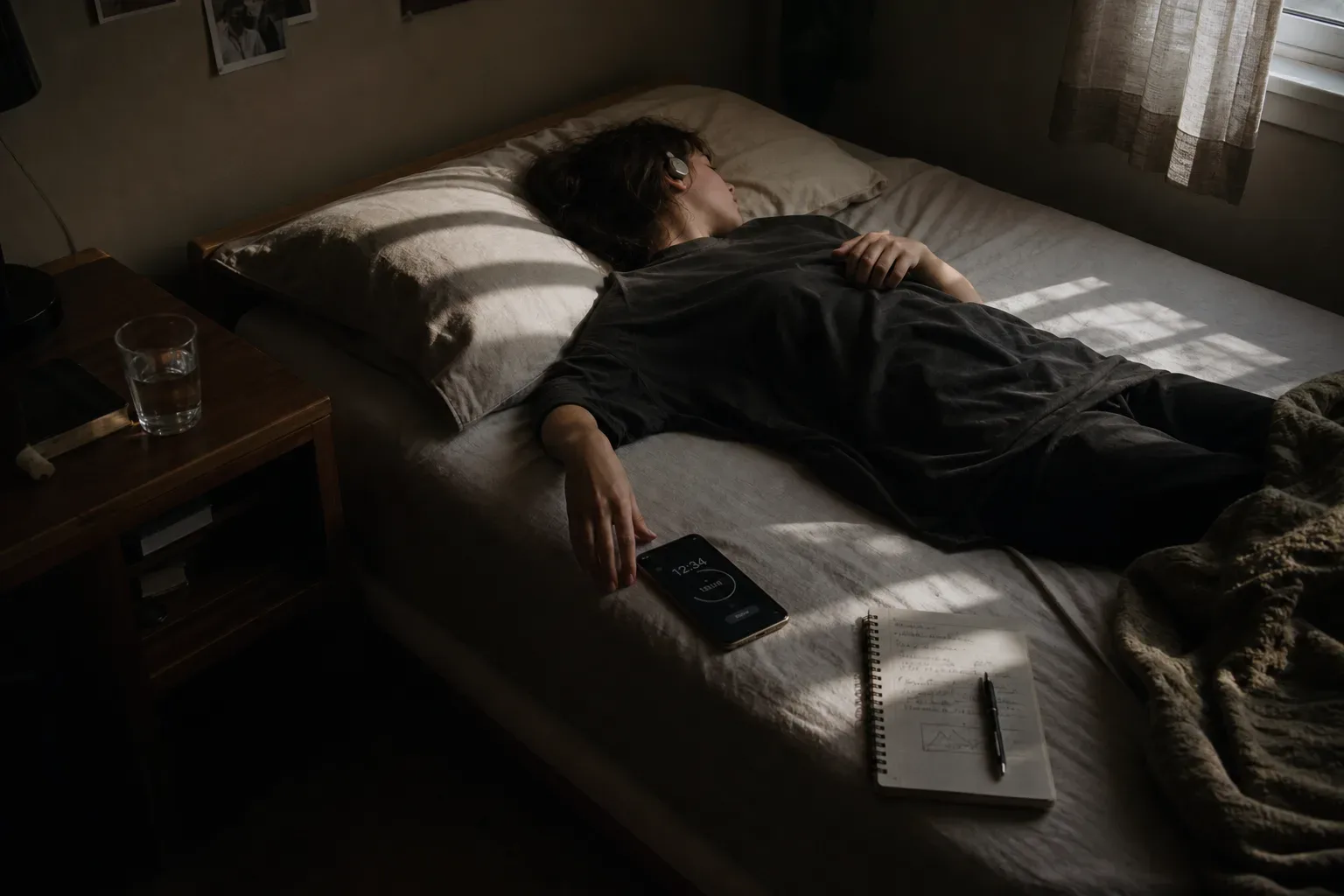
The best nap length for a Dream-Self audio reset is usually 10 to 20 minutes, with the recording played once at low volume before or during the start of the nap. That window gives your mind a clear phrase to rest with, while reducing the chance of waking from deeper sleep.
What nap length works best for a Dream-Self audio reset?
A 10 to 20 minute nap is the safest starting nap length if you want to wake clear rather than heavy.
Sleep scientists usually separate naps into brief alertness naps, longer slow-wave naps, and full-cycle naps. The short version matters here. In a NASA Ames study often cited in fatigue research, a 26-minute cockpit nap was associated with a 34% improvement in performance and a 54% improvement in alertness among pilots. That does not mean every nap should be 26 minutes. It means short sleep can help without taking over the day.
For a Dream-Self audio reset, I would start even tighter: 15 minutes in bed, with 3 to 5 minutes allowed for settling. If you fall asleep quickly, you may get 10 real minutes of light sleep. If you do not sleep, you still practiced downshifting. A nap is useful only if you wake with enough mind left to use the day.
Here is the simple map:
| Nap length | Best use | Main risk |
|---|---|---|
| 10 minutes | Quick reset, low grogginess | May feel too light |
| 20 minutes | Best daily default | Alarm must be firm |
| 30 to 45 minutes | More sleep pressure relief | Higher sleep inertia |
| 90 minutes | Full cycle when truly sleep-deprived | Hard to schedule |
The reason 20 minutes keeps showing up is sleep architecture. Deep slow-wave sleep becomes more likely as a nap length passes the 30-minute mark, though it varies by prior sleep, age, and time of day. Reviews of sleep inertia, including Tassi and Muzet in Sleep Medicine Reviews, describe grogginess lasting from minutes to an hour after waking from deeper stages.
Grogginess is not a character flaw; it is often a timing problem.
When should you nap so it does not hurt tonight’s sleep?
Nap before late afternoon if you want a reset without stealing sleep pressure from the night.
For most sleepers, the cleanest window is early to mid-afternoon, often between 1 p.m. and 3 p.m. That is when circadian alertness often dips and bedtime is still far enough away to rebuild sleep pressure. The American Academy of Sleep Medicine tells adults to aim for at least 7 hours of sleep per night, and the CDC has reported that roughly 1 in 3 U.S. adults sleep less than that. If you are already short on sleep, a nap can help. If you nap too late, it can also push the problem forward.
The quiet rule is this: protect the night first. If a method costs you sleep, it costs more than it gives. That includes audio practices, shifting methods, long guided tracks, and any bedtime ritual that keeps you checking whether it is working.
Use this timing order:
- Pick your ideal bedtime first.
- Count back 7 to 9 hours for your sleep opportunity.
- Keep naps at least 6 hours before bedtime when possible.
- Use the Sleep cycle calculator tool if your wake time is fixed.
- Shorten the nap before you move it later.
A 20-minute nap at 2 p.m. is not the same body event as a 20-minute nap at 6 p.m. Same length, different consequence. Dr. Andrew Huberman often discusses the circadian dip as a normal biological low point, not a failure of discipline. You are not broken because the afternoon gets soft.
The last ten minutes before sleep are suggestible. Choose what goes in.
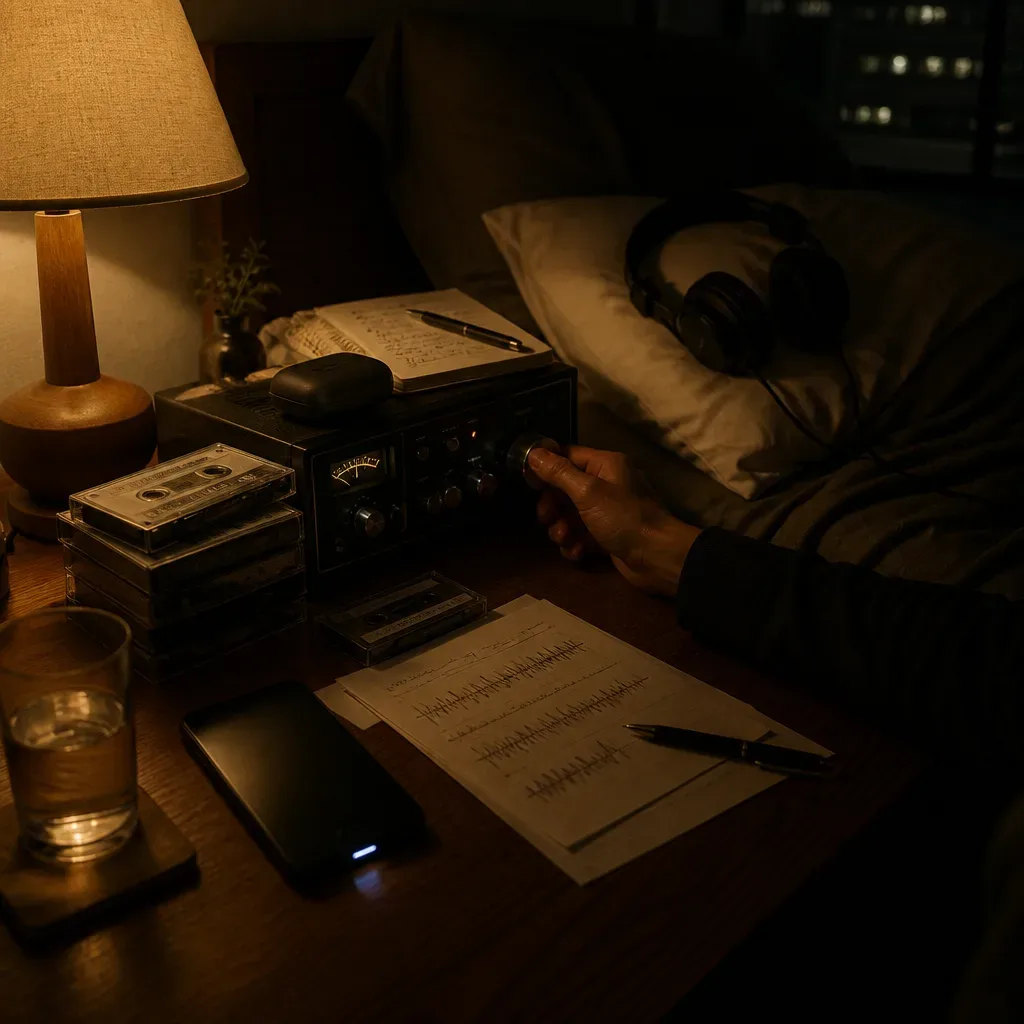
How do you set up the audio without turning the nap into a performance?
Use one short, familiar recording, played softly enough to invite sleep rather than demand attention.
This is where the method matters. The AYA Method is a daily audio manifestation practice. Each day you listen to a short personalized recording, your Dream-Self Moment, narrated from the version of you who has already manifested the life you intend. Listening is the practice. Repetition is the work. The audio is the method.
For a nap reset, you are not trying to cram in a long session. You are giving the mind one clean track before sleep takes over. Five minutes of personal audio can be enough. In behavioral research, repetition and cue consistency matter more than dramatic intensity. A 2009 paper in the European Journal of Social Psychology found habit formation varied widely, with an average of 66 days for a behavior to feel automatic. That number is not a promise. It is a reminder that repeatable beats theatrical.
Set the audio this way:
- Use headphones only if they are comfortable enough to forget.
- Keep volume low, around the level of a quiet person beside the bed.
- Choose one recording, not a playlist of 12 tracks.
- Put the phone face down or out of reach.
- Set the alarm before pressing play.
If you use Sleep affirmations pillar practices, keep them audible and simple for naps. One phrase that you can hear is easier to return to than a long script. Audio before sleep works best when it gives the mind one clean line to return to.
The daily affirmation and Manifestation Board can support the practice, but they are complements. For this reset, the audio is the method.
Should you choose subliminals, affirmations, or your own voice?
For a nap reset, audible personal audio is usually the clearest choice because you know exactly what you heard.
A subliminal is an affirmation you cannot consciously hear. That is the whole trick, and the whole problem. Laboratory subliminal priming is real in modest ways. Meta-analyses of masked priming show small, short-lived effects under controlled conditions, especially when the prime is related to an active goal. That is not the same thing as a 10-hour online track claiming to change your face, income, or personality while you sleep.
If you want the evidence entry point, start with the Subliminals pillar. The honest version is not anti-subliminal. It is precise. Hidden words may influence attention briefly in some contexts, but audible self-directed words let you consent, edit, and remember. Hidden words ask your brain to guess; audible words let you choose.
Neville Goddard spoke often about the state akin to sleep, the drowsy border where a short inner scene can be rehearsed. Joe Dispenza uses different language around rehearsal and identity, and his claims go beyond what sleep science can verify. Still, the practical overlap is simple: repeat a future-facing identity cue when the body is quiet.
For naps, your own voice has three advantages:
- It is familiar, which lowers novelty.
- It is specific, which reduces vague wishing.
- It is editable, which keeps the practice honest.
In small studies of self-referential processing, personally relevant words are remembered better than generic words. Cognitive psychology has shown the self-reference effect since the 1970s, including classic work by Rogers, Kuiper, and Kirker in 1977. Your name, your phrasing, and your real concerns matter.
How do you wake without sleep inertia?
Wake from a short nap with light, posture, and one immediate action before judging how you feel.
Sleep inertia is the dull, underwater feeling after waking. It is strongest after deeper sleep and after sleep loss. Reviews report that it can last 15 to 60 minutes, though the worst part often fades sooner. That is why you should not rate the nap in the first 30 seconds. Rate it after 10 minutes.
Use a wake sequence that is boring and repeatable:
- Alarm sounds.
- Sit up before stopping it.
- Put both feet on the floor.
- Turn on light or face a window.
- Drink water.
- Write one number from 1 to 5 for clarity after 10 minutes.
Light matters because the circadian system is highly responsive to it. Even indoor light is weaker than outdoor light, but it still signals daytime. Many labs measure bright light in lux; outdoor daylight can exceed 10,000 lux, while a dim bedroom may sit under 100 lux. You do not need a lecture from a lamp. You need enough signal to tell the body that the nap is over.
Caffeine can help some people, but treat it carefully. A caffeine nap, coffee followed by a 15 to 20 minute nap, has some support in fatigue studies, but caffeine’s half-life is often around 5 hours. If your bedtime is near, skip it. The Sleep cycle calculator tool can help you see whether a late stimulant is borrowing from the night.
If insomnia is more than occasional sleep hygiene trouble, talk with a qualified clinician. A nap plan should not become a way to avoid getting help.
What should you expect by week two?
By week two, you should expect clearer data, not a guaranteed mood shift or perfect naps.
Seven to fourteen naps is enough to notice your personal pattern. Some people wake best after 10 minutes. Some need 20. Some should not nap unless they are ill, jet-lagged, or truly short on sleep. The point is to stop guessing. In sleep research, individual differences are not a footnote. Age, prior sleep, chronotype, medications, and stress can all change nap response.
Track only three things. More detail becomes homework, and homework is not restful.
| What to track | Scale | Why it matters |
|---|---|---|
| Nap length | Minutes | Finds your grogginess threshold |
| Nap time | Clock time | Shows whether late naps hurt bedtime |
| Clarity | 1 to 5 after 10 minutes | Measures the wake state, not the fantasy |
A useful week-two pattern might look like this: 15 minutes at 2 p.m. gives you a clarity score of 4, while 30 minutes at 4 p.m. gives you a 2 and delays bedtime by 40 minutes. That is not a moral lesson. It is a map.
If your Dream-Self audio starts to feel too stimulating, move it earlier in the nap setup. Listen once while lying down, then let silence do the rest. If it starts to feel dull, do not add five new tracks. Adjust one sentence. The mind trusts what you are willing to repeat.
You can pair this with broader sleep listening practices from the Sleep affirmations pillar, but keep the nap small. A reset should feel like a closed hand opening, not a second bedtime.
What is the exact 25-minute plan?
The plan is 5 minutes of setup, up to 15 minutes of rest, and 5 minutes of waking cleanly.
Here is the version I would use first, because it is simple enough to repeat for 7 days.
- Minute 0 to 2: prepare the room. Dim the screen, set the alarm, and decide the nap length before you lie down. A fixed alarm reduces the half-awake bargaining that turns 20 minutes into 50.
- Minute 2 to 7: play the Dream-Self audio once. Keep it audible and soft. If you practice the AYA Method, this is where your Dream-Self Moment belongs.
- Minute 7 to 20: rest in silence or low neutral sound. If sleep comes, let it. If it does not, stay still and breathe normally. Quiet rest is still useful.
- Minute 20: wake on the first alarm. Sit up, feet down, light on. Do not test whether you could sleep more.
- Minute 25: rate clarity. Use 1 to 5. If you score 1 or 2 twice in a row, shorten the nap by 5 minutes next time.
This plan respects both sides of the question. The sleep side says short naps reduce the risk of inertia. The audio side says repeated, personal words are easier to practice than hidden or generic tracks. The skeptical side says not every claim about sleep listening is proven. The practitioner side says a small nightly or midday ritual can still be worth keeping.
For adults, 7 or more hours at night remains the base target from the American Academy of Sleep Medicine. Naps are not a replacement for that. They are a repair, a rehearsal, or a pause. Keep the pause clean.
Let the recording end before you ask the day for more.