reality shifting
Shifting Symptoms: Meaning and a Sleep-Safe Reset
Shifting symptoms can feel vivid at night. Learn what they usually mean, when to pause, and how to reset your practice without losing sleep.
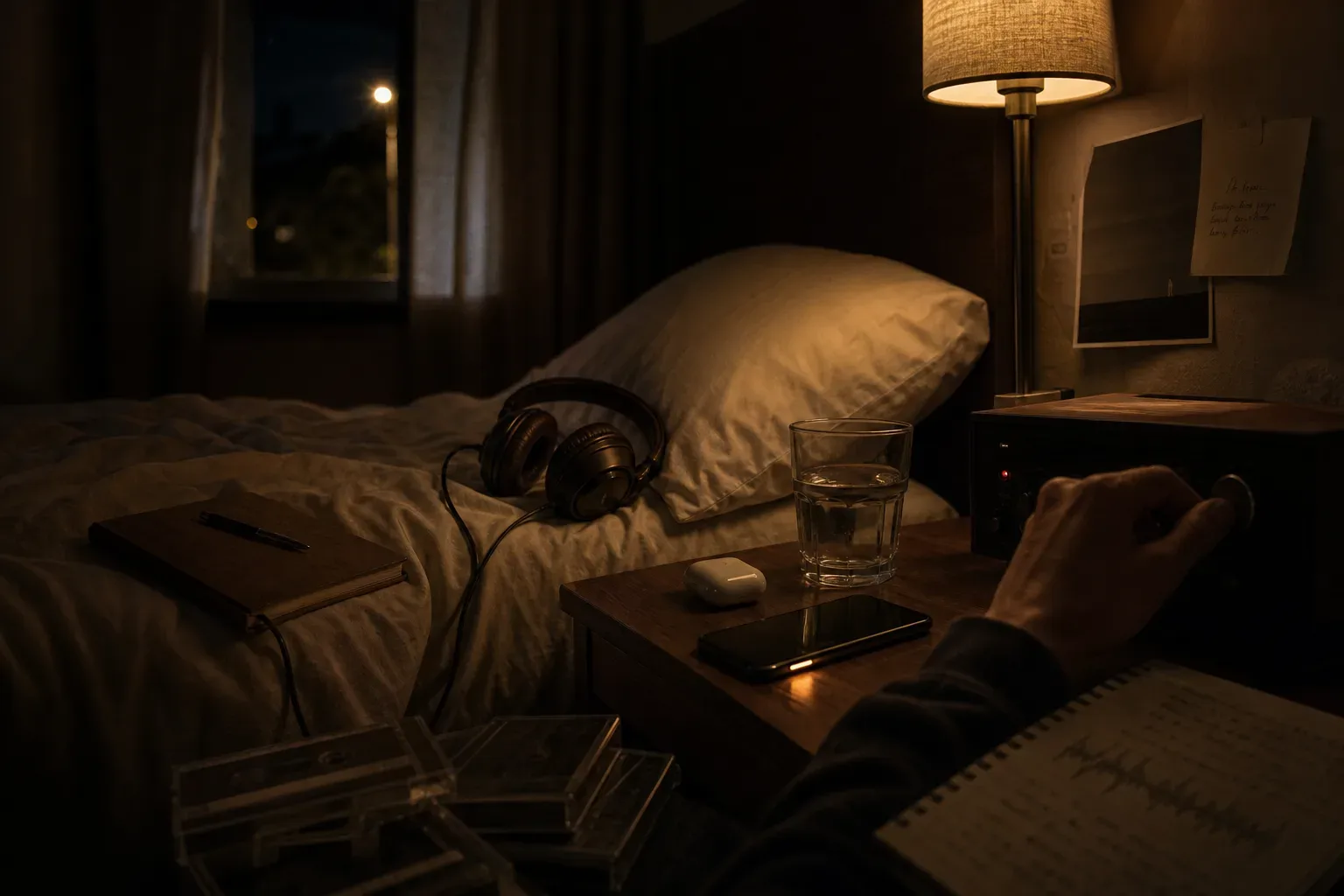
Shifting symptoms are body and mind sensations that often appear near sleep: tingling, floating, buzzing, flashes, heaviness, or dreamlike scenes. They can feel meaningful, but they are not proof that shifting is happening. Most overlap with ordinary sleep-onset states, attention, expectation, and anxiety. Treat them as cues, not commands.
What are shifting symptoms, exactly?
Shifting symptoms are the sensations people report while attempting reality shifting, especially during quiet methods done before sleep.
In shifting communities, the list is familiar: tingles in the arms, a spinning bed, pressure between the eyes, vibrations, muffled sound, numb legs, warmth, flashes of color, or the sudden sense that the room has changed. Some people also report hearing voices, smelling something connected to their desired reality, or seeing scenes as if a dream has started early. These reports are real as reports. The interpretation is where you need care.
Sleep science already has names for many of these states. Hypnagogia is the borderland between waking and sleep, and it can include visual images, sounds, bodily distortions, and brief dreamlike fragments. A 2016 review in Sleep Medicine Reviews describes sleep onset as a staged process, not a clean switch. That matters because many methods ask you to lie still, repeat phrases, count, and notice every small change. You are paying close attention to a body that is naturally turning the lights down.
A symptom can be sincere without being supernatural evidence. That sentence is worth keeping. Your body can tingle because you are still. Your mind can hear a phrase because auditory imagery is common near sleep. Your chest can feel heavy because your breathing has slowed and your attention has landed there. None of this means you failed. It also doesn’t mean you must keep pushing.
The safest definition is simple: shifting symptoms are signals that your arousal, attention, and sleep pressure are changing. For adults, the American Academy of Sleep Medicine recommends at least 7 hours of sleep per night. If symptom-chasing cuts into that, the method is taking more than it gives.
Which shifting symptoms are normal at sleep onset?
Many shifting symptoms are normal sleep-onset sensations, especially when they are brief, mild, and fade when you move or open your eyes.
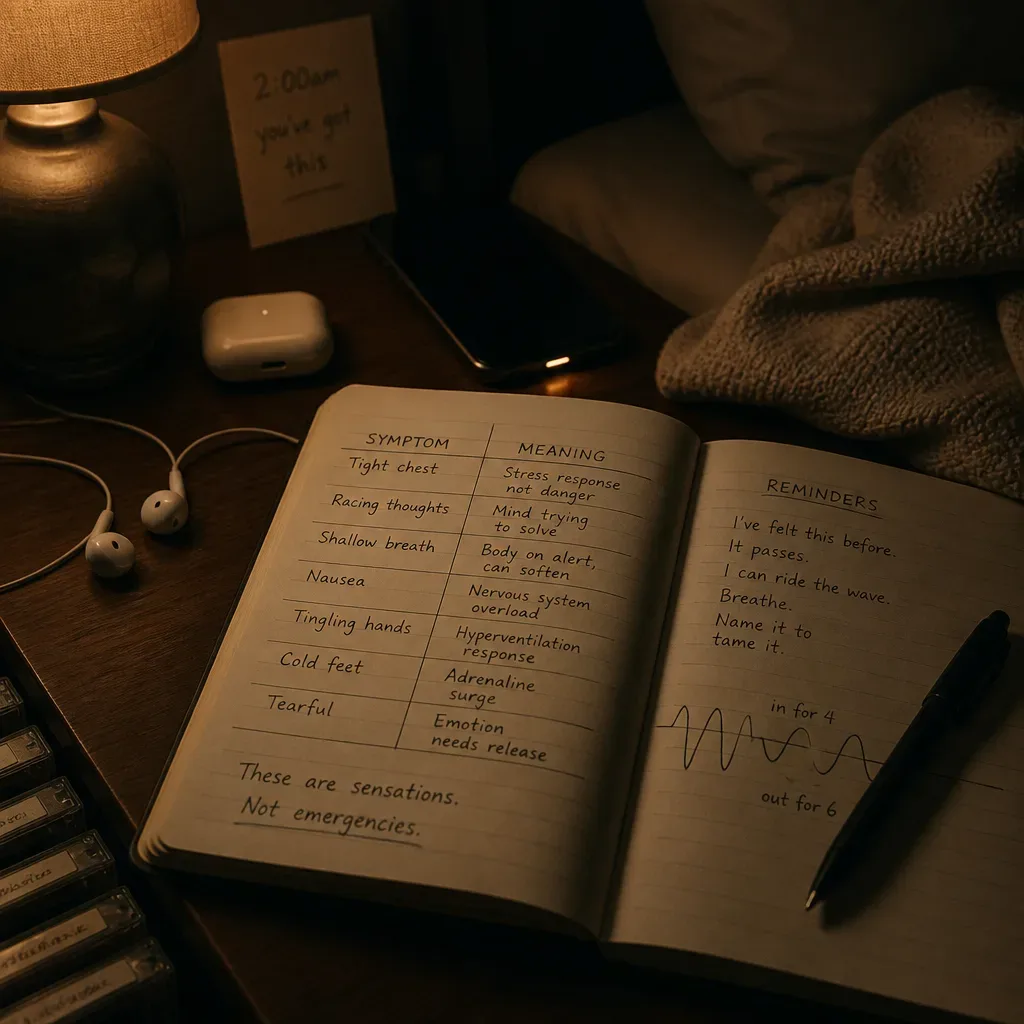
Here is the plain map I use when readers ask what a symptom means:
| Symptom | Common sleep-safe explanation | What to do |
|---|---|---|
| Tingling or numbness | Stillness, pressure, narrowed attention | Move gently if uncomfortable |
| Floating or spinning | Vestibular imagery during hypnagogia | Breathe slower, don’t chase it |
| Buzzing or vibrations | Muscle relaxation, auditory imagery, arousal | Lower effort, soften the method |
| Light flashes | Closed-eye visuals, hypnagogic imagery | Let them pass without testing them |
| Body jerk | Hypnic jerk | Restart calmly or sleep normally |
| Sensed presence | Fear plus sleep-onset imagery | Open eyes, orient to the room |
Hypnic jerks are especially common. Cleveland Clinic and Sleep Foundation summaries both note that many healthy people have them, often when tired, stressed, or using caffeine. Estimates vary, but public sleep medicine sources often put lifetime occurrence around 60 to 70 percent. That number should make the symptom less frightening, not less interesting.
The same is true for inner sound. If you use countdowns, subliminal tracks, or repeated affirmations, you are loading verbal material into short-term memory right before sleep. The Subliminals pillar explains the difference between hidden audio claims and modest priming effects. The useful point here is narrower: repeated words can echo. An echo is not a command from somewhere else.
Some symptoms need a softer response. If you feel fear, pressure in the chest, or an inability to move, you may be near sleep paralysis rather than a calm shifting attempt. Sleep paralysis is linked to REM features intruding into waking awareness. A 2011 review in Sleep Medicine Reviews estimated that roughly 7.6 percent of the general population reports at least one episode, with higher rates in students and some psychiatric groups. If it happens, you are not trapped. You are in a known sleep state, and it usually passes.
Are shifting symptoms proof, placebo, or something else?
Shifting symptoms are best understood as a mix of sleep physiology, focused attention, expectation, and personal meaning.
That answer may sound less dramatic than the videos. It is also more useful at 1:12 a.m. Expectation changes perception. In psychology, this is not an insult. Placebo analgesia studies show that belief and context can alter pain reports and measurable brain activity; a 2015 review in Annual Review of Psychology describes placebo effects as active learning and prediction processes. That doesn’t make a sensation fake. It means the brain is always participating in what you notice.
Subliminal and priming research is real, but modest. A classic 1957 claim that moviegoers bought more popcorn after hidden messages was later exposed as unreliable, yet the myth shaped public belief for decades. Modern priming studies find small, short-lived effects under controlled conditions, not the sweeping claims often attached to YouTube audio. Hidden words are not magic. Repeated words can still become part of your night.
This is where a fair comparison helps. Shifting methods often use scripts, affirmations, counting, and audio. Sleep affirmations are more direct because you can hear the sentence and decide whether it belongs in your mind. The AYA Method is a daily audio manifestation practice. Each day you listen to a short personalized recording - your Dream-Self Moment - narrated from the version of you who has already manifested the life you intend. Listening is the practice. Repetition is the work. The audio is the method.
That difference matters. With the AYA Method, the words are audible and personal; you are not hunting for secret signals under rain noise. A daily affirmation and Manifestation Board can support the practice, but they are complements. The audio is the method.
A symptom is information, not instruction. If tingles help you relax, fine. If they make you scan harder, you can let them go. The quieter test is not “Did I feel something?” It is “Did I sleep, and did I wake steadier?”
When should shifting symptoms worry you?
Shifting symptoms should worry you when they bring fear, loss of sleep, confusion, pain, or a feeling that you cannot stop.
Most tingles and floating sensations are harmless. The red flags are different. If a method makes you panic, avoid sleep, stay up for hours, or feel detached from ordinary life the next day, the practice needs to pause. The CDC has reported that about 1 in 3 U.S. adults do not get enough sleep. You don’t want a spiritual or imaginative practice joining the list of reasons your body is under-rested.
Use this quick filter before you try again:
- Green: mild tingles, warmth, brief visuals, calm floating, easy return to sleep.
- Yellow: frustration, repeated clock-checking, fear of “missing the shift,” trying longer than planned.
- Red: panic, chest pain, repeated sleep paralysis, derealization that lasts into the day, self-harm thoughts, or several nights of lost sleep.
For yellow symptoms, change the structure. For red symptoms, stop the method and get support. If insomnia, panic, trauma symptoms, or dissociation are part of this, it is worth talking with a qualified clinician. That is not a judgment on shifting. It is basic care for your sleep and nervous system.
There is also a community pressure problem. Some posts treat intense symptoms as proof you are close, so people learn to want more buzzing, more pressure, more fear. That is a bad bargain. If a method costs you sleep, it costs more than it gives. The body should not have to scare you to prove that your inner life is vivid.
One more line: pain is not a shifting symptom to romanticize. Numbness from lying still can happen, but sharp pain, breathing trouble, faintness, or neurological symptoms deserve ordinary medical attention. Keep the mystery where it belongs. Don’t use it to explain away the body asking for help.
How can you reset safely when symptoms get too intense?
A sleep-safe reset means you stop chasing symptoms, reorient to the room, and choose sleep before another attempt.
Use the reset before you are desperate. Twenty minutes is a good boundary because the American Academy of Sleep Medicine often uses a similar window in insomnia guidance: if you cannot sleep after about 20 minutes, get out of bed briefly and return when sleepy. You can adapt that without turning the night into a project.
Try this 5-step reset:
- Stop the method. Say, quietly, “Not tonight. Sleep comes first.”
- Move one part of the body. Wiggle toes, open your hands, or roll to your side.
- Name the room. Say five plain facts: “This is my pillow. The door is closed. It is Thursday.”
- Lower the stimulus. Turn off the track, reduce volume, or switch to neutral sound.
- Return to sleep, not shifting. Use breathing, a boring audiobook, or silence.
If audio helps you settle, keep it low. The World Health Organization’s night noise guidance uses 40 dB as a protective outdoor night-noise target; bedrooms and headphones are different, but the spirit is useful. Low means you could ignore it. If the track demands attention, it is too loud for recovery sleep.
You can also plan your wake time instead of gambling with it. The Sleep cycle calculator tool can help you choose a bedtime that allows full cycles, commonly estimated around 90 minutes each. The number is an approximation, not a law, but it stops the common mistake of starting a long method when you only have 5 hours left.
If you use affirmations, make them safety-first. Not “I must shift tonight.” Try: “I can rest and return.” Not “Symptoms mean I am close.” Try: “My body can relax without performing.” A good night practice leaves room for no result. That room is what lets sleep come back.
What should you do differently on your next shifting attempt?
Your next attempt should be shorter, quieter, and less dependent on symptoms as proof.
Set the container before you lie down. Choose one method, one track, one time limit. Ten to 20 minutes is enough for a bedtime attempt, especially if you have school, work, caregiving, or an early alarm. A 2023 Gallup poll found that many adults say they would feel better with more sleep, and sleep researchers keep repeating the same unglamorous point: consistency beats intensity.
Here is a simple next-night structure:
- Pick a method that does not require strain.
- Set the volume just above audibility, or use no audio.
- Decide the stop time before you start.
- Treat symptoms as background weather.
- If you feel fear, reset immediately.
- If nothing happens, sleep anyway.
You can borrow from audio practices without turning them into proof-hunts. A spoken script, a gentle countdown, or a short personal recording can cue attention toward the life you want to rehearse. The phrase “rehearse” matters. You are practicing a felt identity before sleep, not forcing the night to obey. The last ten minutes before sleep are suggestible. Choose what goes in.
If you like community methods, keep the parts that are kind to your body. If a Raven Method count makes you tense, shorten it. If a subliminal playlist makes you check for signs every 30 seconds, use audible words instead. If scripting wakes you up, write earlier in the evening. Your method should become easier by week two, not more elaborate.
For a broader base, read the reality shifting guide and keep the sleep line firm. Reality shifting practices live close to dreaming, role imagery, identity rehearsal, and bedtime attention. That closeness is why they can feel intimate. It is also why sleep hygiene is not optional.
How do you talk about shifting symptoms without scaring yourself?
Talk about shifting symptoms in ordinary language first, then add meaning only if it helps you stay calm and sleep well.
Words steer attention. If you call every tingle a “sign,” you may start scanning for tingles. If you call every buzz “vibrations,” you may wait for the buzz before allowing sleep. The nocebo effect, the negative cousin of placebo, shows that expectation can make symptoms feel worse. Medical studies on informed consent have found that warning people about side effects can increase reports of those side effects, even when the active cause is absent. The mind listens to labels.
Try a two-column note in the morning, not at 2 a.m.:
| What I felt | Sleep-safe wording |
|---|---|
| My body buzzed | My body was settling and alert at once |
| I saw flashes | Sleep images started early |
| I felt scared | I needed grounding, not more effort |
| I felt close | I felt absorbed and sleepy |
This does not take the wonder out of it. It gives the wonder somewhere safe to sit. You can still value the scene you saw, the sentence you heard, or the way your desired reality felt near. You just don’t have to build a rule that says the symptom must return tomorrow.
There is a quiet freedom in not needing proof from your nervous system. You can listen to your chosen words, repeat what steadies you, and let sleep do its old work. If you track anything, track sleep first: bedtime, wake time, night waking, mood. After 7 nights, patterns are easier to see than after one charged attempt.
Keep the room dark, and keep your sleep yours.