reality shifting
Train Method Shifting: A Sleep-Safe Audio Ride
Train method shifting can become a calmer bedtime practice when you use gentle audio, clear timing, and a dream-self script you can actually believe.
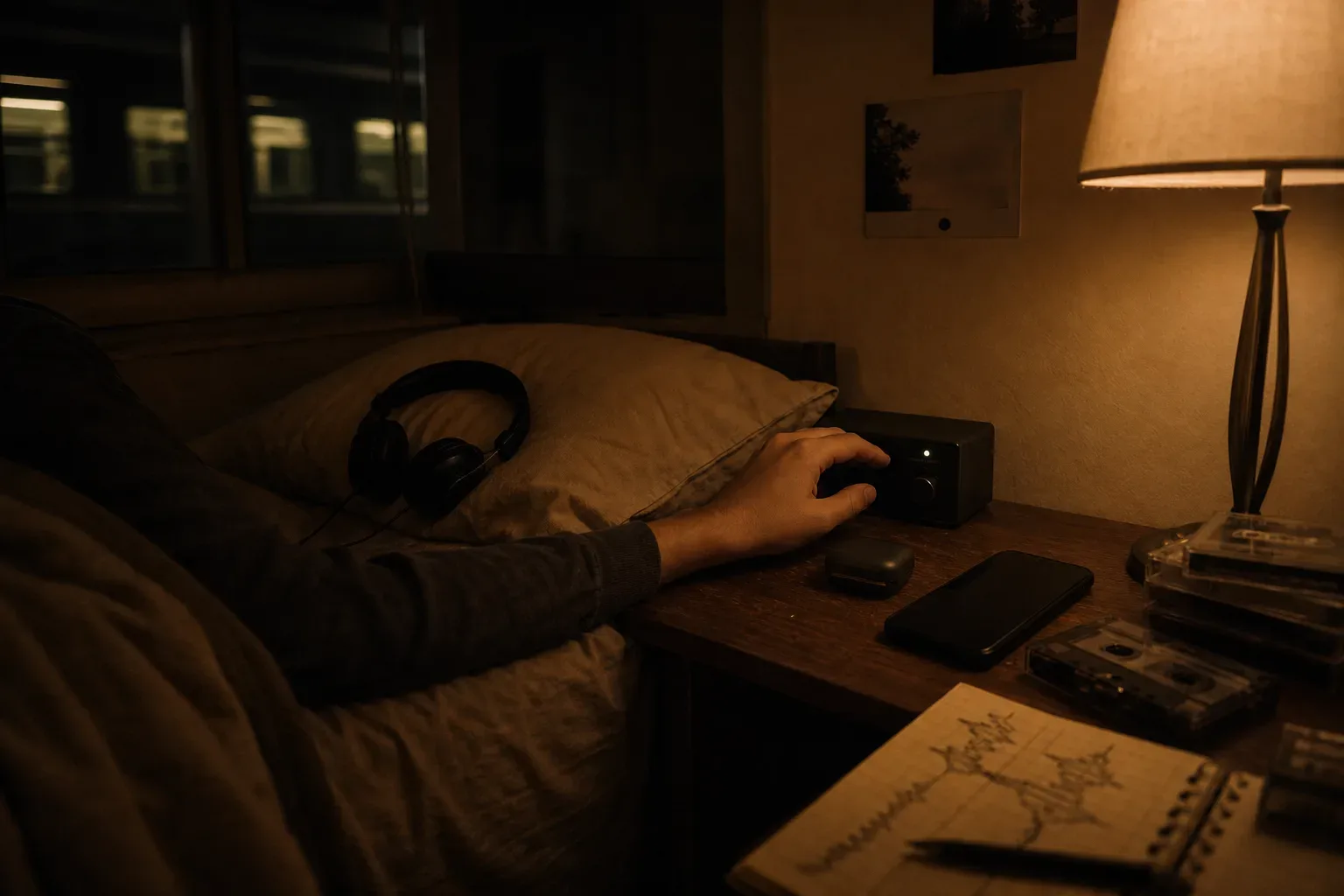
Train method shifting is a bedtime visualization where you picture a quiet train carrying you toward a desired reality or dream-self scene. To make it sleep-safe, keep it short, audible, low-volume, and optional. The goal isn’t to force a shift. It’s to rehearse a softer inner picture before sleep.
What is train method shifting, really?
Train method shifting is a structured visualization that uses the image of a train ride to move attention from your current room into a chosen inner scene.
In shifting communities, the train is a container. You don’t have to invent everything at once. You begin at a platform, step into a carriage, sit down, listen to the wheels, and let the view outside the window change. That sequence gives the mind something orderly to follow when it’s tired. A sleep practice needs that kind of order. The National Institute of Neurological Disorders and Stroke describes sleep as moving through repeating NREM and REM stages, often in cycles of about 90 minutes, though the timing varies from person to person.
The train method became popular because it gives transition a body. Counting methods can feel bare. Door methods can feel sudden. A train moves slowly enough that you can stay relaxed. You can hear the sound, feel the seat, notice the window, and let the destination appear by degrees. That matters because sensory detail is one of the most common features in guided imagery research. In small clinical studies, guided imagery has been used for stress and pain support, but those studies do not prove reality shifting claims.
A grounded version of train method shifting has three parts:
- A start point: your bed, your platform, your current breath.
- A vehicle: the train, carriage, seat, rhythm, and voice.
- An arrival: a dream-self scene that feels specific but not strained.
The practice is not better when it’s more dramatic. The practice is better when you can repeat it without fighting your own mind. A sentence you half-believe will travel farther at night than a speech you secretly reject.
How do you make the train method sleep-safe?
You make it sleep-safe by protecting sleep first and treating the method as a short pre-sleep rehearsal, not a test you have to pass.
The American Academy of Sleep Medicine recommends that adults get 7 or more hours of sleep per night on a regular basis. That number matters here. If a method delays bedtime by 45 minutes, raises your heart rate, or makes you check for signs every few minutes, it’s no longer serving the night. Shifting practices live near sleep, so they need sleep hygiene rules around them.
Use a simple timing frame. Start the audio when you’re already in bed, lights low, phone face down, and tomorrow’s alarm set. Keep the track between 8 and 18 minutes. If you want ambient train sound after the voice ends, use a sleep timer. Dr. Andrew Huberman often points to light, temperature, and regular timing as basic sleep levers; none of those need to be sacrificed for a visualization.
Here’s the quiet rule: if the method costs you sleep, it costs more than it gives.
A safe setup looks like this:
- Set the room first: cool, dark, and boring.
- Set the device second: airplane mode or do-not-disturb.
- Set the volume third: low enough that you could ignore it.
- Start the script only once.
- Let sleep win whenever it arrives.
If you deal with persistent insomnia, nightmares, panic, or sleep disruption that doesn’t respond to basic hygiene, speak with a qualified professional. A bedtime audio can support a routine, but it isn’t medical care. Sleep is not the obstacle to the practice. Sleep is the floor under it.
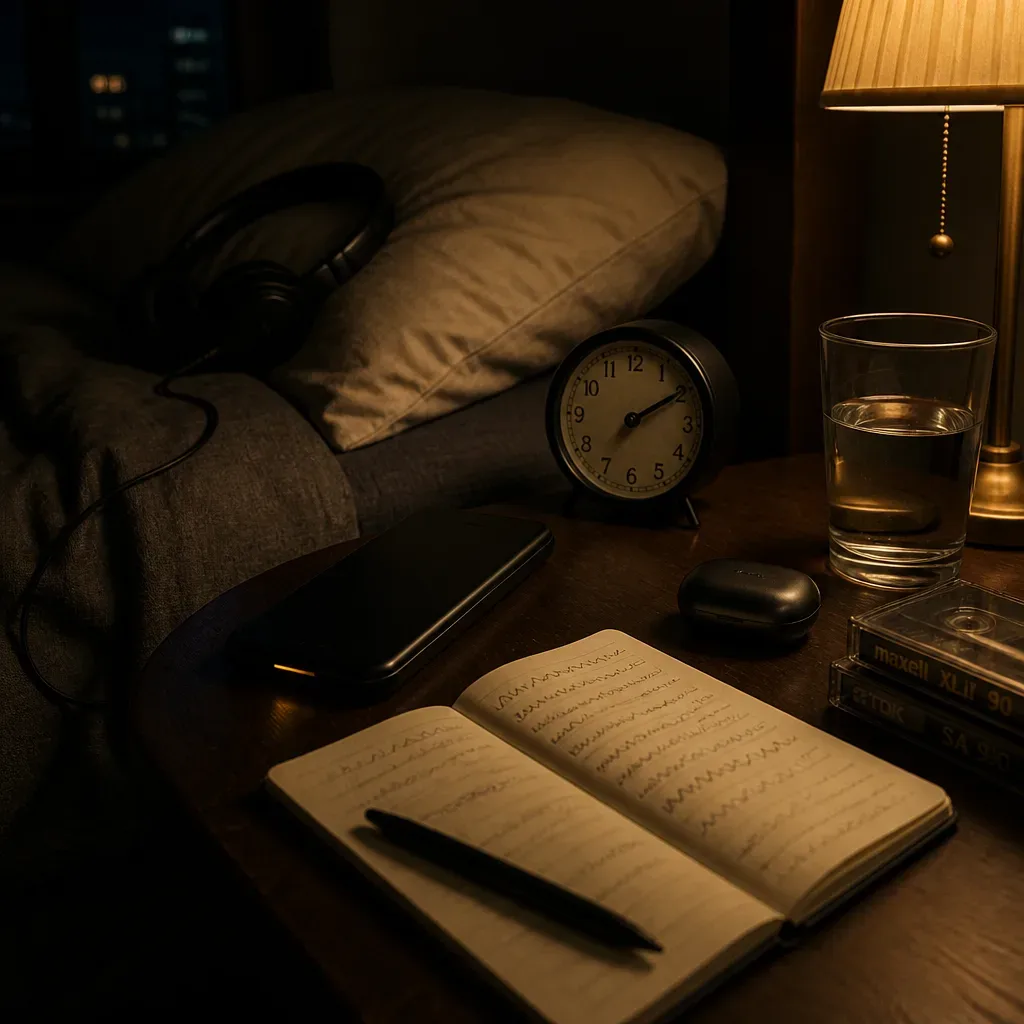
What should your train method audio actually say?
Your train method audio should say fewer things than you think, and each line should be concrete enough to believe while half-asleep.
Start with plain language. You’re not writing a fantasy trailer. You’re writing a soft track for a tired nervous system. In sleep affirmations, the strongest lines are usually short, first-person, present-tense, and modest: I am safe in this bed. I can rest now. I know where I’m going. The same craft applies to train method shifting.
A useful script can follow this 5-part shape:
| Part | What it does | Example line |
|---|---|---|
| Arrival at station | Names the start | I’m standing on a quiet platform. |
| Boarding | Gives the body a cue | I step into the carriage and sit down. |
| Movement | Adds rhythm | The train moves slowly, and I breathe with it. |
| Dream-self contact | Names the inner state | I recognize the version of me I’m becoming. |
| Sleep permission | Protects rest | If I fall asleep, the practice is complete. |
That last line matters. Many shifting scripts accidentally make sleep feel like failure. For a bedtime method, sleep has to count as success. A 2019 paper in Frontiers in Psychology noted that mental imagery can affect emotion, partly because imagined scenes can recruit similar systems to perception. That doesn’t prove shifting, but it does explain why a scene can change the feel of the night.
If you use music or train sounds, keep speech intelligible. The Subliminals pillar explains the main tradeoff: a subliminal is an affirmation you can’t consciously hear. That can feel gentle, but it also means you can’t easily review the words. For this method, I’d rather you hear the script clearly. What you hear while you sleep shapes you, so know what you’re hearing.
Where does the AYA Method fit with shifting audio?
The AYA Method fits as the audible, personal version of dream-self rehearsal, while train method shifting is the scene you can place around it.
The AYA Method is a daily audio manifestation practice. Each day you listen to a short personalized recording, your Dream-Self Moment, narrated from the version of you who has already manifested the life you intend. Listening is the practice. Repetition is the work. The audio is the method.
That difference matters because many shifting methods rely on visual effort. You have to picture the train, hold the destination, remember the script, and stay relaxed. Some nights that’s fine. Other nights, it’s too much. A personalized audio lowers the load because the voice carries the sequence for you. Cognitive load theory, first described by John Sweller in the late 1980s, is about how working memory has limits. Bedtime working memory is not generous.
You can combine them without making the practice heavy. Use the train as the opening image, then let the Dream-Self Moment speak in clear, audible language. Your daily affirmation or Manifestation Board can support the theme during the day, but they are not the core. The audio is the method. The listening is the repeatable act.
Here’s a simple pairing:
- Train platform: I’m ready to leave the noise of the day.
- Train movement: I don’t need to force the picture.
- Dream-Self Moment: the voice describes one lived detail from your intended life.
- Sleep permission: I can drift before the track ends.
Joe Dispenza often speaks about mentally rehearsing a future self; Neville Goddard wrote about entering the feeling of a wish fulfilled before sleep. Those are practitioner traditions, not sleep-lab proof. Still, the shared point is practical: rehearse the state gently and repeatedly. The cleanest rehearsal is the one you’ll return to tomorrow.
What should you expect after seven nights?
After seven nights, expect familiarity, softer recall, and a clearer sense of which words your mind accepts, not guaranteed shifting results.
A week is long enough to notice friction. Do you tense up at the arrival scene? Do you wait for signs instead of resting? Does the train sound soothe you or keep you alert? In behavioral practice, self-monitoring is often used because attention changes behavior; the Journal of Behavioral Medicine has published many studies using daily logs for health habits. You don’t need a complex tracker. Four short notes are enough.
Use this 7-night review:
- Sleep onset: did the track make it easier or harder to fall asleep?
- Body response: did your jaw, stomach, or chest stay soft?
- Dream recall: did any train, travel, or dream-self image appear?
- Believability: which line felt false, too grand, or too vague?
- Return rate: did you want to play it again the next night?
One specific number helps: change only 10 to 20 percent of the script at a time. If you rewrite everything after one restless night, you won’t know what helped. If the line I wake up in my desired reality makes you strain, soften it. Try I let my mind practice the feeling of being there. Modest words are not weaker words. They’re words that get past the guard at 2 a.m.
You can also compare your bedtime against a neutral tool like the sleep cycle calculator. It won’t make the method work, but it can remind you that timing matters. A visualization that starts 20 minutes before a sensible sleep window is kinder than one that begins after midnight because you kept searching for a better script.
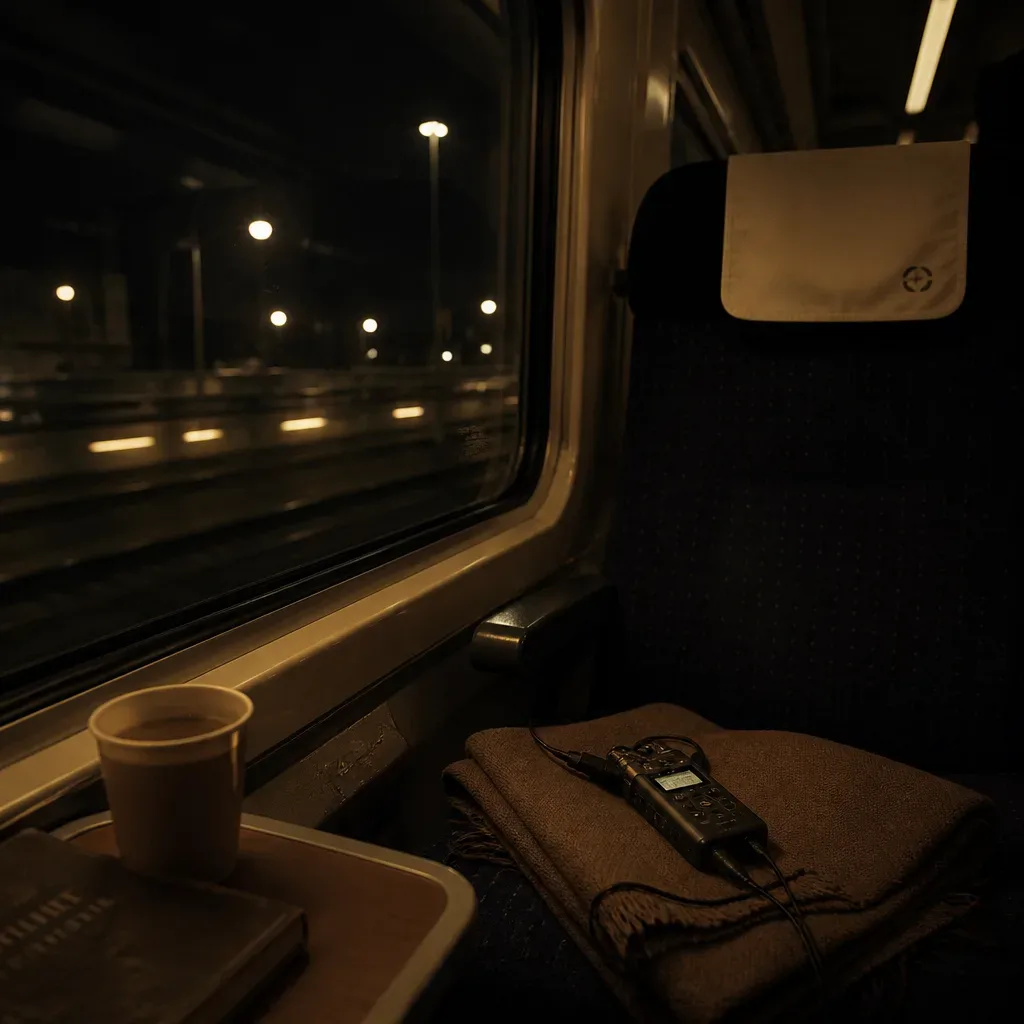
How do you write a train method script you’ll still trust at 2 a.m.?
You write it by choosing believable first-person lines, removing performance pressure, and letting the train do less than the sleep does.
Here’s a complete short script you can adapt. Read it in a whisper before you record it. If any line embarrasses you, delete it. That’s my rule for sleep affirmations, and it holds here too.
I’m lying down, and the day is finished. I see a quiet platform in front of me. The train is already here. I don’t have to hurry. I step inside and find my seat by the window. The carriage is warm and still. The train begins to move. I hear the steady rhythm under me. With every breath, the room gets farther away. I don’t force the picture. I let the scene come close in its own time. Outside the window, I notice small signs of the life I’m practicing. I recognize my own calm. I recognize my own voice. I am not chasing anything tonight. I am listening. If I fall asleep, the practice is complete.
That script is about 150 words, which is roughly one minute of spoken audio at a slow pace. Many audiobook narrators read around 150 to 160 words per minute, but bedtime audio often needs to be slower. If your final track is 10 minutes, most of it should be quiet pacing, breath, and simple sensory detail, not constant talking.
For a fuller version, add one Dream-Self detail only. Don’t list 12 outcomes. Don’t make the train stop at every wish you’ve ever had. Choose one scene: waking in a calmer body, walking into a room where you belong, opening your phone and seeing a message you wanted, hearing yourself speak with steadiness. The mind can hold one clean image at the edge of sleep. Give it one.
How loud, how often, and how long should you listen?
Listen nightly for one to two weeks at a low volume, then keep it only if sleep stays easy and the words still feel like yours.
Volume should be soft enough that you can understand the voice without leaning toward it. If you use earbuds, keep them comfortable and avoid pressure that wakes you later. The World Health Organization has warned about unsafe listening levels in recreational audio, especially with headphones; while bedtime tracks are usually low, the principle still applies. Quiet is part of the method.
A practical schedule looks like this:
| Night range | What to do | What to notice |
|---|---|---|
| Nights 1 to 3 | Play the same 8 to 12 minute track | Does your body settle? |
| Nights 4 to 7 | Keep the track, change nothing | Which line repeats in memory? |
| Nights 8 to 14 | Adjust one small section if needed | Does sleep stay protected? |
| After 14 | Continue, pause, or replace | Do you still trust the words? |
Repetition is not about forcing belief. It’s about giving the mind the same clean path often enough that it stops treating the path as work. Pew Research Center reported in 2024 that a large share of Americans regularly listen to podcasts, and Edison Research has tracked high weekly audio use for years. Audio fits into private routines because it asks less of the eyes. At night, that matters.
If you want to compare methods, keep the categories clear. Subliminals hide the words under sound. A guided train method lets you hear the words. The AYA Method makes the audio personal and daily, centered on a Dream-Self Moment in a voice built for you. None of these should bully sleep. The best night practice is the one you can stop doing because sleep has arrived.
Let the train slow down, and keep the words soft enough to believe.