subliminals
Subliminal Nightmares: Meaning and Audio Reset
Subliminal nightmares can happen when night audio feels unsafe, too loud, or emotionally loaded. Learn what they mean and how to reset your sleep listening.
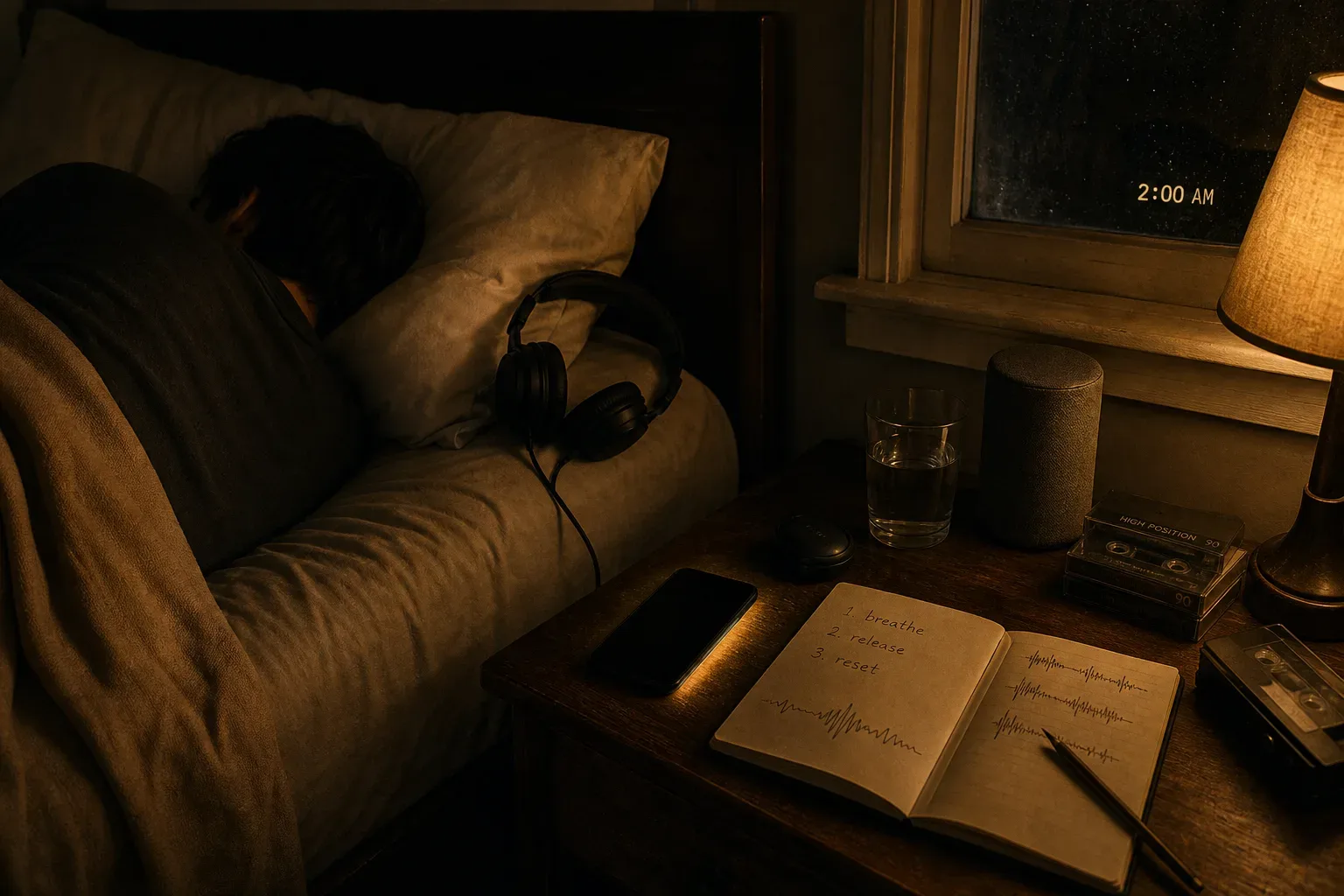
Subliminal nightmares usually mean your sleep audio is disturbing your nervous system, not that a hidden message has taken over. The cause may be volume, timing, fear of the content, stress, or ordinary dream activity. The reset is simple: stop the track, sleep plainly, then rebuild with safer audio.
Can subliminal nightmares really happen?
Yes, nightmares can happen after listening to subliminals, but the honest answer is that the link is personal and not always causal.
A subliminal is an affirmation you can’t consciously hear, usually placed under music, rain, brown noise, or layered voices. That hiddenness is the appeal, and it is also the problem. If you wake scared, you can’t easily check what sentence your mind was hearing at 2:00 a.m. The research on subliminal priming is real but modest; a 2006 meta-analysis by Charles et al. found that subliminal priming effects tend to be small and depend heavily on timing, context, and measurement.
Nightmares themselves are common. The American Academy of Sleep Medicine has reported that 50% to 85% of adults have occasional nightmares, while frequent nightmare disorder is much less common. So one bad dream after a new audio track doesn’t prove the track caused it. Three bad nights with the same track is better evidence that your body doesn’t like the setup.
A nightmare is a signal to lower the volume, not proof that a message got inside you.
The practical question is not whether subliminals can enter sleep like a secret command. It is whether the audio changed your arousal level. Sleep is not off. During the night, your brain cycles through lighter sleep, deeper sleep, and REM roughly every 90 minutes, and REM is where vivid dreaming often increases. A sudden swell in music, a sharp frequency, or a phrase you half-hear can become dream material.
If the content also touches fear, urgency, beauty, money, body image, a crush, shifting, revenge, or dramatic identity change, the dream has more emotional material to use. That doesn’t make you fragile. It means your sleeping mind is doing what minds do: stitching sound, memory, body sensation, and mood into a story.
What do subliminal nightmares mean?
They usually mean the combination of audio, expectation, and sleep state felt unsafe enough to show up as a bad dream.
There are at least 4 layers to check before you assign meaning to the nightmare. First, the physical layer: was the track too loud, too long, or played through uncomfortable earbuds? The World Health Organization’s 2018 environmental noise guidelines note that nighttime noise can fragment sleep even when people don’t fully wake. Second, the content layer: were the affirmations intense, rushed, or about something that already makes you tense?
Third, the expectation layer matters. If you went to bed wondering whether a hidden audio might change you while you were asleep, your brain had a threat cue before the track even began. Pew Research Center has found that large shares of adults use digital media close to bedtime; screen and audio habits often arrive with alertness attached, not rest. The body hears the habit as much as the voice.
Fourth, there is the ordinary dream layer. You may be under stress, sleeping at odd hours, using alcohol, recovering from illness, or taking medication that affects REM. None of that is moral. It is sleep biology. The National Sleep Foundation keeps the adult sleep recommendation at 7 to 9 hours, and short sleep alone can make dreams feel sharper and less regulated.
Use this quick meaning map:
| Pattern | More likely meaning | Safer response |
|---|---|---|
| One bad dream after one track | Coincidence or light-sleep disturbance | Pause for 1 to 3 nights |
| Same nightmare after same audio | Track is probably a trigger | Stop it for 7 nights |
| Fear starts before pressing play | Expectation is driving arousal | Use audible, known words |
| Nightmares continue without audio | Broader sleep or stress issue | Seek support if persistent |
What you hear before sleep should make your body feel safer, not more watched.
Why might hidden audio feel worse at night?
Hidden audio can feel worse at night because sleep reduces ordinary checking, and uncertainty can become part of the dream.
During the day, if a voice annoys you, you turn it off. At night, especially in the border between waking and sleep, you may not make that choice as clearly. Dr. Andrew Huberman often describes sleep as a set of states, not a single blank interval; your brain remains responsive to sound, temperature, light, and internal signals. That responsiveness is useful, but it also means a track can keep nudging you.
The last ten minutes before sleep are suggestible. Choose what goes in.
This is where subliminals ask for a lot of trust. The words are intentionally masked, so you rely on the creator’s title, comments, and reputation. YouTube views are not evidence. A track with 2 million plays may still be too sharp, too busy, or too emotionally loaded for your nervous system. The comments may say “worked in one night,” but sleep research doesn’t support treating distress as proof of progress.
The sound design matters as much as the script. A 20 Hz to 20 kHz hearing range is often quoted, but comfort is not the same as audibility. High, piercing textures can feel edgy even when speech is hidden. Binaural beats, layered whispers, and sudden ad-libs can also create a sense that something is happening just outside awareness. For some people, that is soothing. For others, it is the exact shape of unease.
If you want the broader background on masked affirmations, start with the Subliminals pillar. It gives you the clean definition first: what subliminals claim, what priming research can support, and where online claims step beyond the evidence.
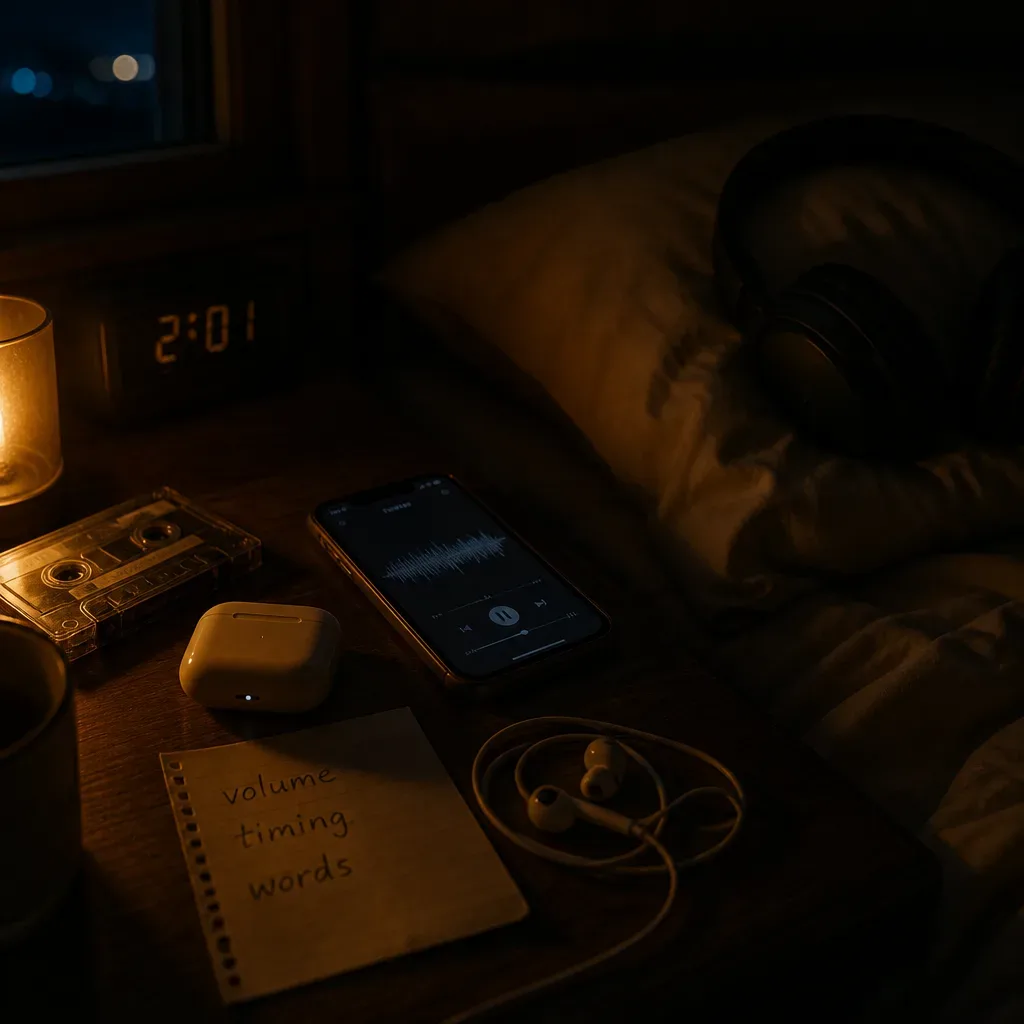
What should you do the morning after a subliminal nightmare?
You should treat the morning after as a reset, not an investigation scene.
Don’t replay the nightmare for an hour. Don’t search 40 comment threads looking for a hidden meaning. Write down 3 plain facts: the track name, the listening time, and what woke you. Then stop. A 2018 review in Sleep Medicine Reviews notes that nightmare frequency is linked with stress and sleep quality, so adding fear and analysis in the morning can feed the next night.
Here is a simple 7-night audio reset:
- Stop the triggering subliminal. Don’t test it again tonight. Give your sleep a clean break.
- Use silence or neutral sound for 3 nights. Rain, fan noise, or nothing at all is enough.
- Move bedtime audio earlier. If you miss listening, play it 30 to 60 minutes before bed while awake.
- Keep volume low. If the track pulls your attention, it is too loud for sleep.
- Choose audible words next. Use a short script you can understand and approve.
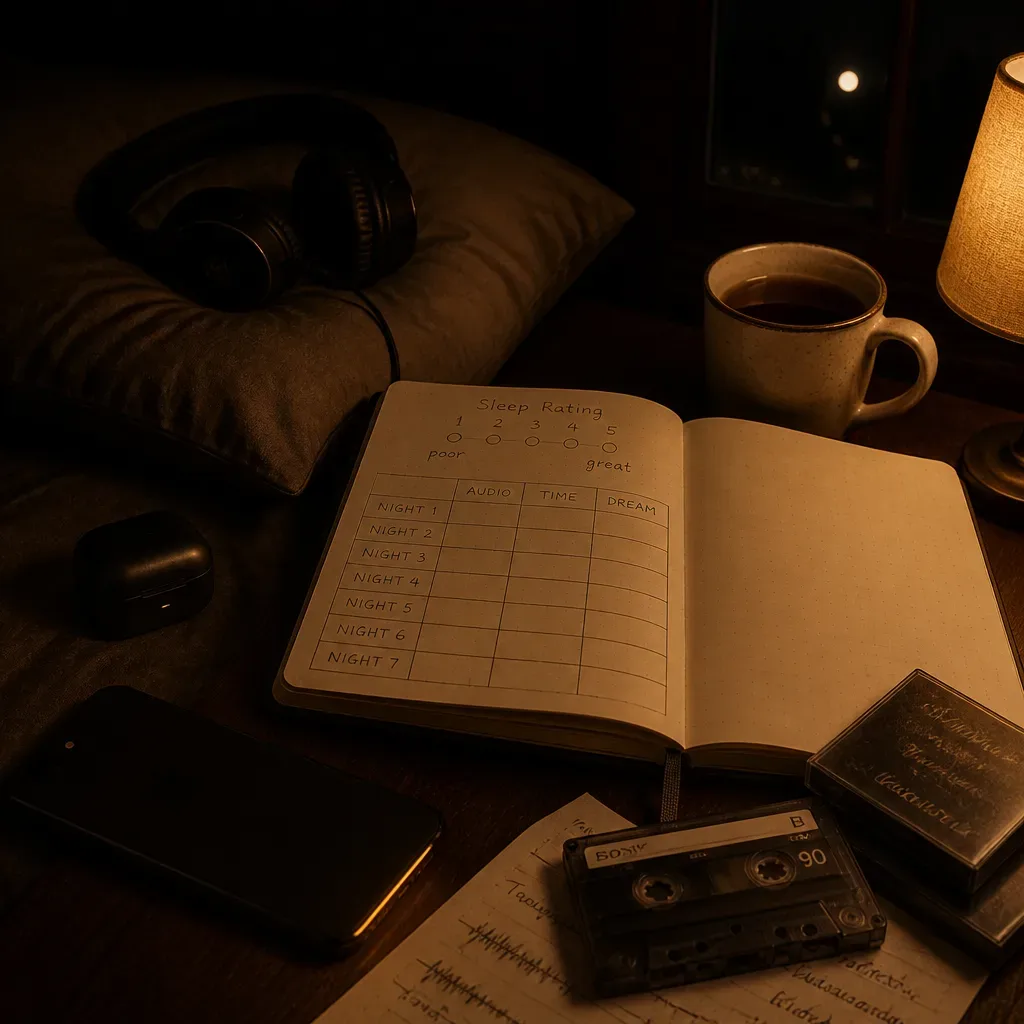
- Track only 2 things. Note sleep quality from 1 to 5 and whether nightmares occurred.
- Reintroduce slowly. One track, one intention, no overnight playlists for the first week.
This is not dramatic, and that is the point. The mind learns from repetition, but it also learns from relief.
If your sleep timing is already messy, use the Sleep cycle calculator tool to choose a wake time that respects roughly 90-minute cycles. It won’t fix nightmares by itself, but it can reduce waking from the middle of REM, which is when dreams are often most vivid.
If nightmares are frequent, trauma-linked, or paired with panic, don’t make audio your only answer. Sleep hygiene helps many people, but persistent insomnia or recurring distress deserves a qualified professional. That sentence is plain because it should be.
What audio is safer after subliminal nightmares?
Safer audio is audible, short, steady, and emotionally believable enough that your body doesn’t argue with it.
Start with speech you can hear. That might sound less mysterious than a masked track, but it gives you agency. You know the words. You can reject a sentence before it repeats for 8 hours. In cognitive and behavioral research, repetition works best when the message is consistent and not wildly outside a person’s belief system; a 2015 paper in Social Cognitive and Affective Neuroscience found that self-affirmation activates valuation and self-related processing regions, but the content still has to be received by a real person in a real state.
A good reset script is boring in the best way. Try 5 to 12 minutes, not an all-night loop. Keep the tempo slow, with pauses of 2 to 4 seconds between lines. Use present-tense statements that don’t demand a fantasy leap. The Sleep affirmations pillar is a better next stop than another hidden playlist if your sleep has started to feel tense.
Good reset lines sound like this:
- I am allowed to rest without solving everything tonight.
- My room is quiet enough for sleep.
- I can return to my breath when a thought passes.
- I don’t need to force a dream.
- I can hear what I’m choosing to repeat.
Avoid lines that raise stakes. “Everything changes tonight” is not a sleep sentence. “I wake rich, adored, and perfect” may sound tempting at noon, but at midnight it can make the body feel tested. Neville Goddard’s bedtime work was built around felt assumption and repetition, not panic. Joe Dispenza’s meditative practices also rely on repeated state training, not frightening yourself awake.
For a more personal audible practice, the AYA Method is a daily audio manifestation practice. Each day you listen to a short personalized recording, your Dream-Self Moment, narrated from the version of you who has already manifested the life you intend. Listening is the practice. Repetition is the work. The audio is the method.
How do you check whether the subliminal itself is the problem?
You check by changing one variable at a time for at least 7 nights.
Most people change too many things after a bad dream. They switch tracks, add crystals, change pillows, drink tea, read comments, and then have no idea what helped. A small self-test is quieter and more useful. Sleep studies often use repeated nights because one night is noisy data; even formal polysomnography can show a first-night effect, where people sleep differently just because conditions changed.
Use this simple comparison:
| Night group | Audio | Timing | What you’re testing |
|---|---|---|---|
| Nights 1 to 3 | No subliminal | Normal bedtime | Baseline sleep |
| Nights 4 to 6 | Neutral sound only | Same volume | Sound without words |
| Nights 7 to 9 | Audible affirmations | 10 minutes before sleep | Known words |
| Nights 10 to 12 | Original subliminal, if you insist | Earlier in evening | Track sensitivity |
If nightmares disappear when the subliminal stops, return when it starts, and fade again when it stops, listen to that pattern. You don’t need a lab to honor a repeated signal. If nothing changes, the cause may be stress, schedule, illness, medication, or another sleep issue.
Keep your notes small. A 1-to-5 sleep rating is enough. Add one word for mood: calm, tense, sad, wired. More detail can become rumination, and rumination is not a friend to sleep. In a 2011 study in Behavior Research and Therapy, repetitive negative thinking was strongly tied to anxiety and sleep disturbance. The notebook should lower noise, not become a second night shift.
If you still want night practice, consider audible sleep hypnosis with conservative pacing. The sleep hypnosis guide is useful because it treats the voice as something you can hear, not a hidden mechanism you have to trust blindly.
When should you stop subliminals completely?
You should stop subliminals completely when they repeatedly cost you sleep, increase fear, or make bedtime feel unsafe.
There is no badge for enduring bad audio. If a method costs you sleep, it costs more than it gives. This is especially true if you are using tracks tied to appearance, obsession, revenge, shifting, or urgent life changes. The stronger the emotional hook, the more careful the sleep boundary needs to be.
Stop for now if any of these are true:
- You dread pressing play but do it anyway.
- You wake from nightmares more than 2 nights in a week.
- You turn the volume up to “make it work.”
- You use 6-hour playlists that leave you tired.
- You feel watched, pressured, or less like yourself after listening.
- You avoid sleep because of the track.
The safer replacement is not always another method. Sometimes it is a week of silence, a regular wake time, morning light, and fewer claims in your ears. Dr. Matthew Walker and many sleep researchers point to consistency as one of the strongest behavioral supports for sleep; the same bedtime and wake time often do more than a clever track.
If you still love the ritual of words before sleep, keep the ritual and remove the hiddenness. Read 5 lines from a notebook. Record your own voice for 3 minutes. Use sleep affirmations that are plain enough to believe. Or return to the wider subliminals guide and choose with a calmer standard: not what promises the most, but what lets you sleep.
Night practice should leave the room quieter than it found it.