subliminals
Subliminal Purging: Meaning and Safer Reset
Subliminal purging explained quietly: what people mean, why nocebo effects matter, and how to reset your night audio without panic.

Subliminal purging is the name some listeners give to feeling worse after subliminal audio: anxiety, headaches, bad dreams, low mood, or doubt. It may feel meaningful, but it isn’t proven as “old beliefs leaving.” Treat it as a signal to pause, reduce intensity, and reset your night audio.
What does subliminal purging actually mean?
Subliminal purging means a listener feels temporary discomfort and interprets it as resistance leaving the mind.
The phrase comes from subliminal communities, not clinical research. You’ll see it used when someone listens to a track for beauty, confidence, shifting, money, or a new self-concept, then feels irritable, tired, emotional, or strangely doubtful. The explanation often offered is that the mind is clearing old material before accepting the new suggestion.
That story can feel comforting because it gives discomfort a purpose. Still, the careful answer is quieter: discomfort after audio can have several causes, and none of them require a hidden purge. A track may be too loud. The mix may include high frequencies that make your ears work. The title may raise expectations. Listening all night may fragment sleep. The words may conflict with what you currently believe about yourself.
Sleep itself is not passive. The National Sleep Foundation has long described sleep as cycling through stages roughly every 90 minutes, with different roles in memory, emotion, and restoration. If a track keeps nudging you awake, even lightly, you may wake with the feeling that something went wrong. That feeling is real data.
A bad reaction is data, not a test of faith.
If you’re new to the practice, read the Subliminals pillar first. A subliminal is an affirmation you can’t consciously hear. That’s the whole trick, and the whole problem: when the words are hidden, you can’t easily separate the message from the mood around it.
Is subliminal purging real, or is it a nocebo effect?
The distress can be real, but “purging” is not the only explanation, and nocebo effects are a serious candidate.
A nocebo effect happens when negative expectation contributes to negative symptoms. It’s the shadow side of placebo research. In clinical settings, people can report side effects after being told they might occur, even when the treatment is inactive. Reviews in journals such as Frontiers in Psychiatry and Pain have described nocebo responses as measurable, expectation-linked effects, not imaginary weakness.
Subliminal communities sometimes prime listeners to expect a purge. If you read 20 comments saying “headaches mean it’s working,” then a mild headache at 11:40 p.m. may become evidence. The symptom may have many causes: dehydration, screen time, jaw tension, a stressful day, or the audio itself. Expectation narrows the field of meaning.
Research on subliminal priming is real but modest. Classic work in psychology suggests that stimuli below awareness can influence attention or preference under narrow conditions, often briefly. That is not the same as a YouTube track changing your face, income, or personality overnight. The lab finding and the online claim are not the same object.
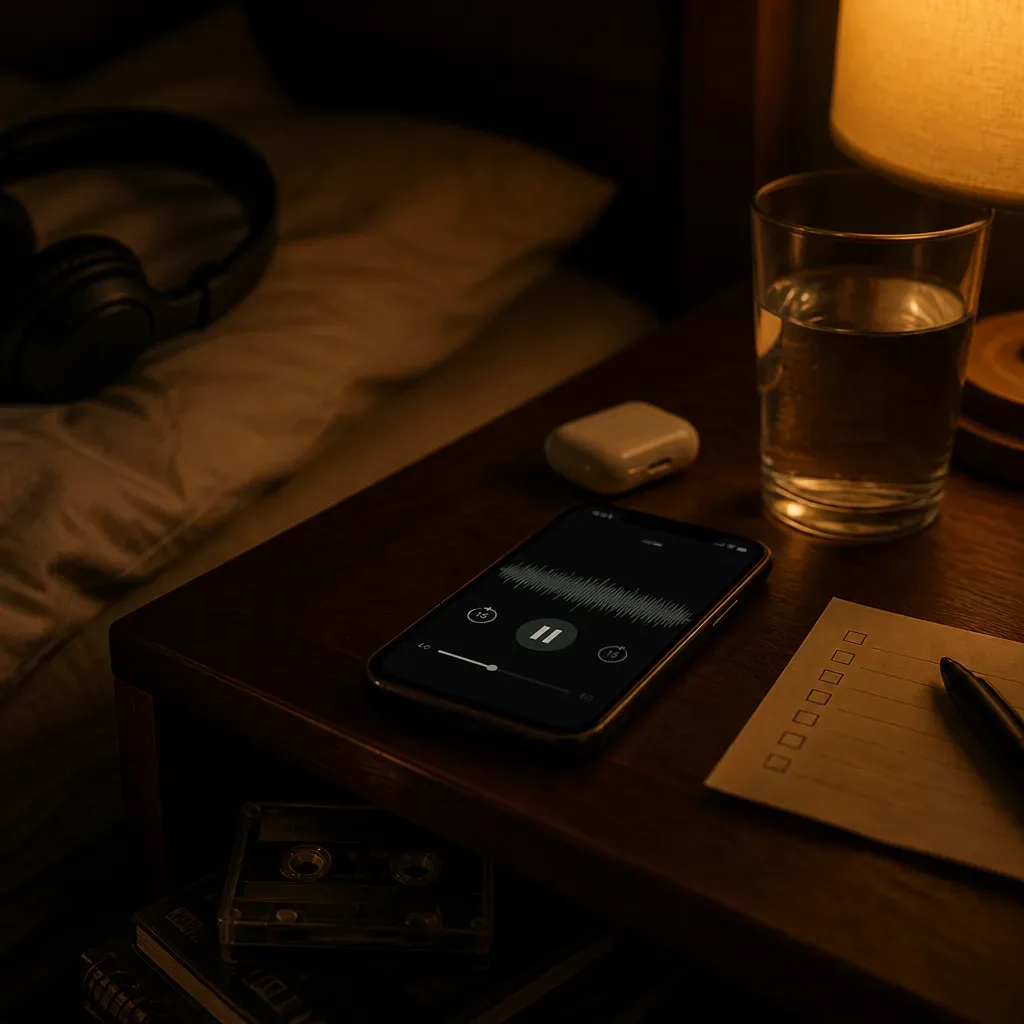
There’s also the plain fact of sleep timing. Dr. Andrew Huberman often points to the last part of the waking day as important for nervous system state, light exposure, and sleep readiness. You don’t need to treat that as a magic window to respect it. The last ten minutes before sleep are suggestible. Choose what goes in.
A subliminal can be meaningful to you and still be too much for your system tonight.
What symptoms mean you should stop the track?
You should stop the track if it reliably makes sleep worse, raises fear, or leaves you impaired the next day.
Mild strangeness can happen with any new bedtime habit. Your recorded voice sounds wrong at first. A new sound bed can feel too present. A sentence can land harder at night than it did at noon. But there’s a line between noticing discomfort and bargaining with distress.
Use a simple rule: if the practice costs you sleep, it costs more than it gives. Adults are commonly advised by the American Academy of Sleep Medicine to get at least 7 hours of sleep per night. If your subliminal habit cuts into that for several nights, the audio has stopped being supportive, whatever the comment section says.
Stop or pause if you notice:
- Panic, dread, or fear before pressing play
- Headaches that appear only with a certain track or volume
- Nightmares that repeat after the same audio
- Waking often because the sound feels intrusive
- Feeling compelled to listen longer to “finish the purge”
- Next-day fog that affects work, driving, study, or care for others
You don’t need to prove harm before you rest. Three quiet nights without the track can tell you a lot. If symptoms settle, the setup mattered. If they don’t, look wider: stress, caffeine after midday, alcohol, screens, illness, or a sleep disorder can all blur the picture.
If insomnia, panic, or distress persists beyond basic sleep hygiene, speak with a qualified professional. That sentence is not a dismissal of your practice. It’s a boundary around what an audio habit can safely carry.
How do you do a safer audio reset?
A safer audio reset means pausing subliminals, returning to stable sleep, then reintroducing only what you can tolerate and trust.
Think in days, not hours. If you’re anxious, don’t replace one intense track with another at midnight. The nervous system learns from repetition, but it also learns from relief. Give it a small pattern it can believe.
Try this 7-night reset:
- Nights 1–2: silence or neutral sound. Use no subliminals. If silence feels too sharp, play rain, brown noise, or a familiar instrumental track at low volume.
- Nights 3–4: restore timing. Go to bed at the same time, and use the sleep cycle calculator tool to choose a wake time that respects full cycles.
- Night 5: use audible words only. Choose a short spoken recording where every sentence is clear and calm.
- Night 6: shorten the session. Stop after 10 to 20 minutes instead of looping all night.
- Night 7: review the notes. Track sleep onset, awakenings, dreams, and morning mood before deciding what comes back.
| Reset choice | Why it helps | Watch for |
|---|---|---|
| Silence | Removes content and expectation | Restlessness from sudden change |
| Neutral sound | Gives the mind a soft anchor | Volume creeping upward |
| Audible affirmation | Lets you inspect every word | Sentences that feel false |
| Short session | Reduces sleep disruption | Urge to loop for proof |
The safer reset is not stronger audio. It’s cleaner feedback.
If you still want affirmation-style language, start with the sleep affirmations pillar. The difference matters: with audible affirmations, you can hear the sentence, reject it, edit it, or repeat it. Hidden audio asks for more trust than many anxious nights can give.
What should you listen to instead of a purging subliminal?
Listen to audio where the words are clear, the duration is short, and the voice feels safe enough to return to tomorrow.
For some people, that means no words at all for a week. For others, it means a softer script: “I can rest now,” rather than “Everything changes tonight.” The more absolute the claim, the more your mind may push back. Neville Goddard wrote often about assuming the feeling of the wish fulfilled, but his nightly practice was not about frightening yourself into belief. It was rehearsal, repeated in a drowsy state.
This is where the AYA Method is a cleaner alternative for some listeners. The AYA Method is a daily audio manifestation practice. Each day you listen to a short personalized recording — your Dream-Self Moment — narrated from the version of you who has already manifested the life you intend. Listening is the practice. Repetition is the work. The audio is the method.
The important difference is audibility. A subliminal hides the words under sound and hopes your mind receives them. The AYA Method makes the words fully audible and personal. You can hear every word, and the voice is yours. That doesn’t make it a medical tool, and it doesn’t promise overnight change. It simply lowers the mystery load.
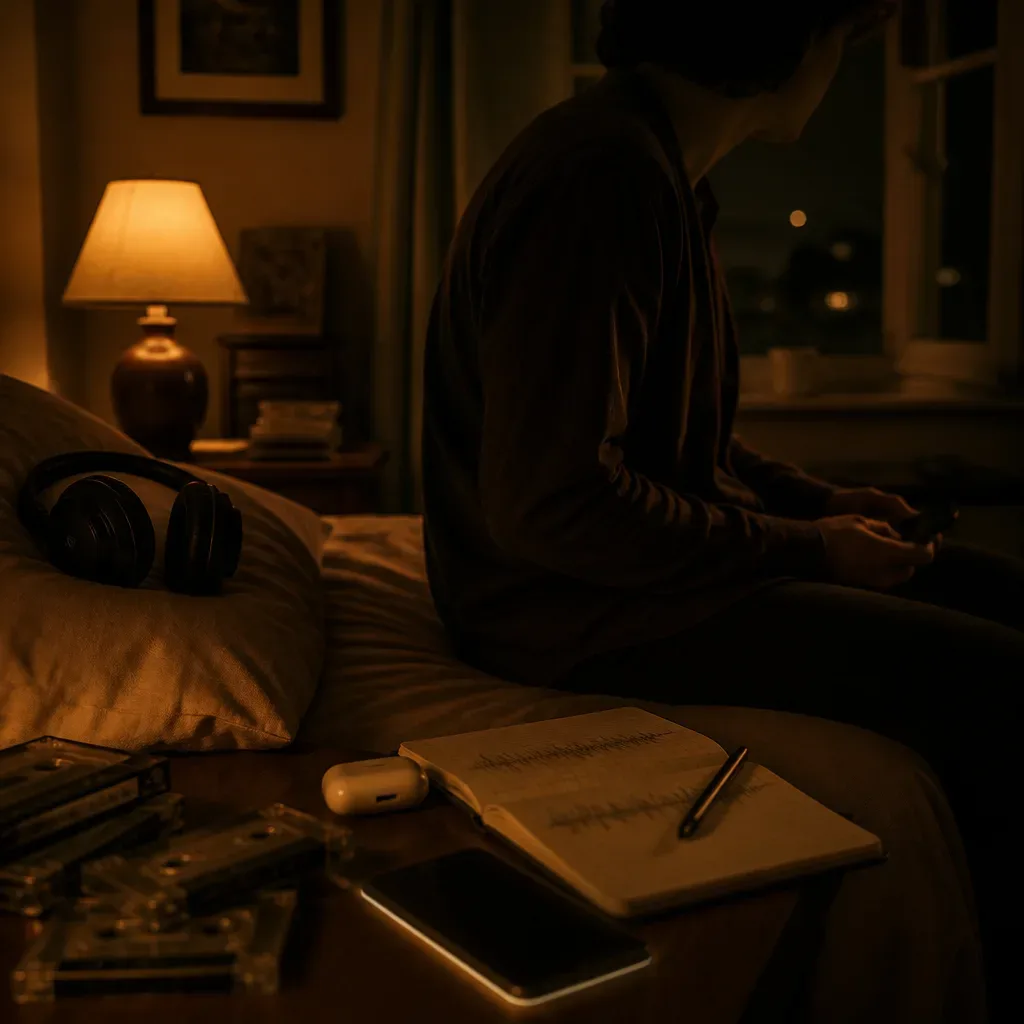
Your own voice can feel awkward for the first few days. Studies on recorded voice perception often point to bone conduction as one reason your voice sounds different when played back. That strangeness usually softens with repetition. The sentence lands differently when the speaker is you.
If you still prefer subliminals, choose tracks with published affirmations, modest claims, and no pressure to loop overnight. The Subliminals pillar is the better place to compare types before returning to hidden audio.
How long should you wait before trying subliminals again?
Wait until your sleep and mood are steady for several nights, then test one variable at a time.
A reasonable pause is 3 to 7 nights for mild discomfort. If the reaction was intense, wait longer. There is no prize for returning quickly. The point is to learn whether the track, the timing, the volume, or the expectation was the problem. Change only one thing when you restart.
Use a small test protocol. Pick one track. Play it at a clearly low volume. Set a timer for 10 minutes. Don’t loop it all night. Don’t stack five topics in one session. Write down the result the next morning in two lines: how you slept, and how you feel. After 4 nights, you’ll have more useful information than you get from 40 anxious rereads of the comment section.
A clean test might look like this:
- Duration: 10 to 20 minutes, not overnight
- Volume: low enough that it never startles you
- Topic: one theme only, such as calm self-talk
- Track notes: published affirmations preferred
- Morning check: sleep quality, dreams, mood, body tension
Joe Dispenza and other popular teachers often talk about repetition and state, but repetition without feedback becomes compulsion. A practice should make you more honest, not less. If you keep needing reassurance that distress means progress, the setup may be teaching fear.
The gentlest sign that a track is suitable is boring consistency: you fall asleep, wake okay, and don’t feel pulled into analysis.
When is subliminal purging a sign to get help?
It’s time to get help when the audio practice is no longer optional, sleep keeps worsening, or distress spreads into daily life.
Most people who worry about subliminal purging need a reset, not an alarm. Still, a night practice can become tangled with anxiety. If you feel unable to stop listening, if you fear harm from missing a night, or if you’re checking symptoms all day, the issue is no longer just audio choice. It’s the relationship with the practice.
Sleep loss can quickly affect mood and attention. The CDC has reported that about 1 in 3 U.S. adults does not get enough sleep on a regular basis. When you add fear, late-night research, and looping audio, you create conditions where almost any symptom can feel like proof. That’s not a good place to make decisions.
Talk to a licensed clinician if you have ongoing insomnia, panic attacks, thoughts of self-harm, or distress that feels unmanageable. If you’re a minor, involve a trusted adult. If you use psychiatric medication or have a diagnosed condition, don’t treat subliminals as a substitute for care.
For everyone else, the next right move is small: pause the hidden words, lower the sound, keep the night plain, and choose only audio you’d be willing to hear clearly.
Let the room get quiet before you ask it for another answer.