reality shifting
Sunni Method Shifting: Sleep-Safe Audio Routine
A sleep-safe sunni method shifting routine using quiet rehearsal, your own Dream-Self audio, and firm sleep boundaries so the practice doesn't cost rest.
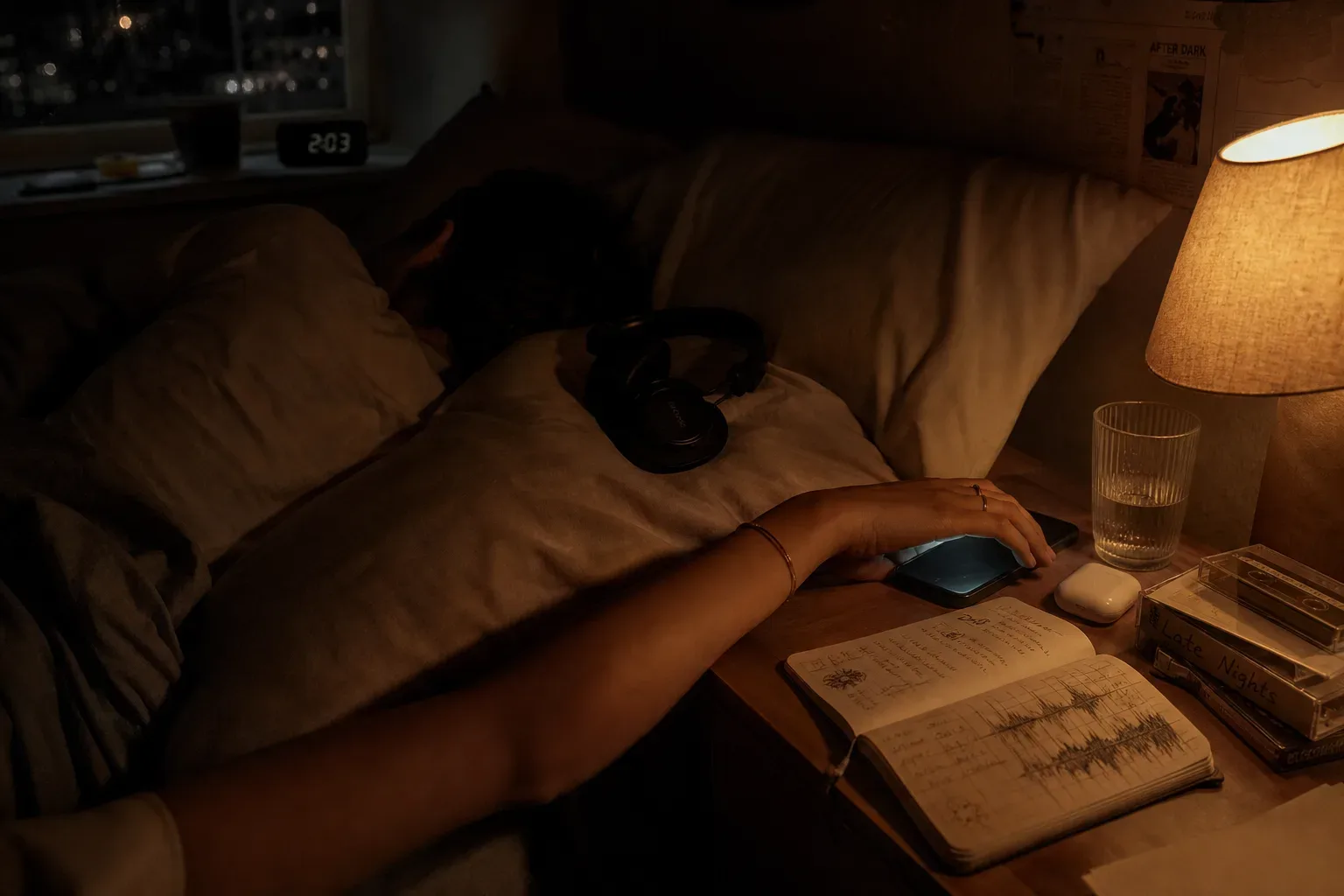
Sunni method shifting is a low-effort reality shifting practice done before sleep: you relax, assume you’re already in your desired life, and let that assumption carry you into rest. A sleep-safe version keeps the routine short, uses gentle Dream-Self audio, and never trades sleep for another hour of trying.
What is sunni method shifting, really?
Sunni method shifting is a bedtime assumption practice where you rest as if the desired self is already normal.
In most community descriptions, the Sunni Method is simpler than counting-heavy shifting methods. You don’t need 100 affirmations, a strict body position, or a full scripted world. You lie down, get calm, and feel the truth of the scene lightly enough that sleep can arrive. That looseness is why people like it, and also why it can become vague.
The honest version is this: no controlled clinical trial proves that the Sunni Method moves a person into another reality. The research you can lean on is smaller and nearer to ordinary psychology. Mental rehearsal is used in sport psychology, intention setting is studied in behavior change, and bedtime suggestion can influence dream content in some lab work. That doesn’t prove shifting. It says the mind is suggestible near sleep.
Sleep itself is not optional background. The American Academy of Sleep Medicine and Sleep Research Society recommend at least 7 hours of sleep for most adults. The CDC has reported that about 1 in 3 U.S. adults don’t get enough sleep. Any shifting method that regularly cuts into rest is asking the nervous system to pay for the practice.
A good Sunni routine feels almost boring. You repeat one scene. You use a few plain sentences. You let the body get heavier. The practice is not to force belief; it’s to stop arguing with the scene for a few minutes before sleep.
The last ten minutes before sleep are suggestible. Choose what goes in.
How do you make the Sunni Method sleep-safe?
You make it sleep-safe by setting a hard time limit and letting sleep outrank the method every night.
Start with a 20-minute ceiling. If you’re still awake when the timer ends, you stop shifting practice and return to ordinary sleep: breathing, a body scan, or just lying still without trying to perform. Stimulus control guidance used in cognitive behavioral therapy for insomnia often advises leaving the bed after about 20 minutes of wakeful frustration, though you don’t need to watch the clock tightly. The principle matters: don’t train the bed to mean effort.
Use sound carefully. The World Health Organization’s night noise guidance treats lower nighttime noise as protective for sleep; many people keep personal audio below normal speaking volume. For a phone speaker, that usually means barely audible from the pillow. For earbuds, it means you can hear the words without feeling sealed off from the room. If you wake with sore ears or a tense jaw, the setup is too much.
Keep the content emotionally steady. Avoid scripts that demand a dramatic sign by morning. Avoid lines that make your current life feel like failure. A sleep-safe script says: I am here. This is familiar. I know how my room feels. I hear my own voice and rest. Those sentences don’t spike the body.
Use this quick boundary before bed:
- Set the sleep timer for 10 to 20 minutes.
- Decide on one scene, not five.
- Put the phone face down or across the room.
- Keep volume low enough that silence still feels present.
- Stop the method if you become alert, tense, or upset.
The rule is plain: if a method costs you sleep, it costs more than it gives.
What should you set up before you lie down?
Set up one scene, one short audio, and one sleep boundary before your head touches the pillow.
The scene should be ordinary. A kitchen counter. A desk. A morning walk. A message from someone you know. People often write shifting scripts with dozens of details, but the Sunni Method works better at night when the scene has 3 to 5 sensory anchors. You need enough to return to, not enough to keep you busy.
Use present tense and first person. Not I will be calm, but I am calm here. Not I want this room, but this room is mine. Neville Goddard’s assumption language sits behind many shifting methods, especially the idea of falling asleep in the feeling of the wish fulfilled. You don’t need to accept every metaphysical claim to borrow the practical structure: rehearse the end state, not the wanting.
Here’s a simple setup table:
| Part | Keep it this small | Why it helps sleep |
|---|---|---|
| Scene | 1 ordinary moment | Less mental load |
| Script | 90 seconds | Easy to repeat |
| Volume | Low, audible | Words don’t startle |
| Timer | 10 to 20 minutes | Sleep stays first |
| Check-in | Morning note, 2 lines | No midnight analysis |
If you already use sleep affirmations, keep them separate from your Sunni scene at first. Affirmations can support the mood, but too many sentences make the mind scan for the right one. If you use subliminals, be honest about the difference: subliminals hide the words, while this routine asks you to hear the words clearly.
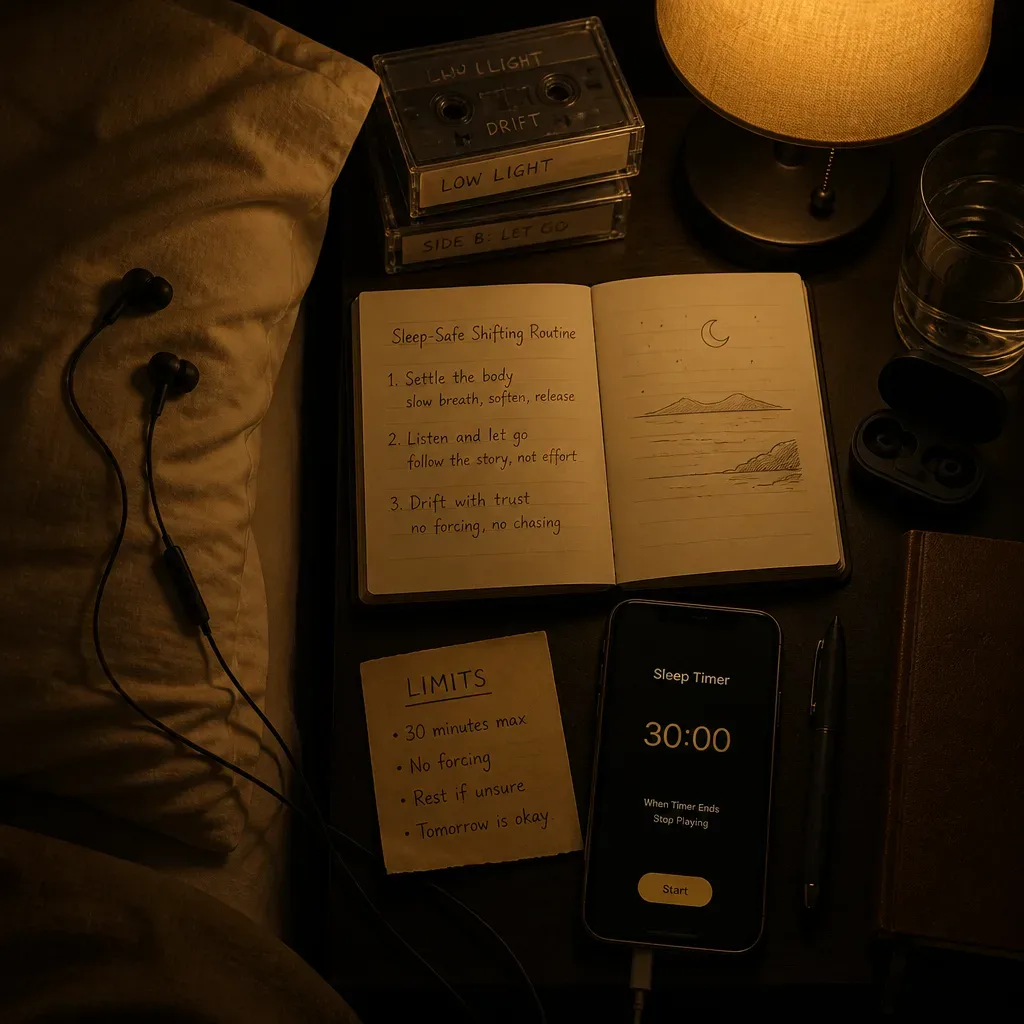
How can Dream-Self audio fit without making the method too intense?
Dream-Self audio fits best when it’s short, audible, personal, and familiar enough to become a cue for rest.
This is where the AYA Method gives the Sunni Method a cleaner audio spine. The AYA Method is a daily audio manifestation practice. Each day you listen to a short personalized recording — your Dream-Self Moment — narrated from the version of you who has already manifested the life you intend. Listening is the practice. Repetition is the work. The audio is the method.
For Sunni Method shifting, that matters because the voice doesn’t have to be hidden or generic. You hear the sentence. You know what it says. You can notice whether your body softens or resists. A subliminal is an affirmation you can’t consciously hear. That’s the whole trick, and the whole problem. With Dream-Self audio, the words stay accountable.
Keep the recording between 60 and 120 seconds. In my own notes, anything longer than 3 minutes became content instead of cue; I started editing it in my head. Dr. Andrew Huberman has often discussed non-sleep deep rest practices in the 10 to 30 minute range, but a shifting bedtime track should usually be shorter because the aim is not a full guided session. The aim is to let go.
Try this 90-second shape:
- 15 seconds: name the room and body softly.
- 30 seconds: describe the desired-self scene as ordinary.
- 30 seconds: speak from the self who already lives there.
- 15 seconds: give permission to sleep.
A recorded voice becomes intimate through repetition, not volume.
What are the exact steps for the sleep-safe routine?
The routine is a 20-minute sequence: settle the room, play the audio, assume the scene, then let the method dissolve into sleep.
First, use a sleep schedule that isn’t already broken. If you don’t know your best bedtime window, use the sleep cycle calculator to estimate a wake time that lands near a 90-minute cycle. Sleep cycles vary from person to person, but 90 minutes is a common planning estimate. The tool is not a medical device; it’s a way to stop guessing at 12:43 a.m.
Second, make the room uninteresting. Dim light 30 to 60 minutes before bed if you can. Bright light at night can delay melatonin timing, and Harvard Health has summarized research showing blue light exposure can shift circadian timing more than dimmer, warmer light. You don’t need a perfect cave. You need fewer signals that say stay up.
Third, press play once. If you loop, loop softly. Lie in a position you can actually sleep in. Some shifting methods tell you not to move; skip that if it makes you tense. A sleep-safe Sunni Method lets the body adjust. Stillness should be an invitation, not a rule.
Use this order:
- Minute 0 to 2: Get into bed and relax the jaw, shoulders, and hands.
- Minute 2 to 4: Play your Dream-Self audio and listen without testing belief.
- Minute 4 to 10: Return to one sensory anchor from the scene.
- Minute 10 to 15: Repeat one line only, such as this is familiar.
- Minute 15 to 20: Stop adding content. Let the scene blur.
- After 20: If awake, drop the method and choose plain rest.
The win condition is not a dramatic event. The win condition is that you protected sleep while rehearsing the self you intend to meet again tomorrow.
What should you expect by week two?
By week two, expect familiarity, less resistance to your own voice, and possibly richer dreams, but don’t expect guaranteed shifting.
The first few nights can feel awkward. Most people dislike hearing their recorded voice because bone conduction makes the live voice sound lower and fuller than playback. That isn’t spiritual resistance; it’s acoustics. After 7 to 14 nights, the strangeness usually fades because the recording becomes associated with bed, darkness, and repetition.
Track only 3 things in the morning: sleep quality, dream recall, and emotional residue. Keep it to 2 lines. The more you analyze at 3 a.m., the more awake you become. In dream research, recall varies widely; some people remember dreams several mornings a week, while others rarely do without journaling. A method can improve attention to dreams without proving that every dream is a shift.
Use a small check-in table:
| Morning note | Example | Keep or adjust? |
|---|---|---|
| Sleep | Fell asleep before timer | Keep |
| Dream | Remembered hallway scene | Keep, no chase |
| Body | Woke tense | Lower volume |
| Mood | Sad after script | Rewrite softer |
| Attention | Stayed awake trying | Shorten routine |
Small changes count. You may notice the desired self feels less like a costume. You may choose different actions during the day because the line you heard at night returns quietly. That is not proof of reality shifting. It is still worth noticing.
How is this different from subliminals or sleep affirmations?
This routine differs because the words are audible, personal, and used as a brief rehearsal rather than a hidden track or a long affirmation loop.
Subliminals can be calming, and many people like them because they reduce conscious argument. The evidence for unconscious priming is real but modest; it doesn’t support the grand claims sometimes made in video titles. If a subliminal helps you sleep and doesn’t make you dependent on all-night audio, fine. Just don’t confuse millions of plays with clinical proof.
Sleep affirmations are clearer because you can hear them. They work best when they’re simple and believable enough not to start a debate in your head. For Sunni Method shifting, though, a list of 50 affirmations can scatter attention. One scene usually lands better than many slogans.
Here’s the clean comparison:
| Practice | What you hear | Main risk | Best use |
|---|---|---|---|
| Sunni Method | Your assumed scene | Trying too hard | Falling asleep as the desired self |
| Subliminals | Usually not clear words | Unknown content, inflated claims | Background comfort |
| Sleep affirmations | Clear repeated lines | Too many lines | Mood and identity cues |
| Dream-Self audio | Personal future-self narration | Over-editing | Short nightly rehearsal |
The daily affirmation and Manifestation Board can complement the work, but the audio does the nightly job. When the room is dark, the method is what you can hear and return to without opening your eyes.
Words heard at night don’t replace action in daylight; they rehearse the person who takes it.
When should you stop, adjust, or get help?
Stop or adjust the Sunni Method whenever it makes sleep shorter, mood worse, or reality feel less stable.
There are clear signs the routine is no longer sleep-safe. You stay awake past the timer to get it right. You feel dread if you miss a night. You compare every dream to success or failure. You use shifting to avoid urgent problems in waking life. Those are not signs that you need a stronger method. They are signs that the method has become too expensive.
Adjust downward first. Cut the audio to 60 seconds. Use it every other night. Replace the desired scene with a simple body-based line: I am safe enough to sleep now. If you need timing support, return to the sleep cycle calculator and plan rest before practice. Sleep debt changes the mind’s weather fast; even one short night can make emotions sharper the next day.
If insomnia persists beyond basic sleep hygiene, or if shifting practice brings panic, dissociation, or urges to neglect daily responsibilities, talk with a qualified health professional. That sentence is not a dismissal of the practice. It’s a boundary. Good nocturnal practices make the next day more livable.
You can also take a week off. The scene will not punish you. Your desired self does not require you to strain in the dark. A quiet routine should be repeatable for months because it asks so little: lie down, hear the voice, return to the scene, sleep.
Keep the volume low enough that the night can keep you.