reality shifting
Void State Shifting: A Sleep-Safe Audio Routine
Void state shifting can stay gentle: use an audible Dream-Self audio routine that protects sleep, lowers effort, and keeps promises honest at night.
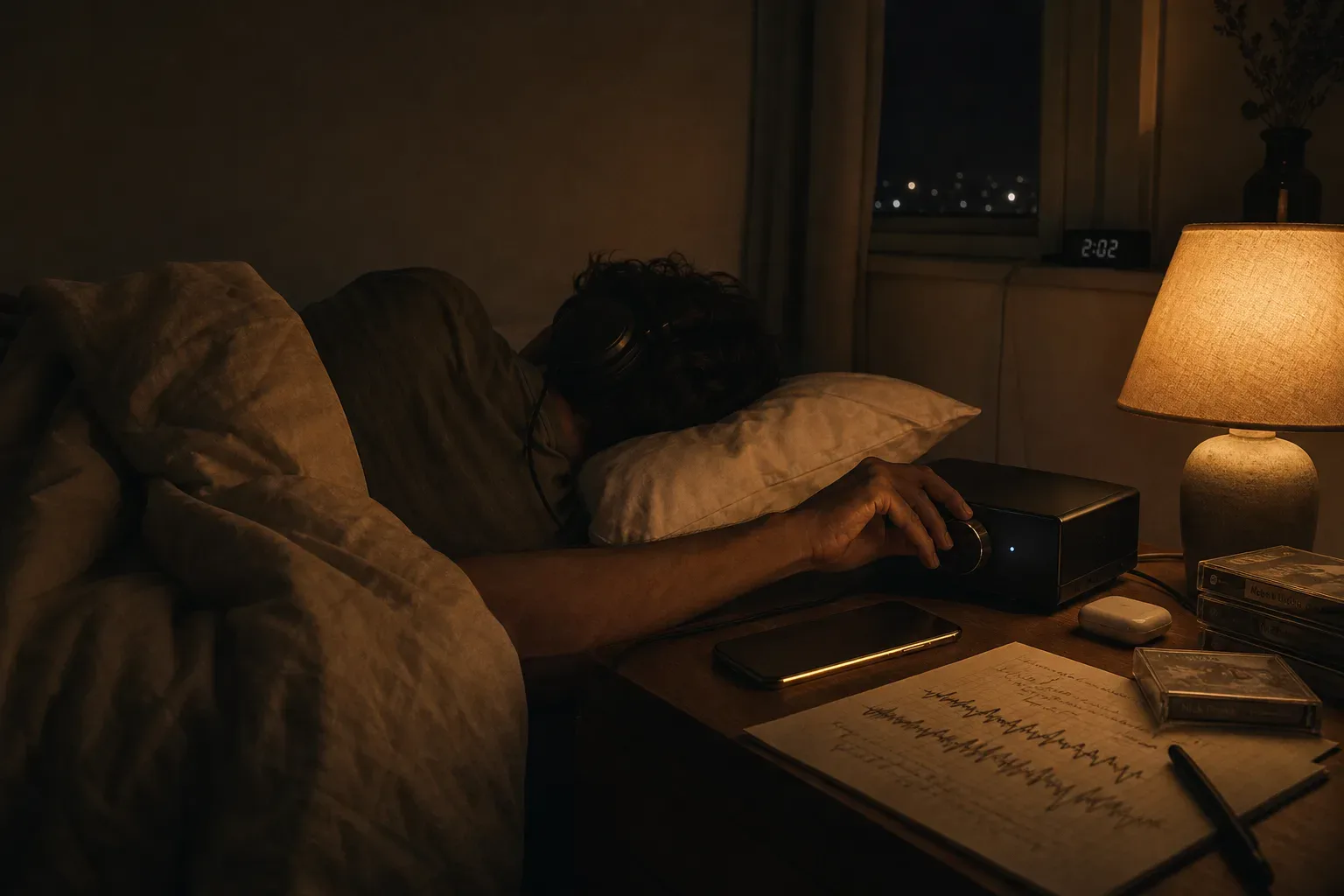
Void state shifting is safest when you treat it as a quiet pre-sleep attention practice, not a test you must pass. Use one short audible Dream-Self recording, listen once at low volume, and let sleep win. If the method costs you sleep, it costs more than it gives.
What is void state shifting, really?
Void state shifting is a community practice for reaching a blank, body-quiet state before directing attention toward a desired reality or Dream Self.
In shifting spaces, the void is often described as pure awareness: no body, no room, no time pressure, just the sense of being here. That description overlaps with older practices. Yoga nidra, self-hypnosis, and hypnagogic imagery all use the same borderland before sleep, when the body softens and ordinary thought becomes less rigid. The name is newer. The drowsy state is not.
The honest line is this: there is no lab test that confirms someone has entered the void as shifting communities describe it. Sleep science does recognize transitional states. The hypnagogic period, the passage from wakefulness into stage N1 sleep, can include drifting images, floating sensations, and altered body perception. The American Academy of Sleep Medicine scoring manual separates N1 from wake by EEG and eye-movement patterns, not by a feeling of success.
That matters because a lot of online advice turns the void into a performance. Stay still for 60 minutes. Ignore every itch. Repeat a phrase until something happens. For some people, that becomes a calm ritual. For others, it becomes sleep anxiety. The National Sleep Foundation and the American Academy of Sleep Medicine both place typical adult sleep need around 7 to 9 hours; any method that regularly cuts into that has crossed a line.
A better frame is modest and kinder. You are practicing attention at night. You are giving the mind a voice to follow when it is already lowering its guard. You may feel blank, floaty, or deeply still. You may simply fall asleep. Falling asleep is not failure inside a sleep practice.
The void is not a prize for staying awake; it is a name some people give to the quiet before sleep.
Why use Dream-Self audio instead of forcing the void?
Dream-Self audio gives your attention something soft to follow, so you don’t have to monitor whether the void has arrived.
Trying to force an inner state usually wakes the mind. You start measuring. Am I there yet? Is my body numb enough? Did that thought ruin it? That kind of checking is close to what sleep clinicians call conditioned arousal: the bed becomes a place of effort. Cognitive behavioral therapy for insomnia often works by reducing that bed-effort link, and clinical guidelines from the American College of Physicians have recommended CBT-I as first-line care for chronic insomnia since 2016.
Audio changes the task. Instead of chasing blankness, you listen. A slow recording gives the mind a track to return to when it wanders. In clinical hypnosis, this is ordinary: voice, pacing, repetition, and permissive language reduce strain. A 2018 review in the International Journal of Clinical and Experimental Hypnosis noted that hypnotic responsiveness varies, but relaxation and focused attention are common ingredients across protocols.
This is also where the AYA Method fits cleanly: The AYA Method is a daily audio manifestation practice. Each day you listen to a short personalized recording — your Dream-Self Moment — narrated from the version of you who has already manifested the life you intend. Listening is the practice. Repetition is the work. The audio is the method.
That last sentence is the hinge. The daily affirmation and Manifestation Board can support memory, but they are complements. The practice is the listening. Compared with many subliminals, the words are not hidden. You can hear what is being rehearsed, edit it, and remove anything that makes your body brace.
Use this comparison before you choose your night routine:
| Practice | What you hear | Best use before sleep | Main caution |
|---|---|---|---|
| Void-only method | Usually silence or repeated phrases | Deep relaxation if it stays easy | Can become effortful checking |
| Subliminal audio | Words under sound, often unclear | Low-effort background listening | You may not know every phrase |
| Dream-Self audio | Clear words in your own voice | Gentle identity rehearsal | Keep it short and sleep-safe |
| Sleep affirmations | Clear repeated statements | Simple self-talk before sleep | Avoid wording that feels false |
A voice you trust is quieter than a method you have to prove.
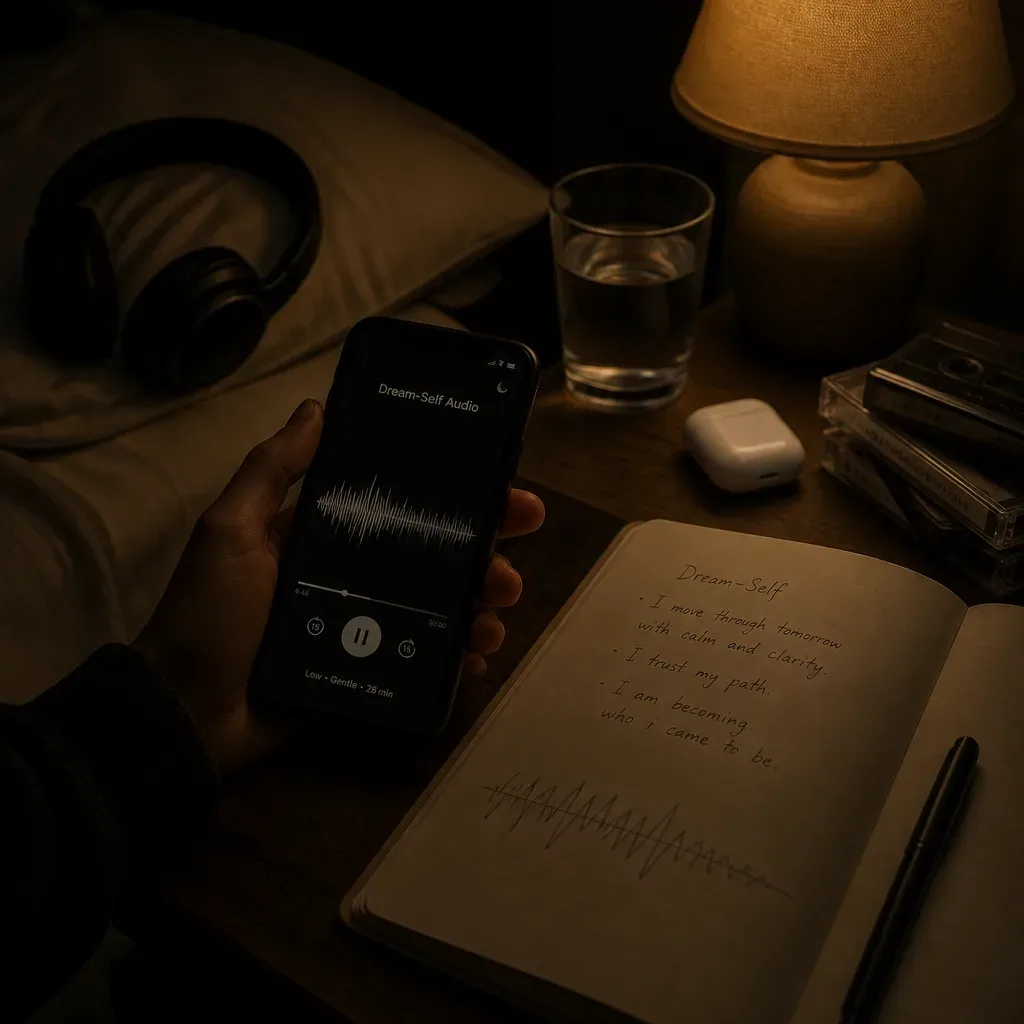
How do you prepare a sleep-safe void state shifting routine?
Prepare the routine by making one rule first: sleep is the outcome you protect, even when shifting is the intention.
Start with timing. Put the practice inside the last 10 to 20 minutes before sleep, not at 2:00 a.m. after a long scroll. Circadian research is plain on this: light, stimulation, and emotional content close to bedtime can delay sleep for some people. A 2014 study in Proceedings of the National Academy of Sciences found that evening light-emitting e-reader use delayed circadian timing and reduced next-morning alertness compared with print reading.
Then set the room. You don’t need perfect silence. You need fewer reasons to check. Dim the screen, place the phone face down, and decide the volume before lying down. If you use a sleep cycle calculator, choose a bedtime that allows full sleep rather than building the practice into a shortened night. A 90-minute cycle is only an average; the full night matters more than hitting a mystical minute.
Use this order:
- Choose one intention for the recording, not five.
- Write a 90 to 180 second script.
- Record it in your own voice at a slow pace.
- Put the file where you won’t keep browsing.
- Listen once, at low volume, after lights out.
- If you’re awake and tense after about 20 minutes, stop practicing and return to basic sleep care.
The 20-minute rule is not magic, but it is common in CBT-I guidance: don’t lie in bed for long periods feeling frustrated. You can sit quietly in low light, then return when sleepy. If insomnia is persistent, severe, or affecting your days, speak with a qualified professional.
Sleep-safe shifting has boundaries. Here are the ones I’d keep:
- No overnight loops if they fragment your sleep.
- No headphones that hurt or make you vigilant.
- No scripts that threaten consequences if you fail.
- No counting methods that make you competitive.
- No restarting the audio to get it right.
The gentlest routine is often the one you can repeat for 14 nights without resentment.
What should your Dream-Self audio say?
Your Dream-Self audio should use clear, present-tense language that feels specific, steady, and safe enough for the nervous system to hear at night.
At noon, dramatic language can feel motivating. Before sleep, it can feel like pressure. The hypnagogic mind takes tone seriously. In my own hypnotherapy practice, clients usually responded better to ordinary sentences than theatrical ones. Not because ordinary words are weak. Because the body doesn’t argue with them as much.
Self-affirmation research is useful here, but it should be kept modest. A 2015 meta-analysis in Social Cognitive and Affective Neuroscience described self-affirmation effects on brain systems linked with self-processing and valuation, especially when statements felt personally relevant. That does not mean a sentence can bend reality on command. It does suggest that repeated self-relevant language can change what the mind rehearses.
For void state shifting, write from the Dream Self without making the void a gatekeeper. You’re not saying, I must enter the void or nothing happens. You’re saying, I can rest, listen, and return to the self I’m practicing. If you already use sleep affirmations, keep the same standard: audible, believable enough, and kind.
Try a structure like this:
A 3-part script for night audio
- Settle the body. “My jaw can soften. My shoulders can drop. I don’t need to hold the day now.”
- Name the Dream Self. “I hear myself as the one who moves through tomorrow with steadiness and clean attention.”
- Release the outcome. “If the void comes, I notice it. If sleep comes first, I let sleep take me.”
Keep the wording sensory but low. Mention the room, the pillow, the breath, the next morning. Avoid commands like you will shift tonight or you cannot fail. Those phrases may sound confident, but at 11:40 p.m. they can make the mind watch for proof.
Here is a short sample you can adapt:
I’m lying here safely. The room can be quiet without needing to be perfect. My body knows how to lower itself into sleep. I hear the voice of the self I’m becoming: calm in the morning, clear in the small choices, steady when nothing needs to be forced. If there is a blank quiet, I rest there. If there is only sleep, sleep is enough for tonight.
The sentence that works is the sentence your body doesn’t have to defend against.
How exactly do you practice the routine tonight?
Practice tonight by lowering effort in a fixed sequence: prepare, lie down, breathe, listen once, then let the night continue without checking.
Here is the 18-minute version. It is long enough to settle the system and short enough to protect sleep. Dr. Andrew Huberman often points listeners toward physiological sighs and longer exhales as accessible downshifts; the broader respiratory literature also supports slow breathing for lowering arousal, with many protocols using about 5 to 6 breaths per minute.
Minute 0 to 2: remove decisions. Put the phone on Do Not Disturb. Start the audio from a playlist with one track only. Set volume low enough that you can hear the words without leaning toward them.
Minute 2 to 5: let the body start. Breathe in normally, then extend the exhale. Relax the tongue from the roof of the mouth. Let the eyes rest as if they’re looking into a dark room. You’re not trying to freeze the body. You’re allowing fewer messages to be sent.
Minute 5 to 8: use a simple anchor. Repeat silently: hear, soften, return. If thoughts come, the instruction is the same. Hear, soften, return. Meditation studies often show mind-wandering as normal rather than a mistake; in one well-known 2010 Science paper by Killingsworth and Gilbert, people reported mind-wandering in 46.9% of sampled moments.
Minute 8 to 11: press play. Let the Dream-Self recording speak. Don’t mouth the words. Don’t test the void. If the body feels heavy, fine. If the mind feels blank, fine. If nothing special happens, also fine.
Minute 11 to 18: let go of the method. When the audio ends, do not restart. Turn your attention to ordinary sleep cues: the weight of the blanket, the breath leaving, the darkness behind closed eyes. The practice has already happened.
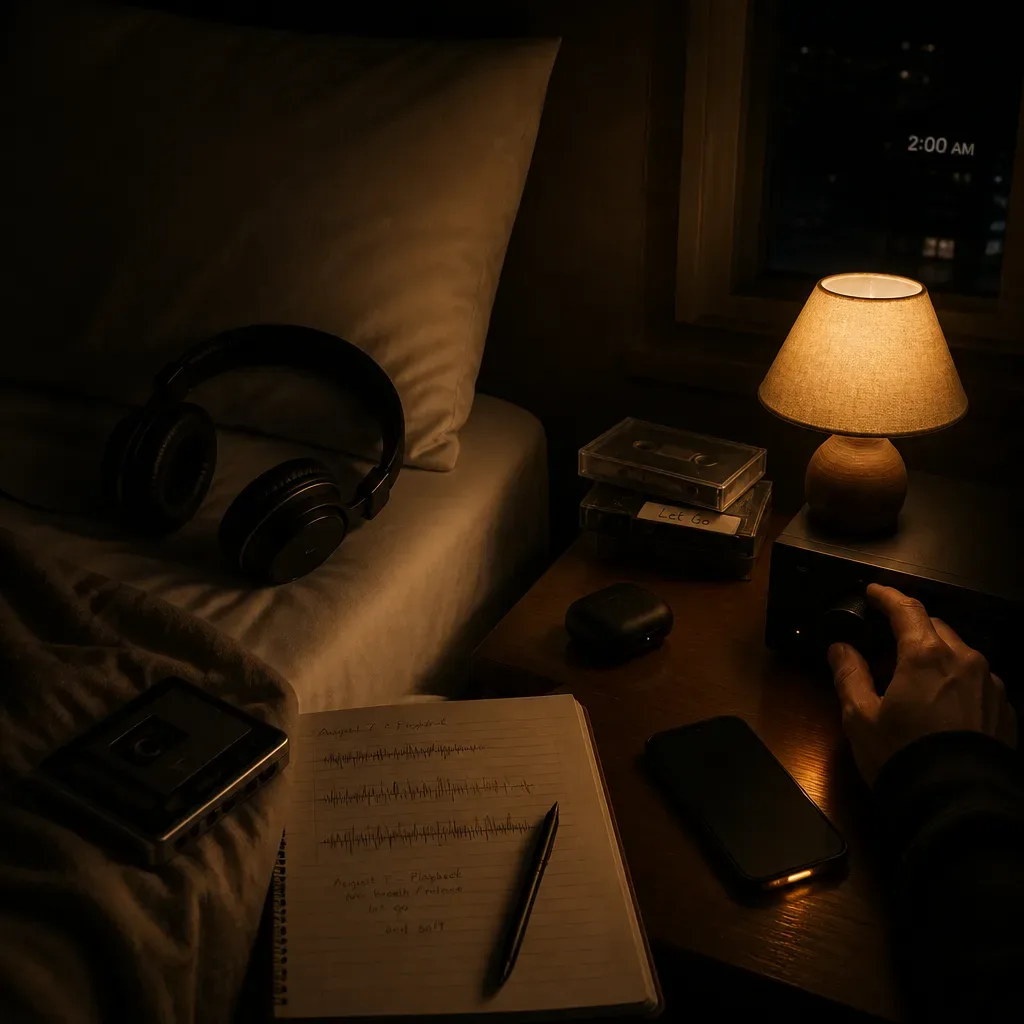
If you want a version with more background on hidden audio, read the Subliminals pillar. If you want a clearer pre-sleep wording practice, stay close to the Sleep affirmations pillar. The method you choose should leave you quieter than it found you.
What should you expect by week two?
By week two, expect changes in familiarity and self-talk before you expect dramatic void sensations.
Fourteen nights is a useful first test because it is long enough for repetition and short enough to stay honest. Habit research is often oversimplified online as 21 days, but a 2009 study by Lally and colleagues in the European Journal of Social Psychology found an average of 66 days for automaticity, with wide variation. Two weeks won’t prove everything. It can show whether the routine is helping or harming sleep.
Track three things in the morning, using numbers rather than moods alone:
| Morning note | Scale | What to watch |
|---|---|---|
| Sleep quality | 1 to 5 | Lower scores mean the routine needs softening |
| Time to sleep | Estimate in minutes | Longer times may mean too much effort |
| Self-talk on waking | 1 to 5 | Notice whether the Dream-Self wording returns naturally |
| Urge to force the void | 1 to 5 | High scores mean the goal has become too tight |
Some nights may include floating, tingling, lost body edges, or a sense of blank awareness. Those are common reports in hypnagogic states and relaxation practices. They are not proof that you did it right, and their absence is not proof that you did it wrong. The nervous system repeats what is safe to repeat.
If your sleep improves, keep the routine almost boring. Same time, same volume, same single play-through. If your sleep worsens, change the method before blaming yourself. Shorten the audio to 60 seconds. Move practice earlier by 30 minutes. Remove any line that creates urgency. A practice that demands strain at midnight is not a sleep practice anymore.
You can also rotate nights. Use Dream-Self audio 4 nights a week and plain sleep audio or silence on the others. Many clients do better with rhythm than with intensity. The body likes proof that it can stop.
By week two, the best sign may be small: you catch one gentler sentence in the morning before the old one arrives.
When is void state shifting not the right practice?
Void state shifting is not the right practice when it increases fear, sleep loss, dissociation, or the feeling that ordinary life is something to escape at any cost.
Community methods can be tender and creative. They can also become rigid. If you notice that you’re avoiding sleep to try one more technique, checking forums for hours, or feeling panicked because you didn’t shift, pause. Pew Research Center reported in 2022 that 95% of U.S. teens had access to a smartphone, and many shifting communities live on phone-first platforms. Night scrolling can quietly become part of the method, even when it is the thing disturbing sleep.
Be especially careful with content that makes medical or absolute claims. A recording should not tell you that you are unsafe unless you shift, that your current life is fake, or that you must ignore your body. In hypnosis, the safest suggestions preserve choice. You can listen. You can stop. You can sleep. You can return tomorrow.
Use these red flags as a firm boundary:
- You sleep less than 6 hours because of the practice.
- You feel dread when bedtime comes.
- You need longer and longer attempts to feel satisfied.
- You feel detached during the day in a frightening way.
- You hide the practice because you know it is harming rest.
- You use audio to override pain, panic, or urgent distress.
If any of these are present, take a week away from void techniques and keep only basic sleep care. If symptoms are intense, persistent, or hard to manage, speak with a mental health or sleep professional. That sentence is not meant to scare you. It is meant to keep the practice in its proper size.
Void state shifting works best as a soft ritual at the edge of sleep. It should not become a courtroom where you prosecute yourself for being awake.
Keep the voice low, and let sleep have the last word.