subliminals
Can Subliminals Change Your Body? Honest Limits
Can subliminals change your body? Here is what evidence says about physical claims, indirect habits, sleep audio, and a clearer audible swap.
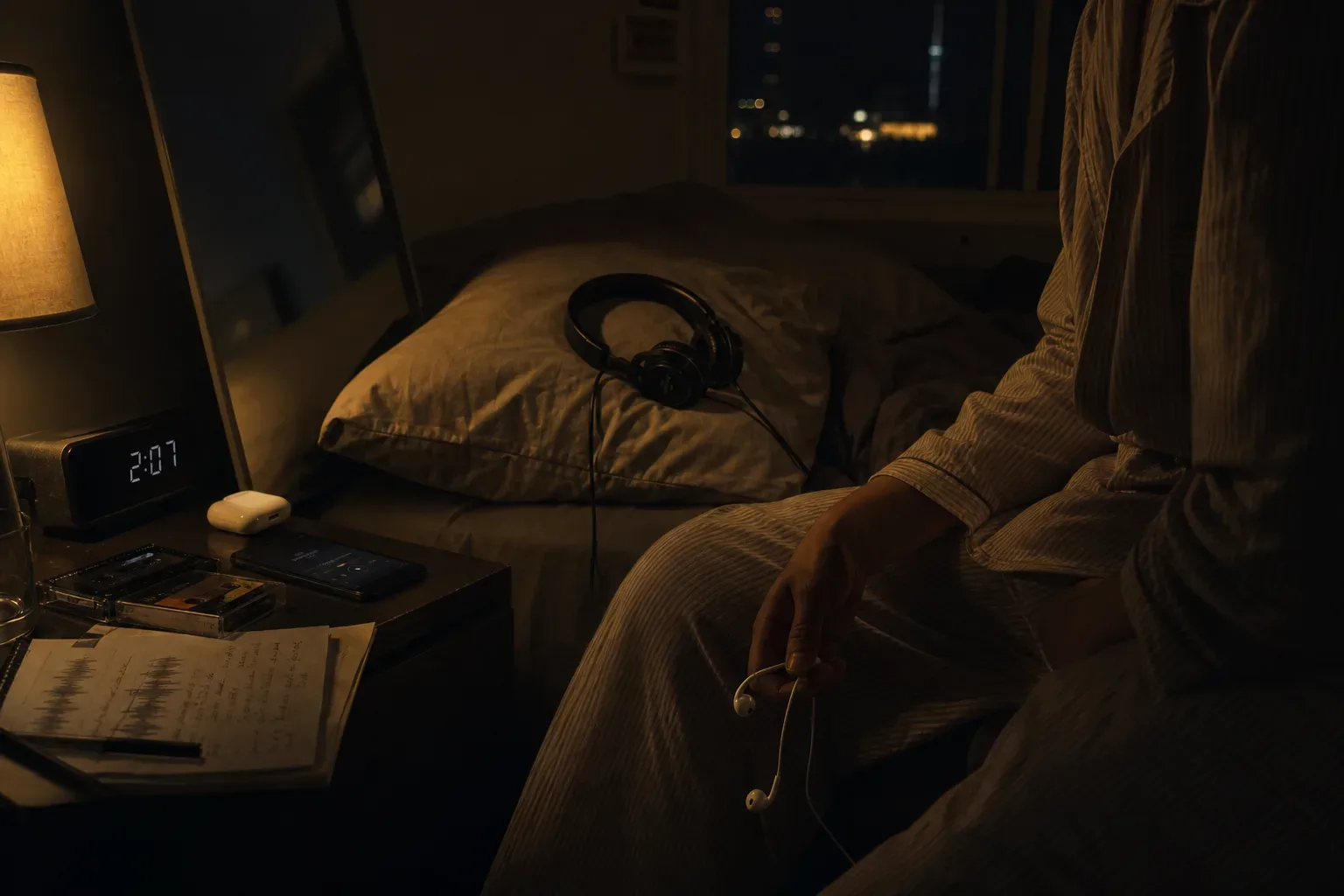
Can subliminals change your body? Not directly in the dramatic way body-change videos often claim. There is no solid evidence that hidden audio can alter height, eye color, bone structure, or facial features. Subliminals may still influence attention, mood, and habits, which can indirectly change how your body looks and feels.
Can subliminals change your body directly?
No, subliminals have not been shown to directly change body structures such as height, eye color, bone shape, or facial symmetry.
A subliminal is a message placed below ordinary conscious hearing or attention. That is the trick, and also the limit. Research on subliminal priming shows small, context-dependent effects on attention and choice, not large biological changes. In a well-known 2006 study by Karremans and colleagues, subliminal priming for Lipton Ice made thirsty participants slightly more likely to choose that drink. That is a long way from changing a jawline.
The body-change claims you see in audio titles usually outrun the evidence. A video may promise a smaller nose in 24 hours, green eyes by morning, or taller bones after one week. Human tissue does change, but through known routes: growth plates, hormones, nutrition, training, inflammation, aging, surgery, medication, illness, and time. Adults do not gain permanent height because a masked voice says so at 432 Hz. A subliminal can rehearse attention, but it cannot secretly rewrite biology on command.
There is one fair caveat. Some things people call body change are not structural. Posture can shift how tall you appear. Sleep can affect water retention and skin dullness. A calmer face can look different in photos. The American Academy of Sleep Medicine recommends at least 7 hours of sleep for adults; falling short can show up in mood, appetite, and recovery. Audio may help you settle, and that may affect how you carry yourself.
If you want the broader primer, read the Subliminals pillar. It separates the audio technique from the louder claims attached to it.
Why do body subliminals feel like they are working?
They can feel like they are working because attention, expectation, posture, sleep, and normal body fluctuation are all noticeable.
I do not dismiss people who say they see changes. I kept a spreadsheet for 11 years because memory is generous at night and unreliable by Friday. Weight can fluctuate 1 to 5 pounds across a few days from water, salt, glycogen, menstrual cycle timing, digestion, and bowel contents. Faces also change across a day because of sleep position, hydration, crying, alcohol, allergies, and light. If you start listening to a waist subliminal and also begin checking your waist three times a day, you will notice every half-centimeter shift.
Expectation matters too. In a classic 1991 study by Greenwald, Spangenberg, Pratkanis, and Eskenazi, people used self-help tapes labeled for memory or self-esteem. Reported improvement followed the label people believed they had, not the actual subliminal content. That is not a sneer. Placebo effects are part of human healing and perception. Sleep does not check receipts, but your body does keep records.
There is also the simple fact of repetition. If the title says clear skin, you may drink more water, touch your face less, change your pillowcase, or notice stress picking. If the title says slim waist, you may unconsciously stand taller, tighten your core in the mirror, or choose a walk after dinner. The audio may be acting as a cue. The cue can matter even when the hidden promise is too large.
Here is the honest split:
| Claim type | What is plausible | What is not established |
|---|---|---|
| Better posture | A nightly cue may remind you to practice | Spinal structure changing by hidden words |
| Weight-related goals | Audio may support eating, movement, sleep consistency | Fat loss without behavior or medical factors |
| Clearer skin | Stress and sleep routines may help some people | Acne cured by masked affirmations alone |
| Facial feature changes | Relaxed expression and angle may look different | Bone, cartilage, or eye color changing by audio |
| Confidence in photos | Rehearsed self-talk may reduce tension | Permanent symmetry edits from subliminals |
The claim gets larger when the audio gets less audible.
What does research on subliminals actually support?
Research supports modest priming effects under specific conditions, not large personal or physical changes from hidden sleep audio.
Subliminal perception is real in a narrow sense. People can respond to stimuli they do not consciously report seeing or hearing. But the effects tend to be brief, sensitive to context, and easier to measure in lab tasks than in ordinary bedrooms. A 2012 review by Kouider and Dehaene described unconscious processing as measurable but limited by attention, timing, and task demands. That is careful science. It is not the same as a three-hour YouTube track changing your nose.
Priming studies often use milliseconds, controlled screens, thirsty participants, or forced-choice tasks. Bedroom listening is messier. Phone speakers vary. Masking music varies. Your volume changes. You fall asleep at different points. You may never hear the embedded words at all. If a creator does not publish the script, volume balance, masking level, or production method, you are taking the claim on trust.
For sleep audio, the evidence is stronger around relaxation and routine than hidden instruction. The CDC has reported that about 1 in 3 U.S. adults do not get enough sleep, using the 7-hour benchmark. A predictable low-volume track can become a bedtime cue, especially if it replaces scrolling. But that benefit comes from routine, not secret anatomy editing. If a method costs you sleep, it costs more than it gives.
A useful way to judge a subliminal claim is to ask what pathway it would use. Does the audio make you more likely to stretch, sleep, eat regularly, practice skincare, reduce jaw clenching, or go outside? That is a pathway. Does it claim your iris pigment will change while you do nothing? That is a promise without a known route.
For a calmer, audible alternative, compare hidden messages with sleep affirmations. Hearing the words removes one layer of uncertainty.
Which body-related goals are reasonable to pair with night audio?
Night audio pairs best with behavior-based goals you can observe, repeat, and support in daylight.
If you like listening before sleep, keep the goal close to something a human can actually practice. I have seen audio help most when it behaves like a soft reminder. Not a spell. Not a medical plan. A reminder. The American College of Sports Medicine gives a familiar target of 150 minutes of moderate aerobic activity per week for general adult health. Audio will not walk those minutes for you, but it may help you become the person who lays out shoes at night and takes the 20-minute walk in the morning.
Reasonable body-adjacent goals include:
- Standing with less collapse through the chest.
- Remembering to unclench your jaw before sleep.
- Keeping a simple skincare routine for 30 nights.
- Going to bed early enough to protect a 7 to 9 hour sleep window.
- Choosing strength practice 2 or 3 times a week.
- Speaking to your body with less punishment.
Notice how ordinary that list is. Ordinary is not weak. The body changes most reliably when sound supports a repeatable behavior.
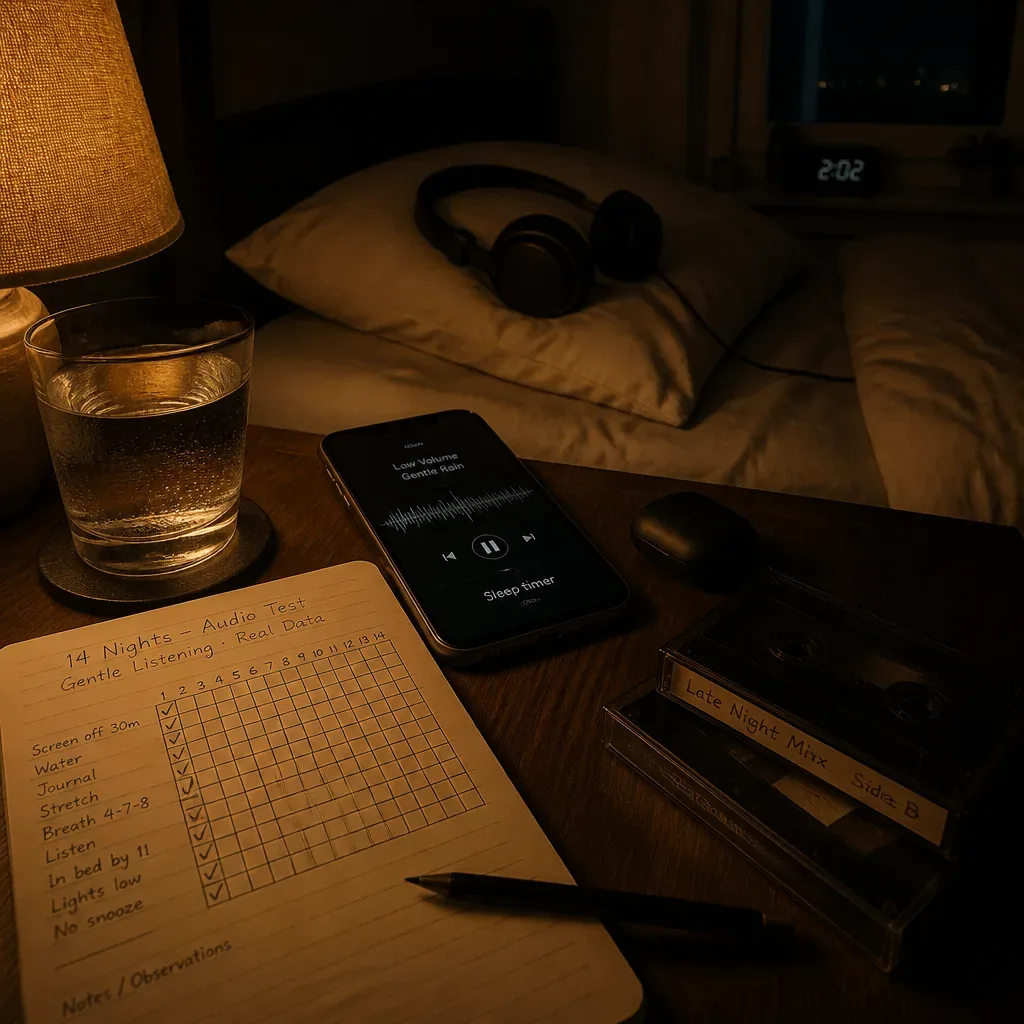
A simple 14-night test is enough to see whether the audio is helping the habit. Choose one track, one bedtime, and one measurable action. Do not change five things at once. If you use a sleep timer, set it for 20 to 45 minutes rather than letting audio run all night, unless continuous sound genuinely helps you stay asleep. The Sleep cycle calculator tool can help you choose a bedtime that gives the practice room without shrinking sleep.
Here is a quiet test you can run:
- Pick one behavior linked to the body goal.
- Choose one audio track with words you can inspect or at least understand.
- Listen at a low, safe volume for 14 nights.
- Track the behavior, not the mirror.
- Stop if you sleep worse for 3 nights in a row.
Three nights proves very little. Fourteen nights can show a pattern.
What are the risks of body-change subliminals?
The main risks are poor sleep, anxious checking, body dissatisfaction, and believing claims that pull you away from real care.
The audio file is not usually the dangerous part. The loop around it can be. Some listeners stack ten tracks, play them too loud, sleep with earbuds in, wake to check results, compare photos under different lighting, then blame themselves for not believing enough. That pattern is rough on sleep and rough on the mind. The World Health Organization has warned for years about unsafe listening levels; as a practical rule, if someone beside you could hear your earbuds clearly, lower the volume.
Body-focused content can also become sticky. Pew Research Center reported in 2023 that 46% of U.S. teens said they are online almost constantly. Adults are not immune to the same checking loop. When your feed, mirror, and night audio all point at the same disliked feature, the practice stops feeling soft. It becomes surveillance.
Be especially careful with topics tied to eating, puberty, hormones, chronic pain, skin disease, gender distress, or trauma. Audio can be a comfort, but it is not a substitute for a clinician, therapist, dermatologist, dietitian, or sleep specialist when you need one. If insomnia continues beyond basic sleep hygiene, speak with a professional. That sentence is plain because it matters.
Use these stop signs:
- You feel worse about your body after listening.
- You skip sleep to play more tracks.
- You believe one missed night ruined everything.
- You avoid medical care because the audio should fix it.
- You compare your body photos daily.
- You feel afraid to hear ordinary, audible words.
The last ten minutes before sleep are suggestible. Choose what goes in.
What audio swap is more honest than body-change subliminals?
A better swap is audible, personal audio that rehearses identity and behavior without pretending to override biology.
This is where the AYA Method sits close to subliminals but does not hide the words. The AYA Method is a daily audio manifestation practice. Each day you listen to a short personalized recording, your Dream-Self Moment, narrated from the version of you who has already manifested the life you intend. Listening is the practice. Repetition is the work. The audio is the method.
That difference matters. With subliminals, the message is usually hidden, sometimes undisclosed, and often paired with physical promises no one can verify. With the AYA Method, you can hear every word. You are not outsourcing your body to a masked script. You are practicing a self-description you can return to daily, including before sleep, while staying inside ordinary cause and effect.
For a body-related intention, the swap might sound like this: I speak to my body without cruelty. I sleep at a time that lets me recover. I choose the walk, the water, the appointment, the stretch. I stop checking the mirror when checking becomes a ritual. Nothing there needs to claim your bones are melting into a new shape. It asks you to repeat the next livable choice.
You can still use a daily affirmation or a Manifestation Board as complements, especially if visual reminders help you remember the practice in daylight. But the audio is the method. The recording is the thing you return to when the room is dark and your mind is most willing to rehearse.
If you prefer a softer entry point, read the Sleep affirmations pillar and compare how audible language feels against masked audio from the subliminals guide. The cleaner question is not whether hidden words can force the body. It is whether the words you hear each night help you live in a way your body can answer.
How should you decide what to listen to tonight?
Choose the audio that protects sleep, tells the truth about the body, and supports one behavior you can repeat tomorrow.
Start with sleep. If you are getting less than 7 hours because you are stacking body subliminals until 2 a.m., the trade is already failing. The National Sleep Foundation and the American Academy of Sleep Medicine both place most adults around 7 to 9 hours as the ordinary sleep range. A track that steals that window is not helping your body, whatever its title says.
Then check the claim. If it promises a physical change that would normally require growth, hormones, training, medicine, surgery, or months of recovery, do not treat the audio as evidence. Treat it as entertainment or a mood cue at most. If it supports a behavior you can do tomorrow, it is more useful. Listen low. Use a timer. Keep your phone face down. Let the room stay boring.
Here is my plain decision rule:
| Tonight’s question | Better answer |
|---|---|
| Can I inspect or hear the words? | Prefer yes |
| Does it protect my sleep window? | Prefer yes |
| Does it ask for one repeatable behavior? | Prefer yes |
| Does it promise anatomy changes without a pathway? | Prefer no |
| Do I feel kinder after listening? | Prefer yes |
If you still want subliminals, choose gentle topics: calm sleep, steady focus, less self-criticism, confidence in care routines. If you want clearer audio, use your own voice or a personalized recording. If you want timing help, set tonight’s bedtime with the sleep calculator, then stop negotiating with the clock.
You do not have to be cynical to be honest. You can love night audio and still refuse impossible claims. You can keep the ritual and change the script.
Keep the volume low, and let the body rest.