subliminals
How Many Subliminals Should You Listen To at Night?
Wondering how many subliminals to play at night? Use one main audio or a short, consistent playlist that protects sleep and keeps the message clear.
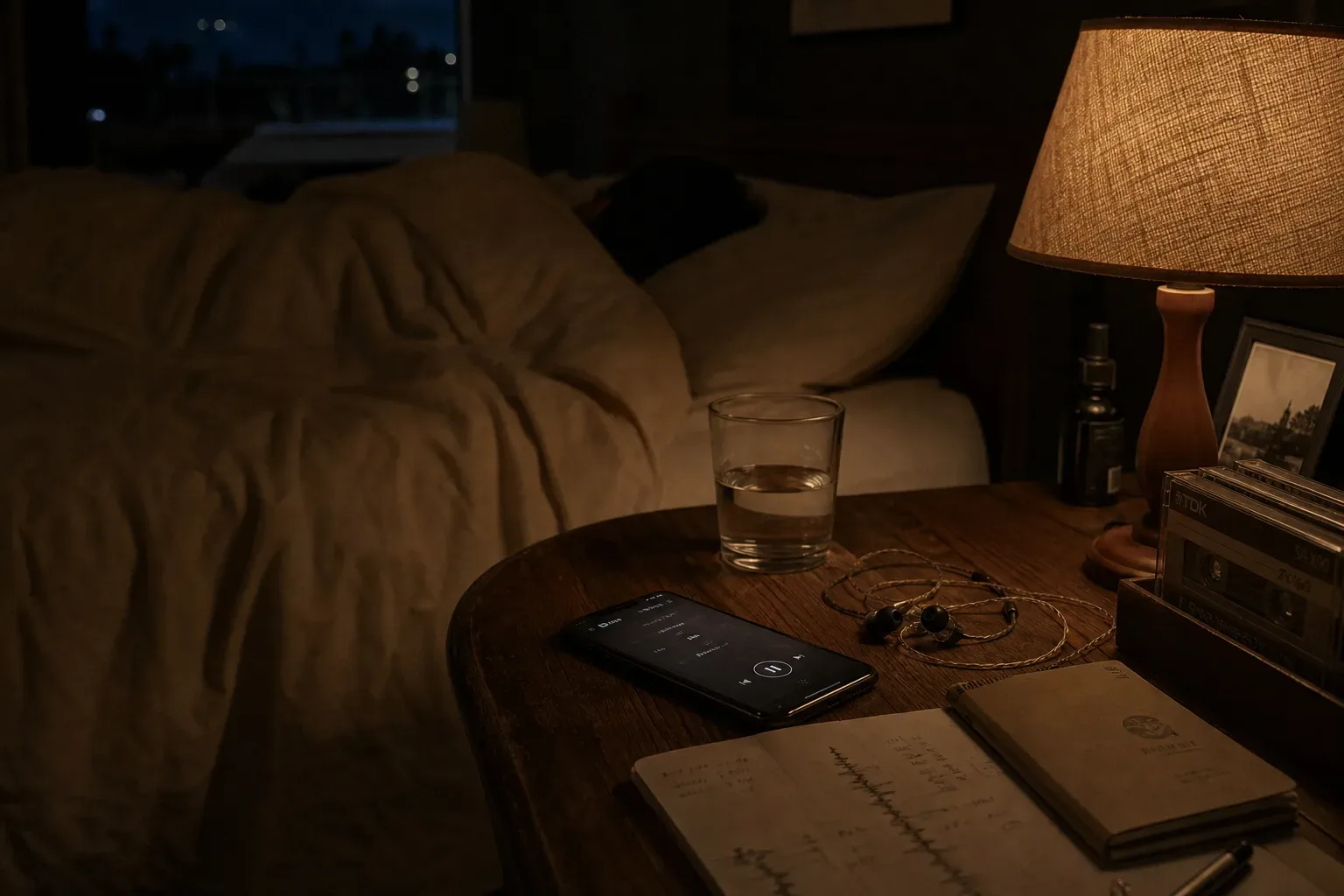
Most people should listen to one subliminal at night, or a small set of two to three closely related subliminals. More is not automatically better. A short, repeated playlist protects sleep, keeps the message consistent, and makes it easier to notice whether the audio is helping or just adding noise.
How many subliminals should you listen to at night?
Start with one subliminal, then add a second or third only if they support the same theme.
A subliminal is an affirmation you cannot consciously hear, usually hidden under music, rain, brown noise, or another mask. That is the whole trick, and the whole problem. If you cannot hear the words, you need to be extra honest about the structure around them: topic, length, volume, repetition, and sleep quality. The safest starting number is one track for 7 to 14 nights.
The reason is not mystical. Learning research has leaned on repetition for more than a century, from Hermann Ebbinghaus and his memory work in the 1880s to modern cue-based habit studies. The details differ, but one thing stays plain: a repeated cue is easier to recognize than a changing one. Ten subliminals in one night may feel thorough. One repeated message is easier for your mind and routine to meet again.
The priming research people often cite for subliminals is real but modest. A 1992 review by Anthony Greenwald and colleagues found weak effects for self-help subliminal tapes when tested carefully. Later priming studies showed that unseen cues can influence small, short-term responses under controlled conditions, but that is not the same as proving a YouTube playlist will change your life while you sleep.
A practical rule is simple:
- Pick one main topic for the night.
- Use one track, or two to three tracks with the same topic.
- Keep the playlist under 90 minutes at first.
- Repeat for at least 7 nights before judging.
- Change only one variable at a time.
The night is not a storage unit for every desire you had this week. It is a narrow door. Choose what goes through.
Is it better to use one topic or several topics?
One topic is usually better at night because it gives the mind a clearer pattern to return to.
A tight playlist works like a sentence. A scattered playlist works like a room full of people speaking at once. If the first subliminal is for self-trust, the second for an exam, the third for appearance, the fourth for a relationship, and the fifth for lucid dreaming, the issue is not that they cancel each other. The issue is that you cannot tell what you are practicing.
In sleep science, consistency matters. The American Academy of Sleep Medicine recommends a regular sleep schedule as a first-line sleep hygiene habit, and the Centers for Disease Control and Prevention notes that about 1 in 3 U.S. adults report not getting enough sleep. If your subliminal routine makes bedtime more complex, it may cost more than it gives.
Use themes instead of piles. A theme can hold several tracks if they point in the same direction. For example, a calm public speaking night might include low-volume audio for steady breathing, clear speech, and social ease. That is still one theme. A mixed night of wealth, height, beauty, grades, and shifting is five different conversations.
Here is a plain comparison:
| Night playlist | Number of tracks | How it usually feels | Best use |
|---|---|---|---|
| Single subliminal | 1 | Clear and easy to repeat | Testing a new topic |
| Tight themed playlist | 2 to 3 | Varied but coherent | One goal with related wording |
| Mixed playlist | 4 to 8 | Busy and harder to read | Rarely ideal for sleep |
| All-night rotation | 10+ | Easy to overdo | Only if sleep stays solid |
If you want the basics of what subliminals are and what evidence can and cannot say, read the Subliminals pillar before you build a longer night stack.
How long should a subliminal playlist run while you sleep?
A bedtime subliminal playlist should usually run 20 to 90 minutes, not necessarily all night.
The last part of the evening is already suggestible because attention is soft and resistance is lower. That does not mean your ears need audio until morning. In a typical adult night, sleep cycles last about 90 minutes, with lighter and deeper phases repeating 4 to 6 times. Audio that feels soft at 11 p.m. can still wake you at 3 a.m., especially if the track changes, ads play, or headphones press into your ear.
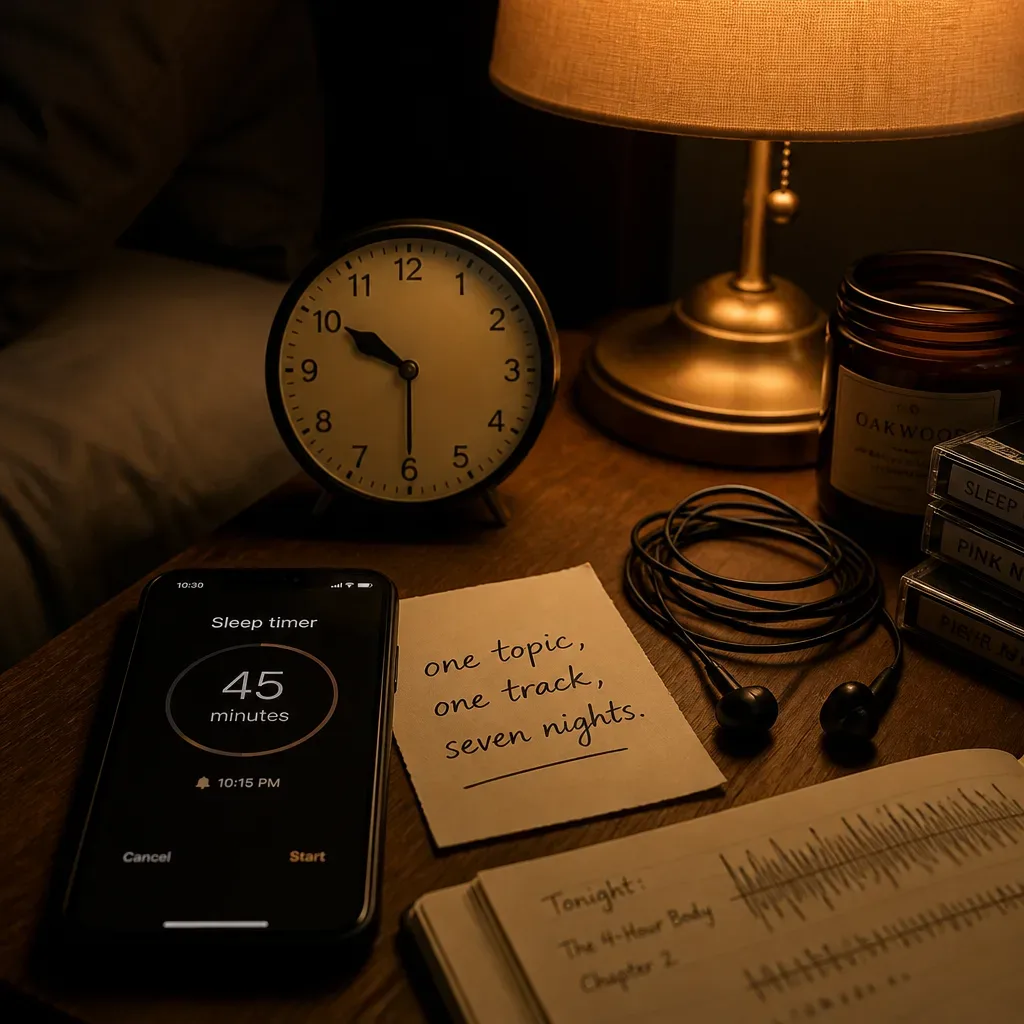
For most people, the cleanest test is one sleep cycle or less. Use a 30, 45, 60, or 90 minute timer. Many phones and audio apps have a sleep timer. If you wake during the night, shorten the playlist. If you fall asleep peacefully and wake rested, you can keep it.
You can also time the routine backward. If you need to wake at 7:00, use the Sleep cycle calculator tool to choose a bedtime that gives you enough full cycles. Then place the subliminal at the start of that window, not in the middle of the night.
A simple starting schedule:
- Nights 1 to 3: one 20 to 30 minute track.
- Nights 4 to 7: repeat the same track, same volume.
- Week 2: extend to 45 to 60 minutes only if sleep stayed steady.
- After 14 nights: add one related track if you still want more.
You are not trying to win a listening contest. You are trying to build a repeatable night cue that does not steal sleep.
How loud should subliminals be at night?
Subliminals should be quiet enough that the masking sound is comfortable and low enough not to interrupt sleep.
There is no universal volume number because phone speakers, headphones, room noise, and the audio mix all vary. A useful check is this: if the rain, music, or noise makes you tense, turn it down. If you are using headphones, be more careful. The World Health Organization has warned that unsafe listening can put over 1 billion young people at risk of hearing loss, mainly from loud personal audio and noisy settings. Night listening should be softer than daytime listening.
Many subliminal makers tell you the words are below conscious hearing. That means raising the volume will not always make the affirmations clearer. It may only make the mask louder. A well-made subliminal should not require you to push the sound until it dominates the room.
Try this practical volume test before sleep:
- Play the track in your normal sleeping position.
- Set it to the lowest volume you can still comfortably hear as background sound.
- Remove one earbud if you use earbuds and notice whether your body relaxes.
- Set a timer for 30 to 60 minutes.
- In the morning, rate sleep quality from 1 to 5.
If the rating drops below 3 for two nights in a row, reduce the volume or stop the audio. If a method costs you sleep, it costs more than it gives.
For people who prefer audible words, Sleep affirmations pillar may be a better fit. Audible affirmations let you know exactly what you are hearing, which matters if hidden wording makes you uneasy.
What should you expect by week two?
By week two, expect familiarity and small changes in attention, not guaranteed outer results.
A good subliminal routine often becomes less dramatic over time. The track feels less strange. You fall asleep faster because the audio becomes a bedtime cue. Certain phrases, even if hidden, may become associated with a calmer state. That is a reasonable expectation. It is different from believing that 14 nights proves the content has changed your body, bank account, or relationship.
Small studies on subliminal priming often measure immediate effects, sometimes within seconds or minutes, not life outcomes across months. For example, work by John Bargh and others in the 1990s made priming famous, while later replication debates showed that effects can be sensitive to method and context. That does not make night audio useless. It means you should track what is trackable.
Use a low-friction log. Write down four numbers each morning:
- Sleep quality, 1 to 5.
- Time to fall asleep, estimated in minutes.
- Mood on waking, 1 to 5.
- Whether you felt pulled toward the behavior connected to the topic.
If your subliminal is for studying, the meaningful sign is not a magical feeling. It is opening the book more often. If it is for calm speech, the sign is pausing before you answer. Identity practice becomes real in the tiny behavior you repeat when nobody is watching.
By night 14, keep what supports sleep and action. Drop what creates pressure, obsession, or late-night playlist editing. The practice should get quieter as it gets more useful.
How do subliminals compare with audible sleep audio like the AYA Method?
Subliminals hide the message, while audible sleep audio lets you hear and check every word.
That difference matters. Hidden audio can feel gentle because you are not consciously arguing with the statement. It can also feel vague because you cannot verify the wording without trusting the creator. Audible audio asks for a different kind of consent. You hear the sentence. You notice whether it lands. You can revise it.
The AYA Method is a daily audio manifestation practice. Each day you listen to a short personalized recording, your Dream-Self Moment, narrated from the version of you who has already manifested the life you intend. Listening is the practice. Repetition is the work. The audio is the method.
That is not the same as a subliminal. In the AYA Method, the voice and words are not hidden under sound. The recording is short, personal, and meant to be heard daily, including last thing at night if that suits you. The daily affirmation and Manifestation Board can support the practice, but the audio is the method.
A fair comparison looks like this:
| Practice | Can you hear the words? | Who writes the message? | Best reason to use it |
|---|---|---|---|
| Subliminals | Usually no | Creator or script maker | Soft background repetition |
| Sleep affirmations | Yes | Creator or you | Clear bedtime language |
| AYA Method audio | Yes | Built from your own intake | Personal future-self rehearsal |
The more personal the sentence, the less it behaves like content. It starts behaving like a mirror.
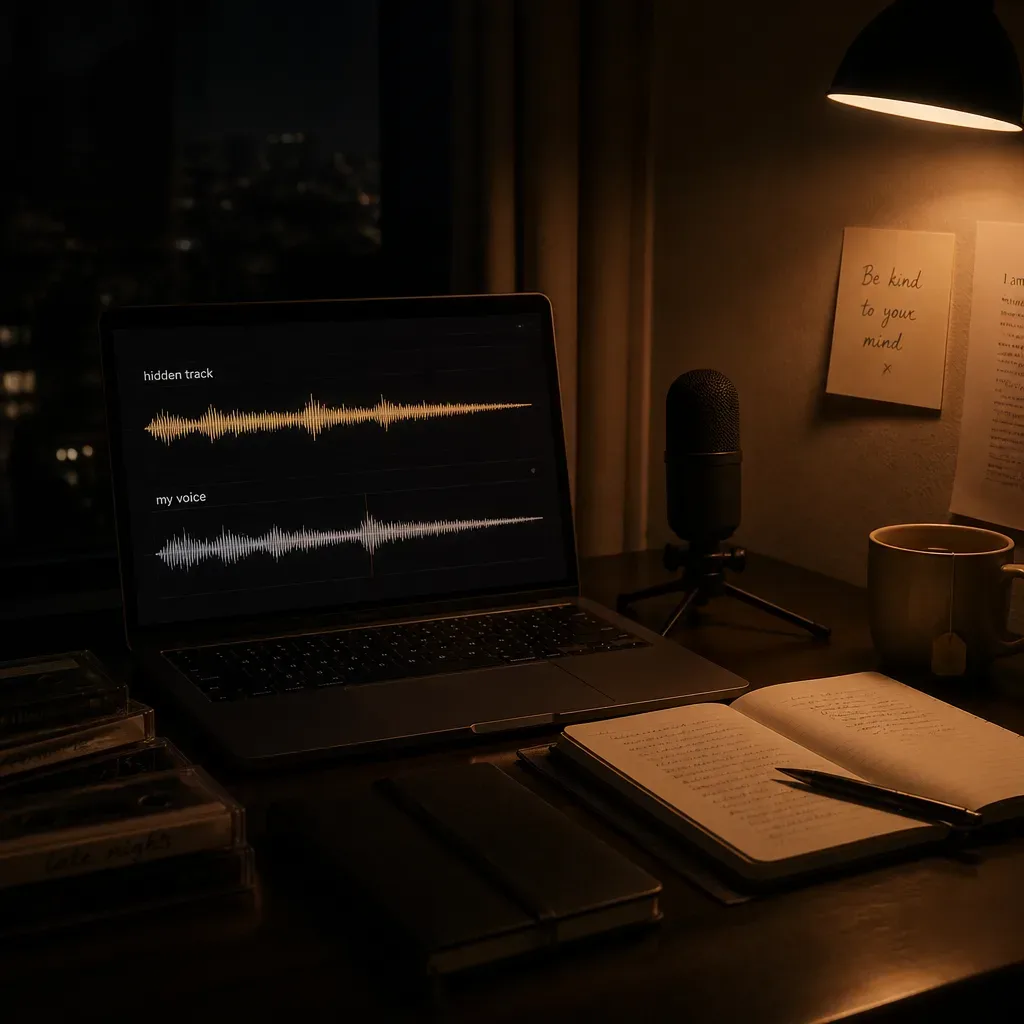
If you like hidden tracks, you do not have to reject them. Just know what trade you are making. Subliminals give you concealment. Audible personal audio gives you precision.
When should you reduce, change, or stop your night playlist?
Reduce or stop your subliminal playlist when it disturbs sleep, increases checking, or makes the night feel tense.
The first warning sign is simple: you sleep worse. Adults generally need 7 or more hours of sleep per night, according to the CDC and the American Academy of Sleep Medicine. If you are staying up late to arrange playlists, waking to restart tracks, or using uncomfortable earbuds for 8 hours, the practice has crossed a line.
The second sign is mental noise. Some people begin asking whether they used enough boosters, whether one track conflicted with another, or whether missing one night ruined the work. That kind of checking is not a spiritual discipline. It is friction. A good night practice should make bedtime easier by week two, not more crowded.
Change the playlist only after a fair test. Seven nights is enough to notice sleep disruption. Fourteen nights is better for noticing routine effects. Thirty nights is a reasonable maximum before you decide whether the topic still feels yours. Joe Dispenza, Neville Goddard, and modern habit writers disagree on mechanisms, but they all return to repeated inner rehearsal in some form. Repetition needs room.
Use this decision rule:
- If sleep worsens, shorten or stop immediately.
- If sleep is steady but nothing changes, keep the same track for 14 nights before judging.
- If you feel scattered, reduce to one topic.
- If you feel dependent on the playlist, take 3 nights off and see what remains.
- If insomnia is persistent or distressing, speak with a qualified health professional.
You do not need to be harsh with yourself. You only need to be honest. The best subliminal count is the one you can repeat without turning the night into work.
Let the last thing you hear be simple enough to meet again tomorrow.