subliminals
Subliminal Blockage Remover: Meaning and Safer Swap
A subliminal blockage remover is hidden affirmation audio for “blocks.” Here’s what it means, what evidence can’t say, and a safer night routine.
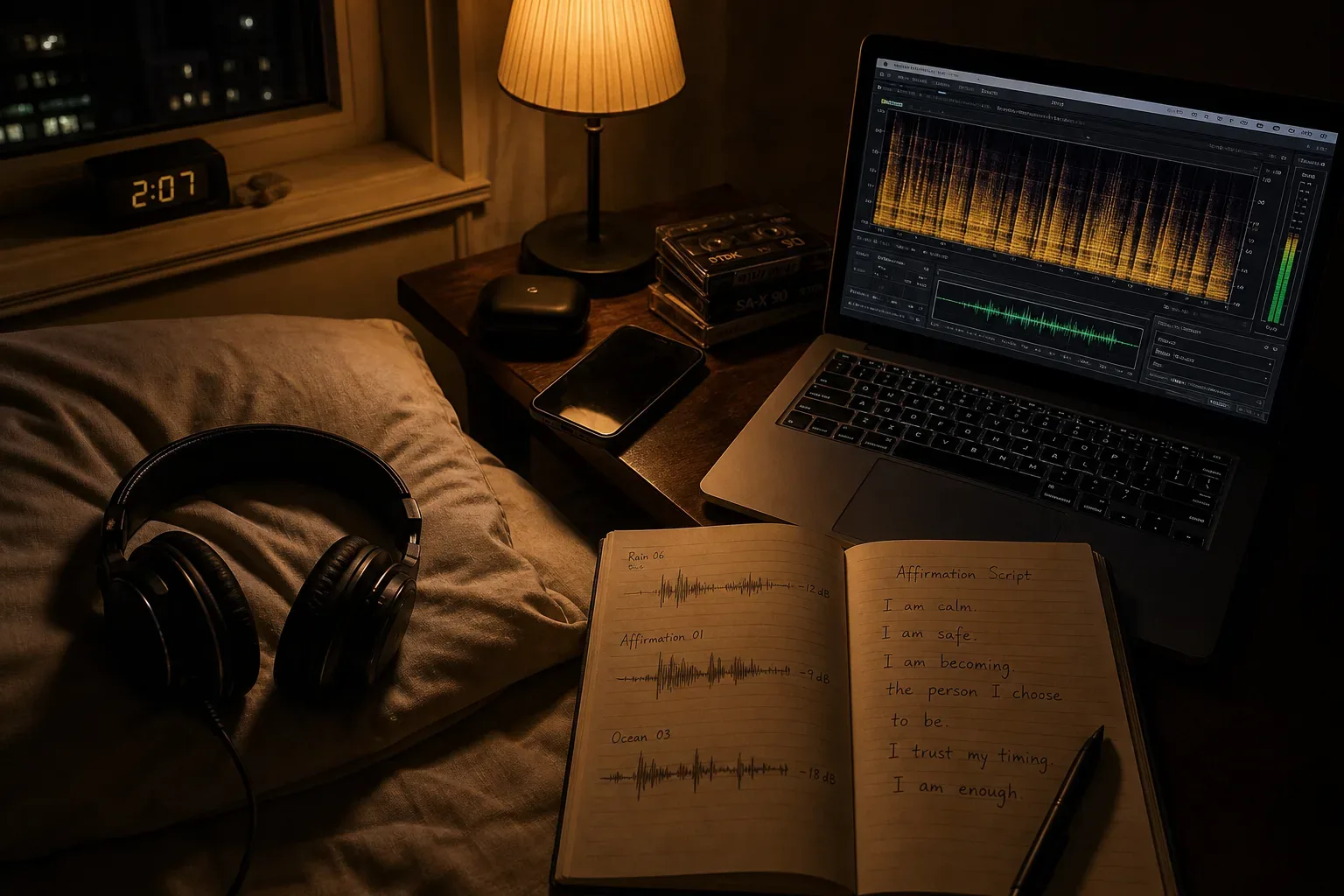
A subliminal blockage remover is hidden affirmation audio that claims to clear inner blocks while you listen, often before sleep. The safer swap is not a stronger hidden track. It’s a clear, low-volume recording you can hear, understand, and stop using if it disturbs your sleep.
What does a subliminal blockage remover mean?
A subliminal blockage remover means an audio track that claims to hide affirmations beneath sound so they can bypass conscious attention and clear resistance.
Most tracks with this title use the same few ingredients: rain, drones, soft music, whispered speech, reversed speech, or a high-frequency layer labeled 17,500 Hz or 20,000 Hz. The “blockage” part is usually not defined. It might mean fear, shame, procrastination, attachment, doubt, old family stories, or anything the uploader thinks stands between you and a result. That vagueness matters. A word can’t be tested if it means ten different things.
In audio terms, a subliminal is simple: a message is present, but masked or mixed so low that you don’t consciously hear it. The fuller guide to subliminals explains the difference between masked speech, inaudible tones, and ordinary affirmations. The engineering is real. The claim that hidden words remove a named emotional block overnight is where the evidence thins out.
The best-known self-help tape study is still useful here. In 1991, Anthony Greenwald and colleagues gave 237 people subliminal self-help tapes, then swapped some labels so listeners believed they were hearing memory or self-esteem content. People often reported changes that matched the label, not necessarily the tape. That doesn’t prove nothing happened. It does show how much expectation can steer what we notice.
A hidden message is not more honest because it’s harder to hear.
That’s the first quiet line I’d draw. If a track claims to work because you can’t inspect it, the burden of clarity belongs to the maker, not the listener. You’re entitled to know what words you’re sleeping beside for 6, 8, or 10 hours.
Can hidden audio really remove mental blocks?
Hidden audio has not been shown to reliably remove mental blocks, though repeated bedtime audio may shape attention, mood, and intention in modest ways.
Subliminal priming research is real, but it’s narrower than YouTube titles make it sound. In laboratory studies, unnoticed cues can influence quick choices or reaction times for a short period. Those studies usually measure milliseconds, word recognition, or simple preferences, not deep personal change. Meta-analyses of priming have also become more cautious since the replication debates of the 2010s. The honest sentence is this: subliminal effects may exist, but they’re usually small, context-dependent, and not the same thing as removing a life pattern.
Sleep adds another layer. The sleeping brain can process some sound, especially names, alarms, and emotionally relevant cues. A 2017 Current Biology study on targeted memory reactivation found that cues during sleep can influence memory consolidation when they’re tied to prior learning. That is not the same as installing a new belief under rain sounds. It means the night brain is responsive, not gullible.
There’s also the sleep cost. The CDC says most adults need at least 7 hours of sleep per night. If a subliminal blockage remover keeps you awake, makes you restart the track, or sends you checking comments at 1:12 a.m., it has already taken something measurable. If a method costs you sleep, it costs more than it gives.
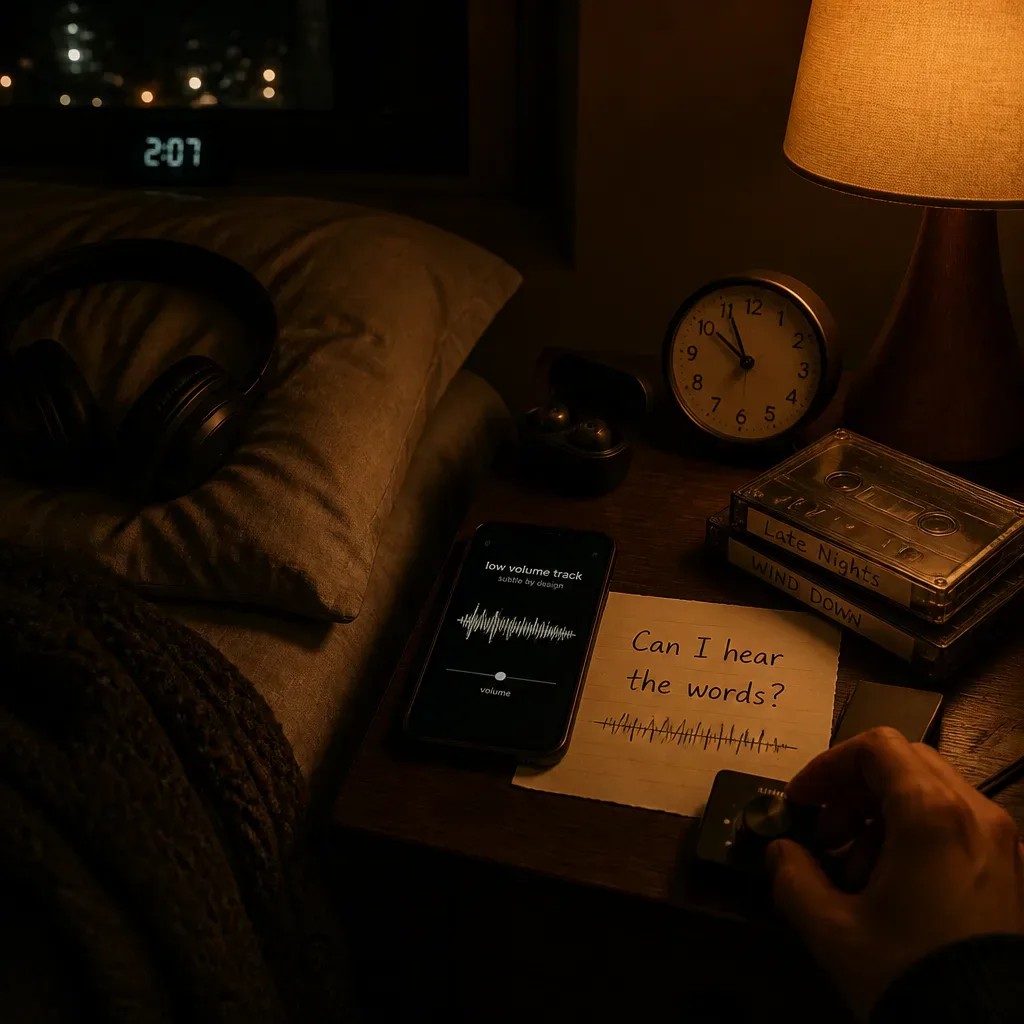
A better question is not “Can this bypass my mind?” It’s “Can this help me rehearse what I want without making the night louder?” That question leads to safer audio choices: audible words, short duration, known script, gentle volume, and a clear stop point.
The last ten minutes before sleep are suggestible. Choose what goes in.
How are subliminal blockage remover tracks usually made?
Most subliminal blockage remover tracks are made by masking a spoken script under noise, music, or tones, then exporting the file for streaming.
At a mixing desk, the common method is ducking the vocal far below the bed sound. The producer records lines like “I release resistance” or “I feel safe receiving,” lowers the vocal 20 to 40 decibels under rain or pads, adds compression, and sometimes raises the speed. If the track is exported as MP3 or uploaded to a platform that compresses audio again, the buried voice can smear, vanish, or turn into artifacts.
Some makers use ultrasonic claims. They’ll say the affirmations sit at 17,500 Hz or higher, where you can’t hear them but your subconscious can. Here’s the plain technical problem: the National Institute on Deafness and Other Communication Disorders describes the typical young human hearing range as about 20 Hz to 20,000 Hz, and upper-range hearing often drops with age and noise exposure. Many adults don’t hear 17 kHz clearly. Many phone speakers and cheap earbuds don’t reproduce it well. Streaming compression may also discard parts of the spectrum it treats as less useful.
| Track claim | What may be on the file | Practical concern |
|---|---|---|
| “Masked affirmations” | Voice under rain or music | You may not know the script |
| “Ultrasonic 17,500 Hz” | High-frequency tone or filtered speech | Earbuds and adult hearing may not carry it |
| “Silent subliminal” | Very low or absent audible content | Hard to verify without analysis |
| “Layered 10,000 affirmations” | Stacked speech, often unintelligible | More layers can mean less clarity |
Layering is another issue. Ten voices at once don’t make ten times the message. They often make a mush of consonants and phase interference. If a producer stacks 100 affirmations, speeds them up 4x, reverses them, and hides them under waterfall noise, the track may be more myth than message.
Respect the listener’s ear, and label what’s on the tape.
What is the safer audio swap?
The safer swap is a short audible track, spoken in words you choose, played softly before sleep rather than hidden under aggressive masking.
This can be as simple as a 2-minute voice memo. You don’t need a studio chain. You need a quiet room, a phone, and a script that doesn’t insult your nervous system. Avoid “remove all blocks now” if it makes you tense. Use language you can believe enough to repeat: “I can take one clear step tomorrow,” “I’m allowed to rest before I solve this,” or “I can practice being steady.”
If you want a more structured manifestation audio practice, the AYA Method is a daily audio manifestation practice. Each day you listen to a short personalized recording — your Dream-Self Moment — narrated from the version of you who has already manifested the life you intend. Listening is the practice. Repetition is the work. The audio is the method. The daily affirmation and Manifestation Board can support it, but they are complements, not the core.
You can also use ordinary sleep affirmations if you prefer something simpler. The difference is audibility. With sleep affirmations, you can hear the sentence. You can reject it, soften it, rewrite it, or keep it. That choice matters.
Try this 5-night swap:
- Write 6 to 10 plain sentences about the pattern you want to practice.
- Record them in your normal voice, slower than daytime speech.
- Keep the recording under 3 minutes.
- Play it once before sleep, not on a full-night loop.
- Rate sleep quality from 1 to 5 in the morning.
Five nights is not a clinical trial, but it’s enough to notice whether the audio calms you or agitates you. In behavioral sleep work, simple tracking often reveals patterns within 1 to 2 weeks. You’re not trying to force belief. You’re checking whether a voice at night helps you return to what you chose in daylight.
The safest suggestion is the one you can hear and consent to.
How can you check whether a track is trustworthy?
You can check a track by looking for script transparency, sane volume, clean audio, and claims that don’t outrun what audio can do.
Start with the description. A trustworthy maker tells you what style of audio you’re getting: masked speech, audible affirmations, music only, hypnosis-style guidance, or ambient sound. They don’t need to publish every private line, but they should explain the category and avoid medical promises. If the title says it cures trauma, removes depression, guarantees results in 24 hours, or works even if you never sleep, close the tab.
You can do a basic technical check with free tools. Audacity, Ocenaudio, or a mobile spectrum app can show whether there’s a vocal-looking band under the noise. Human speech usually shows energy across roughly 100 Hz to 8 kHz, with consonants higher and vowels lower. A spectrogram won’t tell you whether a sentence is good for you, but it can show whether the file is only rain, a piercing tone, or a dense block of clipped audio.
Look for these signs:
- The creator says whether the words are audible, masked, or silent.
- The track has no sudden volume spikes in the first 10 minutes.
- The description avoids guaranteed timelines.
- Comments don’t show many people reporting headaches or poor sleep.
- The file doesn’t require painfully high volume to “work.”
- You can stop using it without feeling warned, cursed, or pressured.
The World Health Organization’s 2019 safe-listening materials warn that both volume and duration matter for hearing risk. Overnight playback is long-duration playback, even when it feels gentle. If you use earbuds, be especially conservative. I’d rather you miss a few masked syllables than train your ears to tolerate a hiss for 8 hours.
For timing, you can use a sleep window instead of a loop. The sleep cycle calculator can help you plan a bedtime and wake time around roughly 90-minute cycles. It’s not a medical device, but it’s a useful reminder that sleep itself is the main practice at night.
How should you use sleep audio tonight if you still want the ritual?
Use sleep audio tonight as a brief cue before sleep, not as a test of whether your mind can be forced to change.
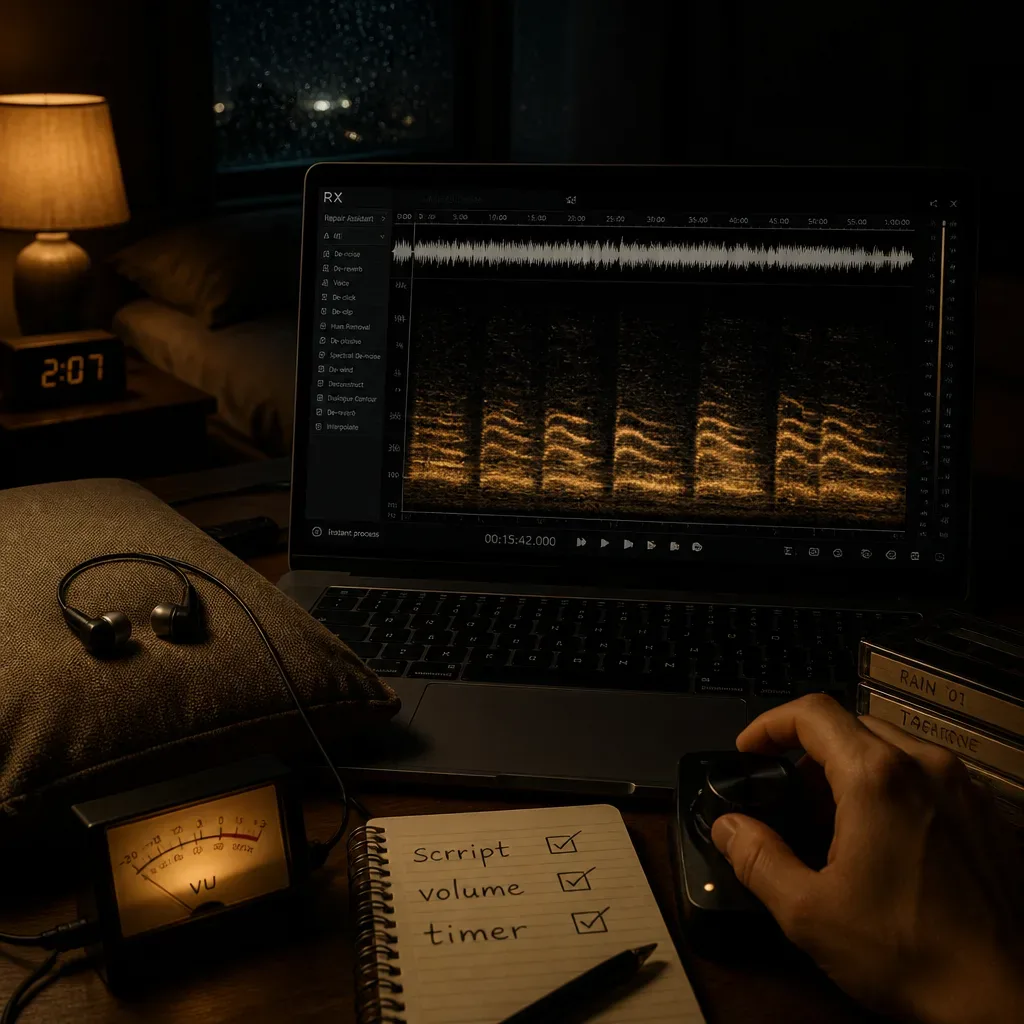
Keep the setup boring. Boring is good at night. Put the phone across the room if you tend to keep checking it. Set the volume low enough that the words sit at the edge of attention, not inside your skull. If you’re using speakers, start quieter than you think. If you’re using earbuds, consider using only one, or switch to a pillow speaker. The goal is to hear softly, then sleep.
A practical routine looks like this:
- Choose one track under 10 minutes.
- Read or write the script if it’s your own.
- Play it once while lights are already low.
- Stop the audio when it ends, or use a sleep timer.
- In the morning, note sleep quality and mood in one sentence.
- After 7 nights, keep it only if sleep stayed steady.
This is not anti-subliminal. It’s pro-consent. The subliminals world has always had a mix of sincere makers, sloppy exports, beautiful rain loops, and titles that promise too much. The same is true in hypnosis channels and affirmation playlists. Your job is not to be cynical. Your job is to be awake enough before sleep to choose the voice.
If insomnia, panic, trauma symptoms, or compulsive checking are part of the pattern, get help from a qualified professional. Audio can be a ritual. It isn’t a substitute for care.
One more technical note from the desk: louder hidden audio is not safer or more effective just because you’re frustrated. The ear is mechanical before it is symbolic. Tiny hair cells in the inner ear don’t care whether a tone is labeled “blockage remover” or “test signal.” They respond to level and duration.
If you want words at night, make them clear, kind, and yours.
Keep the last voice of the night honest and low.