subliminals
Crush Subliminals: Sleep-Safe Confidence Audio
Crush subliminals can be gentler at night when you use audible Dream-Self audio for confidence, boundaries, and sleep-safe repetition.
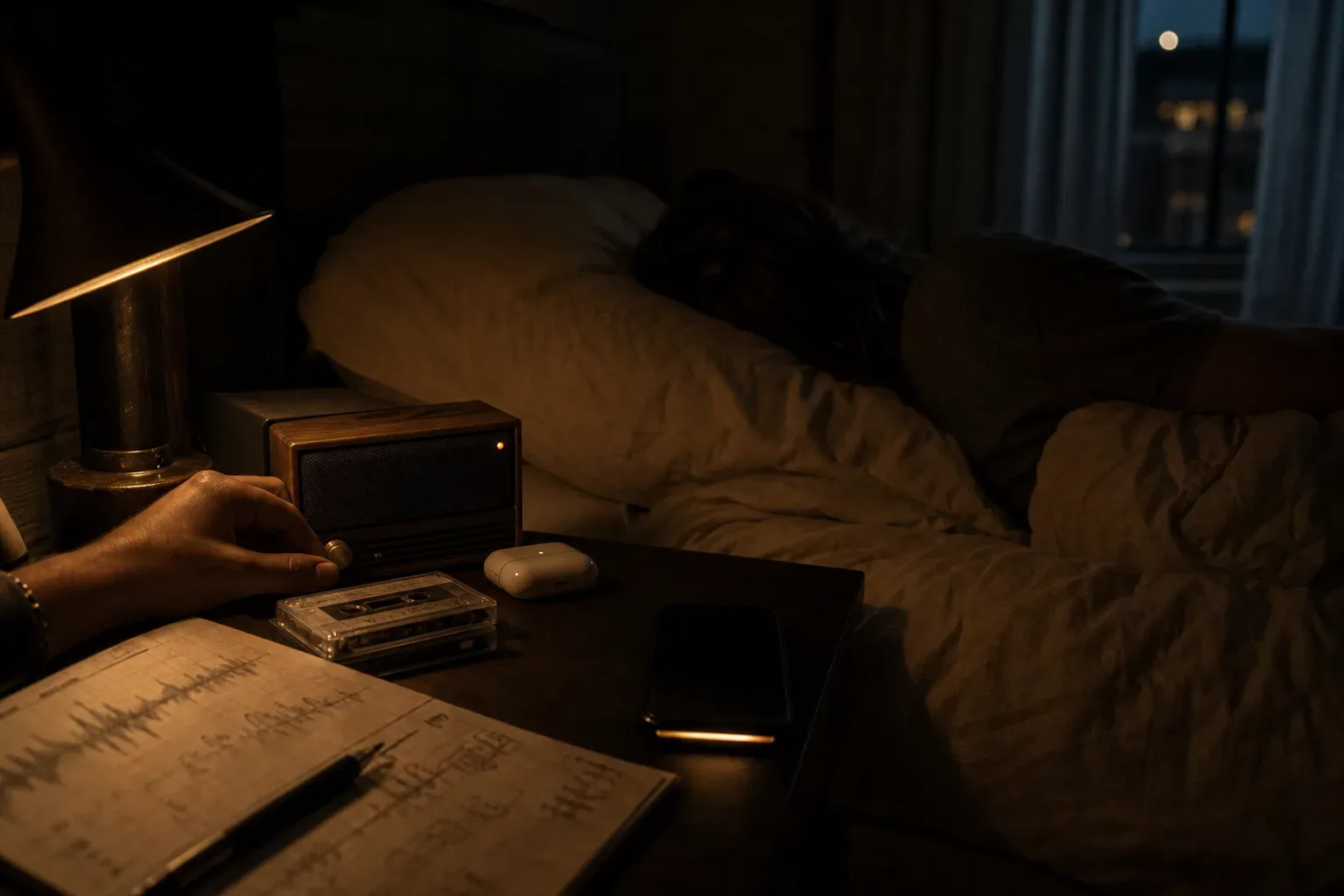
Crush subliminals are audio tracks meant to influence confidence, attraction, or a specific person while you listen, often before sleep. A sleep-safe version keeps the focus on your own nervous system: calm, worth, voice, and boundaries. You can repeat the feeling without trying to override anyone else’s choice.
What are crush subliminals actually trying to do?
Crush subliminals try to pair repeated attraction-related suggestions with a relaxed listening state.
Most tracks in this category use affirmations hidden under music, rain, brown noise, or layered whispers. The promise is usually bigger than the evidence: “they text you,” “they dream of you,” “they can’t stop thinking about you.” A subliminal is an affirmation you can’t consciously hear. That’s the whole trick, and the whole problem.
Priming research is real but modest. In psychology, priming means one stimulus can influence a later thought or behavior, often briefly. A 2012 multi-lab replication project in Perspectives on Psychological Science found mixed results for some social priming effects, and that matters here. YouTube claims are not the same thing as controlled research.
Sleep adds another layer. The American Academy of Sleep Medicine says adults usually need at least 7 hours of sleep per night, and any audio practice that cuts into that number is not helping you. If a method costs you sleep, it costs more than it gives.
For crush work, the cleanest target is not “make them want me.” It’s “help me become steady when I want to be wanted.” That can include:
- speaking without shrinking
- noticing mixed signals sooner
- letting a delay in texting be just a delay
- feeling attractive without needing proof every hour
- sleeping instead of checking your phone at 1:17 a.m.
There’s nothing wrong with wanting to feel chosen. There is something shaky about building a nightly practice around another person’s inner life. The safer question is not “Can I make them feel it?” The safer question is “Can I meet my own feelings without losing myself?”
If you want a wider primer on hidden-message audio, start with the Subliminals pillar. It covers volume, masking, and why audibility matters more than most comment sections admit.
Why can crush subliminals feel so intense at night?
They feel intense because night lowers distraction and leaves you alone with longing, uncertainty, and repetition.
The last 10 minutes before sleep are often more suggestible because attention has narrowed. Dr. Andrew Huberman has often described the pre-sleep period as a time when the brain is moving away from active task control and toward memory processing. That doesn’t mean magic happens. It means the words you repeat at the edge of sleep may be easier to rehearse.
Crush audio can also attach itself to reward loops. A 2019 Pew Research Center report found that 48% of 18-to-29-year-olds in the U.S. had used dating sites or apps. That’s a lot of people trained by notifications, delays, and tiny social signals. If you’re already checking whether someone watched your story, a nightly “they want me” track can feed the same loop.
The body may not care that the audio is supposed to be relaxing. If the script keeps naming the person, predicting contact, or making you scan for signs, you may wake more alert. In sleep hygiene terms, that’s a poor trade: you brought the phone into the bed without touching it.
A better night script softens the charge. It doesn’t deny desire. It gives desire a rail to run on. Instead of “They miss me all night,” try “I can feel attraction and still rest.” Instead of “They are obsessed with me,” try “I am easy to meet, and I let people come freely.”
The goal is not to stop liking someone. The goal is to stop making your sleep audition for them.
Use a simple rule: if a line makes your chest tighten, remove it. If it makes your breath drop lower, keep it. After 7 nights, you’ll usually know which phrases are feeding calm and which ones are feeding surveillance.
How do you make crush subliminals sleep-safe?
You make them sleep-safe by keeping the words audible, self-focused, short, and quiet enough not to disturb sleep.
Hidden audio can be interesting, but for a charged topic like a crush, I prefer audible words. You need to know what you’re feeding yourself at night. The Sleep affirmations pillar explains this difference well: a sentence you can hear can be edited, softened, rejected, or kept. A buried sentence asks for trust before it earns it.
Use these settings as a starting point:
| Element | Sleep-safe choice | Why it matters |
|---|---|---|
| Length | 5 to 12 minutes | Short enough to avoid sleep delay |
| Volume | About 30% or lower | Audible, not attention-grabbing |
| Timing | Last 10 minutes before sleep | Repetition without looping all night |
| Voice | Yours, slow, close mic | Familiar sound lowers effort |
| Target | Your confidence | Avoids control claims |
The World Health Organization has noted that night noise above 40 decibels can disturb sleep for some people. You don’t need a decibel meter to apply the spirit of that number. If the track keeps pulling your attention back, it’s too loud or too busy.
Here’s a 4-part filter I use before any romantic audio goes near my pillow:
- Consent filter: Does this line respect the other person’s freedom?
- Sleep filter: Could I fall asleep after hearing this?
- Body filter: Does my jaw soften or clench?
- Morning filter: Will I feel steadier tomorrow, not more attached to proof?
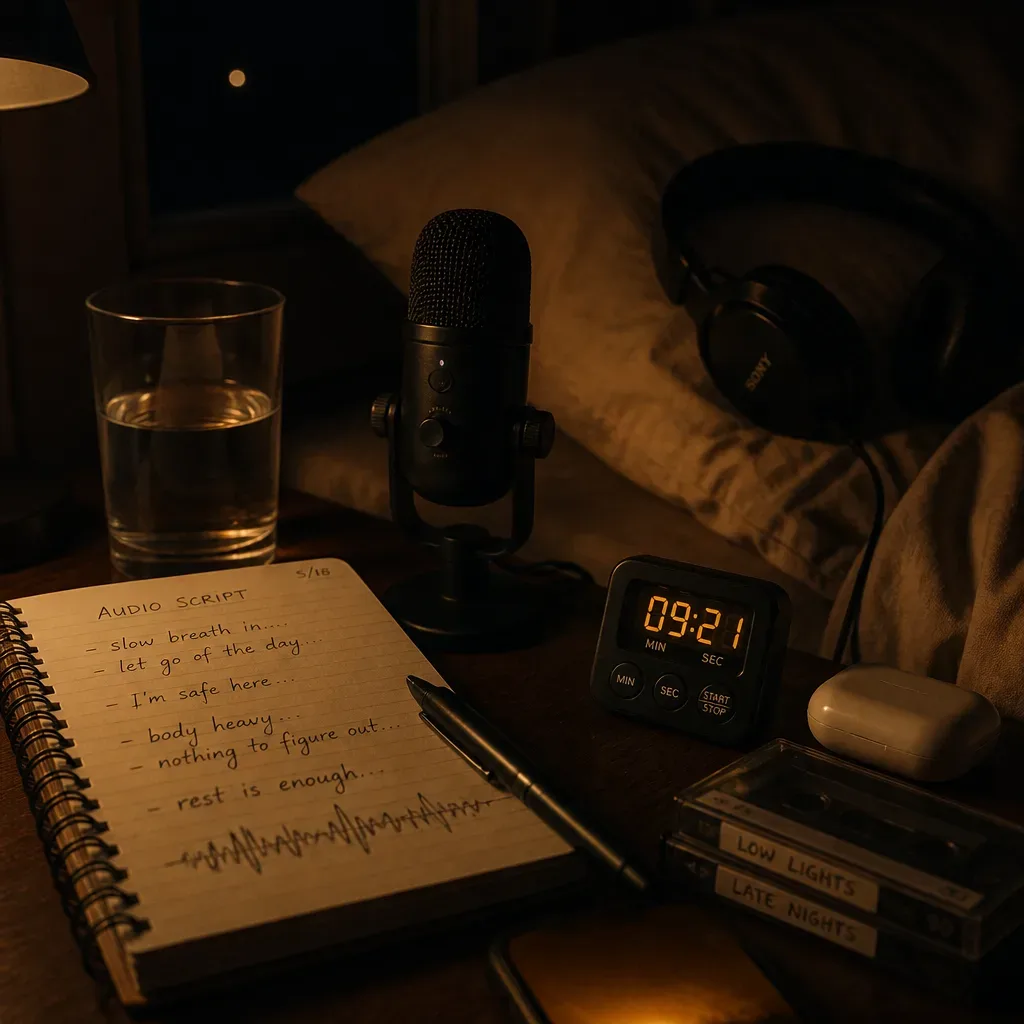
A safe crush script sounds less dramatic than the ones that get clicks. That’s a feature. Quiet wording lasts longer than urgent wording. Your sleeping mind doesn’t need a sales pitch; it needs a sentence it can live beside.
If your sleep timing is already fragile, use the Sleep cycle calculator tool before adding any audio. A 6-minute practice is still too much if it pushes you past the sleep window you actually have.
How do you write a Dream-Self audio for confidence instead?
You write it as a short first-person recording from the version of you who already handles attraction with calm.
This is where the AYA Method is a cleaner fit than ordinary crush subliminals. The AYA Method is a daily audio manifestation practice. Each day you listen to a short personalized recording — your Dream-Self Moment — narrated from the version of you who has already manifested the life you intend. Listening is the practice. Repetition is the work. The audio is the method.
For this topic, your Dream-Self Moment should not say “my crush has no choice.” It should say something more adult and more restful: “I am calm when I like someone. I let myself be seen. I let the truth of their response arrive without chasing it.” That’s not a weaker practice. It’s a cleaner one.
In cognitive-behavioral work, rehearsal matters. A 2016 review in Behavior Research and Therapy described imagery rescripting and mental rehearsal as useful tools in several clinical settings, though not as proof that audio can create external events. The fair takeaway is simple: rehearsing a response can change your response. It doesn’t grant you ownership of another person.
Write 120 to 180 words. Spoken slowly, that’s about 60 to 90 seconds. Repeat it once or twice in the audio, with 10 seconds of silence between takes. Keep the background plain: room tone, soft rain, or nothing. Don’t stack 12 layers and call it stronger. If you can’t hear the words, you can’t consent to them.
Try this structure:
- Open with safety: “It’s night. I can rest now.”
- Name the self: “I’m someone who can like another person and stay with myself.”
- Rehearse behavior: “I speak warmly. I don’t over-explain. I pause before sending.”
- Respect choice: “I let mutual interest be mutual.”
- Close sleep-first: “Nothing needs checking tonight.”
A good line should feel like a hand on the shoulder, not a hook in the ribs.
What should you play, when, and how loud?
Play one audible confidence recording once before sleep, at low volume, for 14 nights before you judge it.
My practical setup is boring, which is why it works. I put the phone across the room or face down. I play the recording once. I don’t loop it. I don’t follow it with three more tracks promising contact by morning. The National Sleep Foundation has long advised keeping stimulating phone use out of bed, and crush-related checking is almost custom-built stimulation.
If you’re using headphones, choose comfort over detail. One earbud digging into the pillow can wake you at 3 a.m. For many people, a small speaker at low volume is kinder. Keep it just loud enough that you can understand the sentence if you pay attention, but soft enough that you don’t have to.
A 14-night test gives you enough data to see patterns. Three nights mostly tells you whether novelty felt good. Fourteen nights can show whether you fall asleep faster, text with less panic, or stop treating silence as a verdict. Small self-tracking studies are imperfect, but sleep diaries are still commonly used in behavioral sleep medicine because patterns matter.
Use this nightly checklist:
- Did I listen once, not loop?
- Was the audio under 12 minutes?
- Did I avoid checking their profile afterward?
- Did I wake during the night?
- Did I feel more settled the next day?
If you want to compare this with other night audio, the sleep hypnosis guide is useful because hypnosis, subliminals, and affirmations often get mixed together online. They’re not the same. Different methods ask for different kinds of attention.
What should you expect by week two? Usually something small. You may pause before sending a second message. You may sleep instead of building a courtroom in your head. You may notice that confidence is less about being certain they like you and more about not abandoning yourself while you wait.
How do you know if the practice is helping or hurting?
It’s helping if your sleep stays intact and your daytime behavior becomes calmer, freer, and less compulsive.
Track outcomes you can actually observe. Don’t track “did they think of me?” You can’t measure that from your bedroom. Track sleep onset, wake-ups, morning mood, checking urges, and whether you acted in line with your own values. A 2021 Sleep Foundation summary noted that even one poor night can affect mood and attention the next day, so romantic audio that disturbs sleep has a real cost.
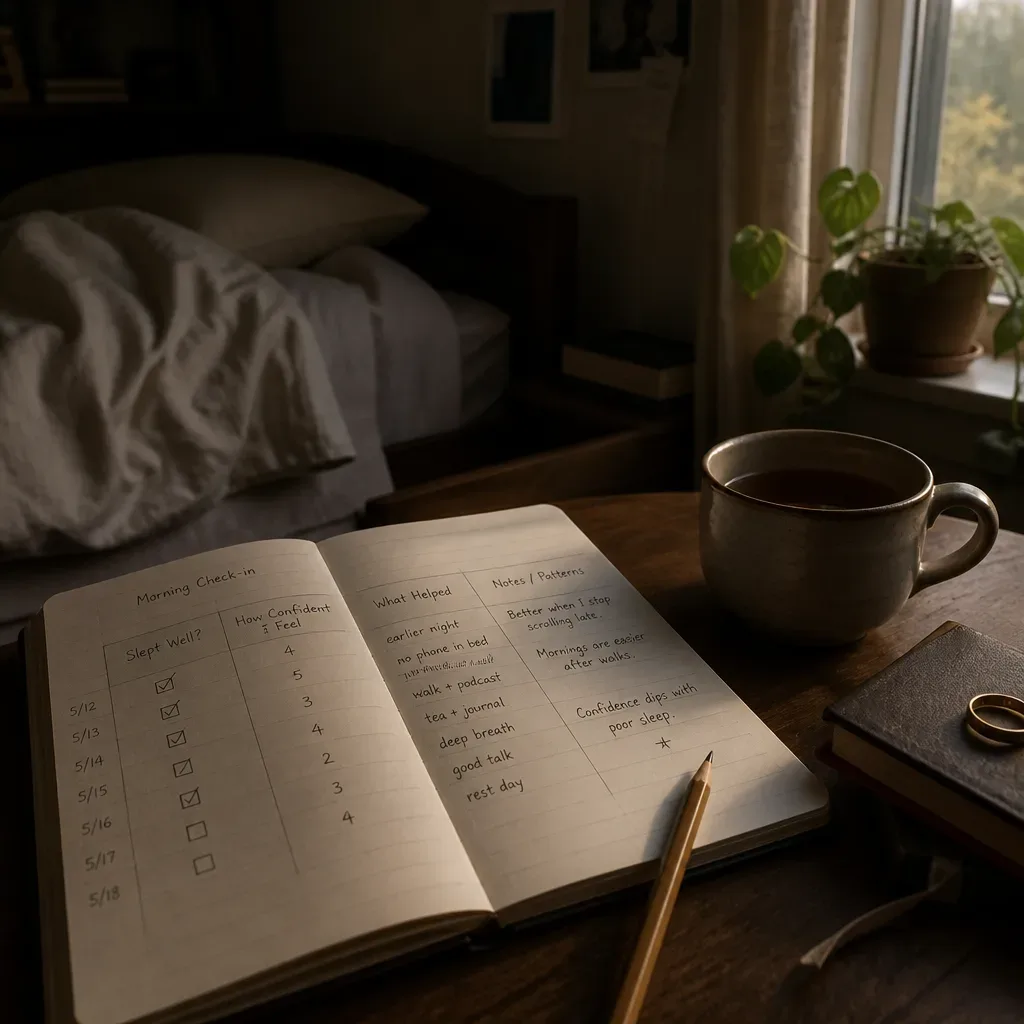
Use a simple 0-to-3 scale each morning:
| Question | 0 | 1 | 2 | 3 |
|---|---|---|---|---|
| Sleep felt protected | Not at all | A little | Mostly | Yes |
| Checking urge | High | Medium | Low | Barely there |
| Self-respect | Low | Shaky | Present | Steady |
| Crush fixation | Strong | Noticeable | Mild | Soft |
Stop or revise the audio if you notice any of these for 3 nights in a row:
- you stay awake waiting for a sign
- you dream anxiously about the person
- you check your phone after listening
- you feel worse when nothing changes
- you start avoiding real conversation
There’s also a plain clinical line. If you have ongoing insomnia, panic, or intrusive thoughts that feel hard to interrupt, talk with a qualified professional. Audio can support a routine, but it should not become the only tool holding you together.
The honest win is not control. The honest win is being able to like someone and still sleep.
What’s the 20-minute routine for tonight?
The routine is to prepare one short script, record it once, listen once, and leave the rest of the night alone.
Set a 20-minute timer. Spend 5 minutes writing, 5 minutes recording, 3 minutes adjusting volume, and the remaining time getting into bed without adding more inputs. This matters because sleep routines work partly through consistency. The CDC has reported that about 1 in 3 U.S. adults don’t get enough sleep, so your romantic practice needs to protect the basics, not compete with them.
Use this script if you need a starting point:
It’s night, and I can stop performing now. I’m someone who can like another person and stay close to myself. When I speak, my voice is warm and clear. When I wait, I don’t punish myself. I let mutual interest be mutual. I don’t chase signs that cost me sleep. I’m allowed to be wanted, and I’m allowed to rest before I know the answer. Nothing needs checking tonight.
Record it in your normal voice. Don’t try to sound mystical or perfect. Leave one breath between sentences. If a line feels false, make it smaller. “I am completely confident” may be too far away tonight. “I can send one honest message and stop” may be exactly right.
Then do the practice:
- Put your phone face down or across the room.
- Play the audio once at low volume.
- Let silence, rain, or neutral sound follow.
- Don’t check messages afterward.
- In the morning, write one sentence about what you noticed.
If you want to pair it with spoken night wording, keep it simple and read the sleep affirmations pillar before adding more. More words are not always more help. Sometimes the best practice is the one sentence you can repeat without tightening.
And if you still love subliminals, you don’t have to throw them away. Just ask them to become honest. Let hidden audio be optional, not the place where your most tender hope gets handled without supervision.
Keep the voice low, and let the night stay yours.