subliminals
Detachment Subliminals: A Sleep Audio Reset
Detachment subliminals can support letting go before sleep. Learn how to choose words, set volume, protect sleep, and track what changes.
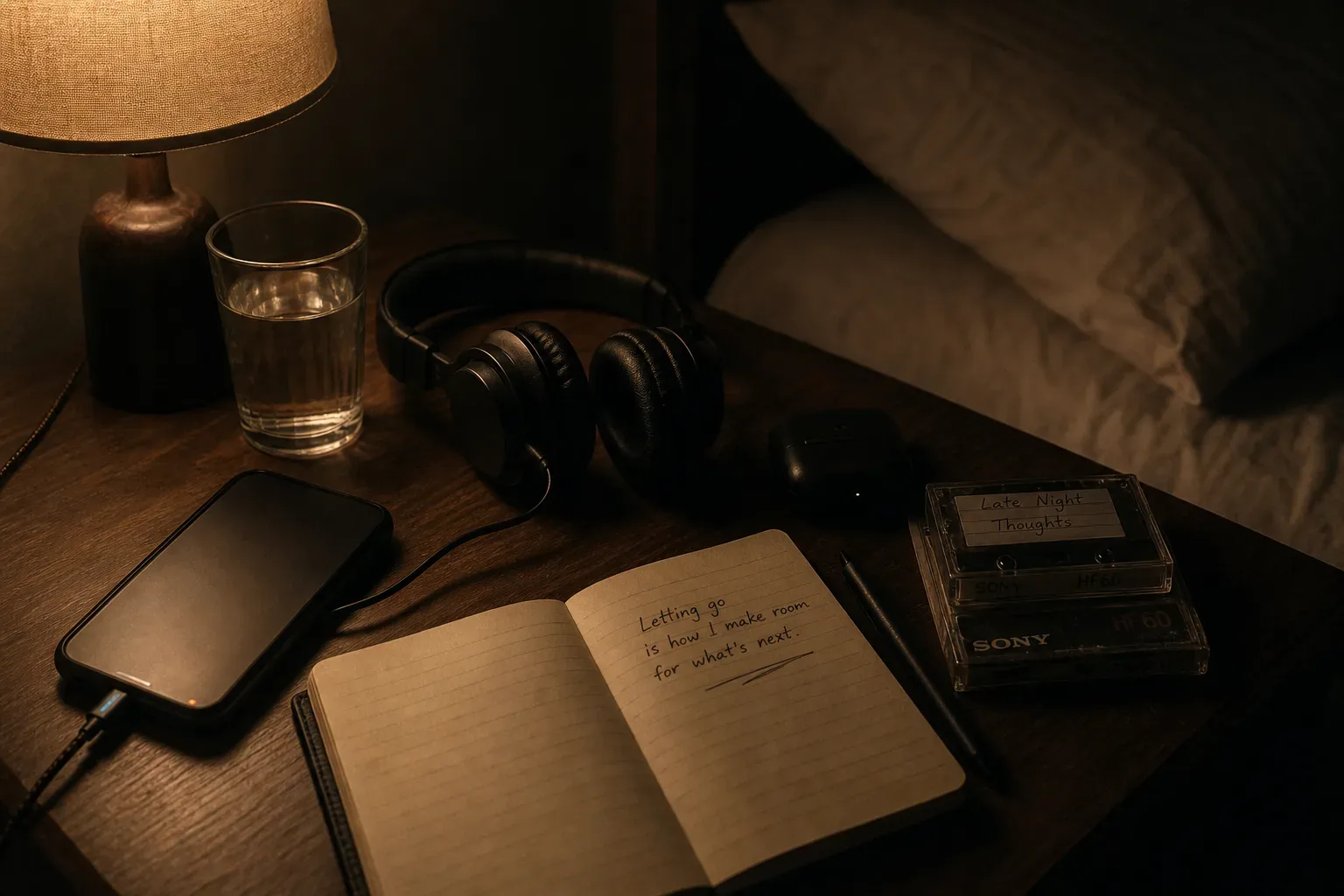
Detachment subliminals are quiet audio tracks that repeat letting-go statements beneath music, rain, brown noise, or another mask. Use them as a sleep cue, not a guarantee: choose clean wording, keep the volume low, run a timer, and judge results by calmer behavior over 14 nights.
What are detachment subliminals supposed to do?
Detachment subliminals are meant to soften the mental grip around a person, outcome, fear, or repeated thought.
A subliminal is an affirmation you can’t consciously hear. That’s the whole trick, and that’s also the whole problem. The claim is that your mind receives the words without your waking attention arguing with them. Research on subliminal priming is real, but modest. Kunst-Wilson and Zajonc reported preference shifts after very brief exposure in 1980; later studies, including Greenwald’s work in the 1990s, found effects that were small and easy to overstate.
Detachment is not indifference. It is the quieter skill of not using your whole nervous system to hold one outcome in place. In a sleep audio context, that might sound like: “I can rest without solving this tonight,” “I release checking,” or “My body is safe when I stop rehearsing.” Those statements won’t erase grief, but they can give your mind a path to repeat when the room gets dark.
The honest use case is narrow and useful: detachment subliminals may help you interrupt rumination before sleep. The American Psychological Association describes rumination as repetitive negative thinking, and multiple sleep studies link pre-sleep cognitive arousal with poorer sleep quality. If your track reduces the 30-minute argument you usually have with your own phone, it has done something practical.
What it should not do is keep you attached to the very thing you claim to release. A track titled “detach so they chase you” is still about them. A cleaner track brings attention back to your own breath, bed, body, and morning.
The test of a detachment track is not whether it feels mystical. The test is whether you check less and sleep sooner.
For a broader grounding in this category, read the Subliminals pillar before you commit to any one nightly file.
How do you set up a night session without losing sleep?
Set up detachment subliminals like sleep hygiene first and manifestation practice second.
The American Academy of Sleep Medicine recommends that adults sleep 7 or more hours per night. That number matters because some people turn subliminals into all-night experiments, then wake up tired and call it “purging.” I wouldn’t. If the audio fragments your sleep, the cost is too high. A practice that steals rest is not a sleep practice.
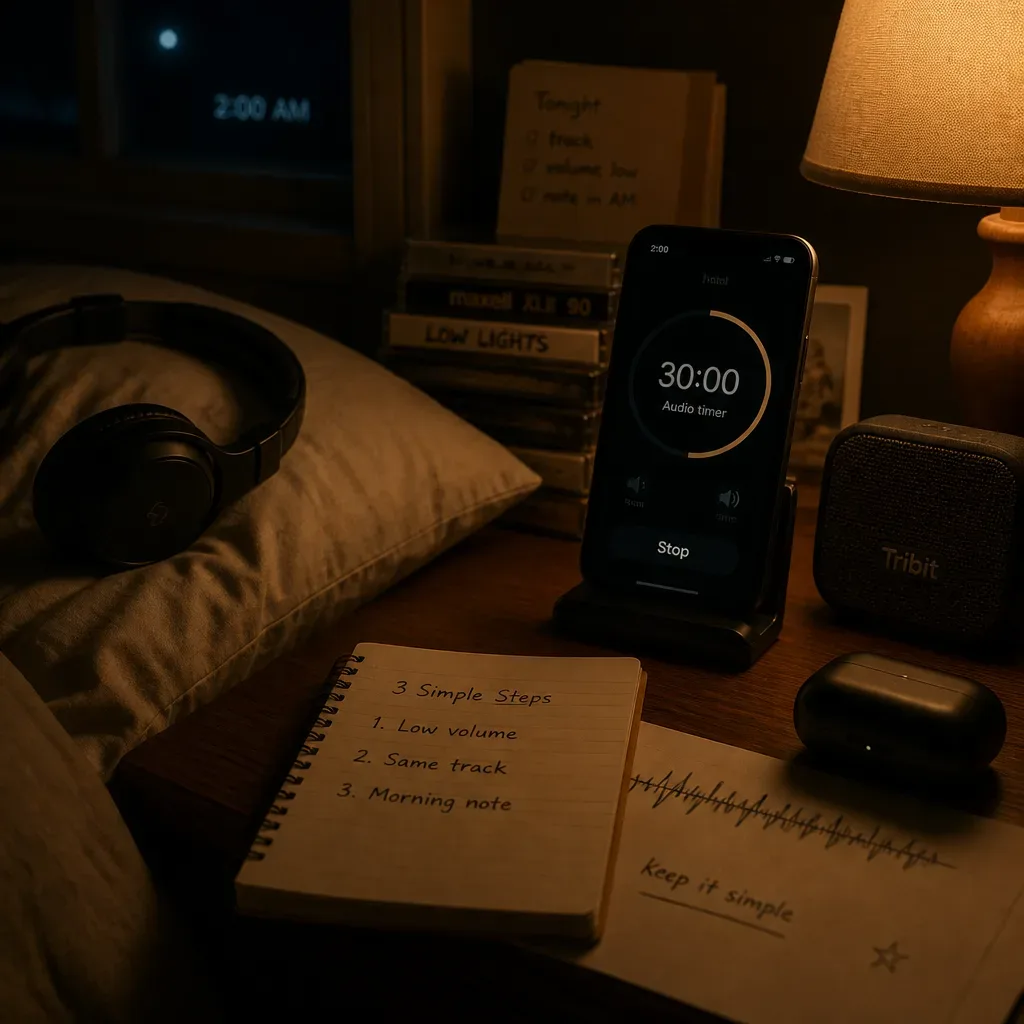
Start with a 20- to 45-minute timer. That gives the mind a repeated cue without making the whole night depend on a file. If you usually fall asleep in 15 minutes, a 30-minute track is enough. If you take longer, use 45 minutes for the first week, then reduce it if you notice lighter sleep. The Sleep cycle calculator tool can help you choose a wake time that doesn’t cut through a cycle.
Use the same track for at least 14 nights unless it bothers you. Two nights is noise. Three nights proves almost nothing. In my own notes, the earliest useful pattern usually appears between nights 8 and 12: fewer checks, less bargaining, or a shorter spiral after lights out. That is not a scientific claim. It is what long tracking makes visible.
A simple setup works better than a dramatic one:
- Put your phone across the room or face down.
- Set the audio timer before you get into bed.
- Keep the volume low enough that you could ignore it.
- Do not read comments while listening.
- Track one behavior in the morning.
If you have persistent insomnia, speak with a qualified clinician. Audio can support a routine, but it is not medical care.
What should the words actually say?
The best detachment scripts are specific, self-focused, and calm enough to sleep beside.
Many subliminal makers publish affirmations in the description. Read them. If there is no script, decide whether you trust the creator enough to sleep with their words for 14 nights. Pew Research Center reported in 2024 that YouTube remains one of the most widely used online platforms in the United States, with 83% of adults saying they use it. That scale is useful, but it also means quality control is uneven.
Look for statements that reduce urgency instead of feeding it. “I am safe without checking” is different from “They can’t stop thinking about me.” One returns you to your own life. The other keeps the attachment warm. Detachment subliminals should not turn your pillow into a surveillance desk.
Here is a plain comparison:
| Better wording | Riskier wording | Why it matters |
|---|---|---|
| “I can rest without an answer tonight.” | “They text me now.” | One supports sleep; one keeps waiting active. |
| “I release the need to control this.” | “I control their thoughts.” | Consent matters, even in fantasy. |
| “My attention returns to me.” | “They regret losing me every night.” | The first lowers fixation; the second repeats the bond. |
| “I am allowed to stop replaying.” | “I remember every sign.” | Detachment needs fewer loops, not sharper loops. |
Self-affirmation research is stronger when the statements connect to values and identity. In a 2013 review in the journal Social and Personality Psychology Compass, Cohen and Sherman described self-affirmation as a way people protect a broader sense of self under threat. That does not prove subliminals work during sleep. It does suggest that words about self-respect may land better than words about winning.
You can also pair detachment audio with audible sleep affirmations on nights when hidden wording makes you uneasy. Audible words give you consent in real time. You know what you are repeating. For some listeners, that alone makes the body soften.
Letting go is not a performance of not caring. It is the practice of no longer giving one thought the whole room.
How loud should detachment subliminals be, and what audio is safest?
Use the quietest volume that keeps the track steady without making your ears or attention work.
There is no universal decibel level because phones, speakers, headphones, and rooms differ. A practical test is easier: start at the lowest audible setting, then lower it one step if you can still feel settled. If you are using masked affirmations, you do not need to hear the words. If the rain, music, or brown noise is loud enough to make you tense, it is too loud.
Be careful with headphones. The World Health Organization has warned for years that unsafe listening levels can contribute to hearing risk, especially with long duration and high volume. Sleep makes this trickier because you are not monitoring discomfort well. If you use earbuds, choose a timer. If you can use a small speaker instead, many people find it kinder.
Also watch the frequency claims. Some tracks advertise 432 Hz, theta waves, or binaural beats as if a number guarantees release. Binaural beat studies exist, but results vary. A 2019 meta-analysis in Psychological Research found small effects across cognition and mood, with timing and frequency conditions mattering. That is not the same as proof that one YouTube upload can make you detached by morning.
The safest audio is boring in the right way:
- no sudden volume jumps
- no ads in the middle if possible
- no alarming whispers
- no commands about another person’s will
- no promise that you must feel worse before it works
- no need to sleep with it at high volume
If you wake at 3 a.m. irritated, stop. That is data, not failure. Sleep audio should be invited back by the body.
What should you expect by week two?
By week two, look for small behavioral changes, not dramatic signs.
Fourteen nights is long enough to see whether the track is helping the routine hold. It is not long enough to declare a new personality. Habit researcher Phillippa Lally and colleagues found in 2009 that automaticity took 66 days on average, with wide variation from 18 to 254 days. That study was not about subliminals, but it is a useful guardrail: repetition takes time, and people differ.
For detachment subliminals, the first signs are usually plain. You check the app 6 times instead of 20. You stop writing the same unsent paragraph. You fall asleep after one loop of the thought instead of six. You still care, but the caring no longer has your throat in its hand.
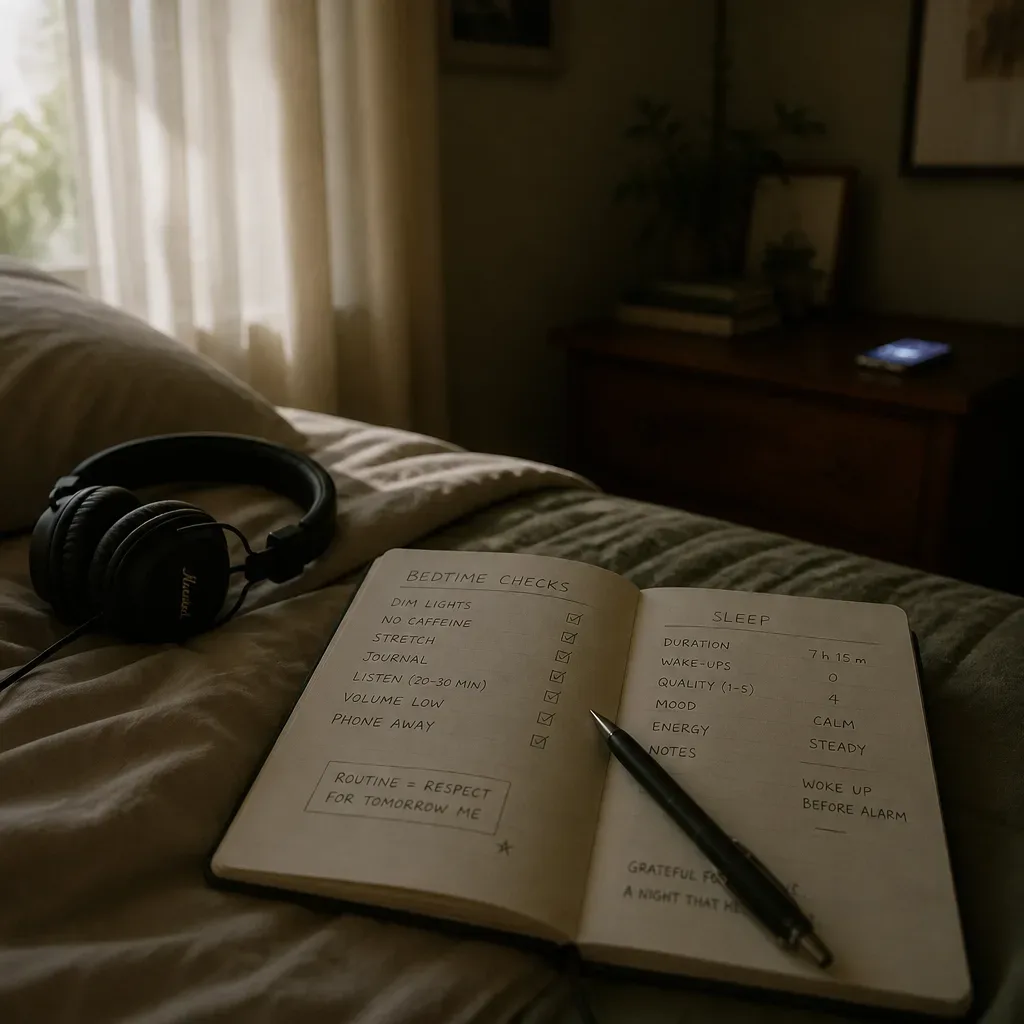
Track one metric. Not ten. If you measure everything, you will turn letting go into another form of holding on. Pick the behavior that hurts sleep most and write down a number in the morning. My favorite is “minutes spent checking after getting into bed,” because it is concrete. If the number drops from 25 minutes to 10 minutes over two weeks, that matters.
You can use this 14-night check:
- Nights 1 to 3: notice comfort, volume, and whether you wake up more.
- Nights 4 to 7: watch the target behavior without changing the track.
- Nights 8 to 14: compare your sleep onset and checking pattern.
- Morning 15: keep, edit, or stop the audio.
Do not mistake numbness for detachment. If you feel flat, dissociated, or more anxious, choose a gentler practice and consider support. The goal is a wider life, not a smaller one.
When should you choose audible audio instead of subliminals?
Choose audible audio when consent, clarity, or personal wording matters more than hidden repetition.
This is where the AYA Method sits close to subliminals but does something different. The AYA Method is a daily audio manifestation practice. Each day you listen to a short personalized recording — your Dream-Self Moment — narrated from the version of you who has already manifested the life you intend. Listening is the practice. Repetition is the work. The audio is the method.
The difference is simple: you can hear every word. The voice is yours, and the script is personal. A subliminal hides the affirmation under sound and hopes the hidden layer helps. The AYA Method makes the statement audible enough to agree with, resist, edit, and return to. For detachment, that can matter. You may need to hear yourself say, “I don’t have to solve this at midnight.”
Audible recordings also reduce the common problem of borrowed language. A public subliminal has to speak to thousands of people. Your attachment has details: the hour you check, the phrase that hooks you, the room where the thought gets loud. Personal audio can name the pattern without making it theatrical.
Use subliminals when you want a soft background cue. Use audible audio when you want clarity and ownership. Neither should be used to override sleep. Dr. Andrew Huberman often talks about NSDR and rest protocols as tools for downshifting arousal; even there, the useful part is not force. It is repeatable calming.
Hidden words can cue you. Heard words can ask for your agreement.
If you are already using sleep affirmations, you may find audible detachment phrases easier than masked ones. If you still prefer hidden audio, stay close to clean wording and low volume.
How do you keep detachment subliminals from becoming another attachment?
Keep the practice small, timed, and measured by real-life freedom.
This is the quiet trap. You start listening to let go, then you spend an hour picking the perfect track, reading 400 comments, checking whether your mood means it is working, and restarting the audio because you had a doubtful thought. The ritual becomes another hook. The nervous system does not care that the hook has a prettier title.
Put limits around the practice before the emotional night begins. Choose one track for 14 nights. Do not switch because a comment promised faster results. Do not stack 12 detachment files until 3 a.m. The National Sleep Foundation has long advised a consistent wind-down period, often 30 to 60 minutes, because regular cues help the body predict sleep. Predictability is part of the medicine here.
A clean detachment routine might look like this:
- 10:15 p.m. phone on charger, away from bed
- 10:20 p.m. wash, lights low
- 10:30 p.m. detachment subliminal starts on a 30-minute timer
- morning: write one number, such as checks after bedtime
- day 15: decide with evidence, not panic
If a track makes you more preoccupied with signs, stop using it. If it encourages revenge, control, or obsession, skip it. If it helps you close the day and return to yourself, keep it simple. The best night practice is one you don’t have to keep negotiating with.
For more background on how hidden affirmations differ from audible nighttime phrases, keep both the Subliminals pillar and the Sleep affirmations pillar nearby. Use the Sleep cycle calculator tool when timing matters more than another track.
Let the last thing you hear be something that gives you back to yourself.