subliminals
Do Subliminals Work? Science vs Dream-Self Audio
Do subliminals work? Here is the honest line between modest priming science, YouTube sleep claims, and audible Dream-Self audio.
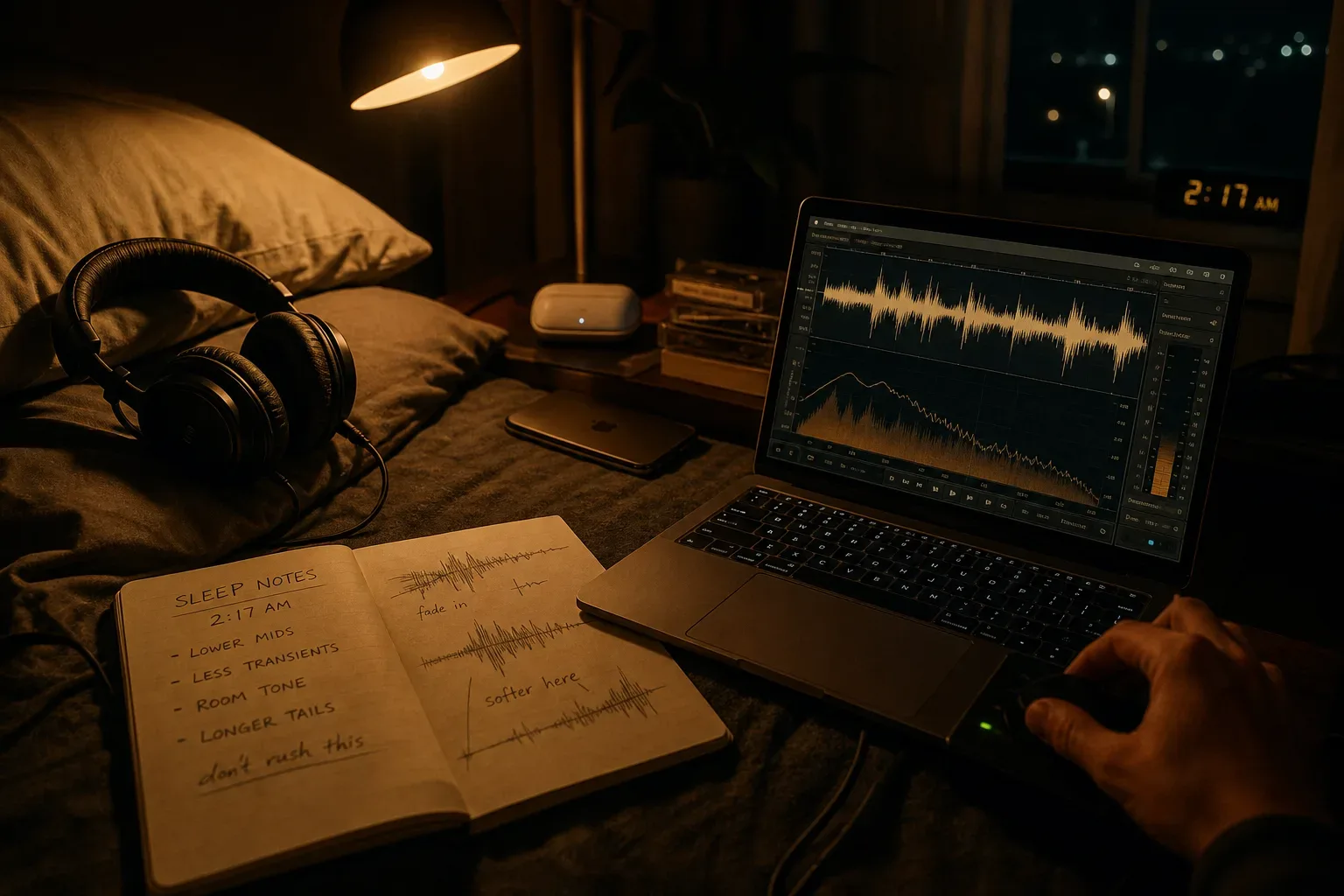
Do subliminals work? Sometimes, in small ways that look more like priming than life control. Hidden cues can nudge attention or feeling under lab conditions, but overnight YouTube claims go far beyond the evidence. Audible Dream-Self audio is different: you hear the words, consent to them, and repeat them before sleep.
What are people really asking when they ask, do subliminals work?
They are usually asking whether hidden words can cause a real change without conscious awareness.
That question has 2 parts: audio and psychology. The audio part asks whether there is actually a voice on the file, whether your speaker can reproduce it, and whether your ear can receive it. The psychology part asks whether an unnoticed cue can change what you choose, feel, remember, or expect. Those aren’t the same question. A file can contain a hidden voice and still fail to do much. A cue can influence a lab task and still not remake your life.
A subliminal is usually defined as a stimulus presented below conscious awareness. In audio, that can mean a voice mixed 20 to 40 dB under rain, a whisper buried under music, or a pitched layer placed near the edge of hearing. Adult hearing often rolls off above 15,000 to 17,000 Hz, and many phone speakers don’t reproduce those frequencies cleanly. If a creator claims a script lives at 17,500 Hz, your earbuds, codec, and ears all get a vote.
The research base is real but narrow. A 1991 paper by Anthony Greenwald and colleagues tested commercial self-help tapes and found no evidence that the labeled content produced the promised memory or self-esteem changes, even when users thought they improved. Reviews of subliminal priming, including work discussed by Stanislas Dehaene and Lionel Naccache, tend to support brief, context-dependent effects rather than sweeping personal change.
A hidden sentence is not stronger because it is hidden; it is only harder to inspect.
That doesn’t make every listener foolish. Rituals matter. Repetition matters. A calm track can lower arousal for some people, and bedtime routines are easier to keep when they feel yours. But if the claim is specific, the evidence should be specific too. Start with the plain subliminals guide if you want the basic terms separated from the sales language.
What does priming science actually support?
Priming science supports modest shifts in attention, recognition, and preference, not guaranteed overnight identity change.
In a typical priming study, researchers expose people to a word, image, sound, or cue and then measure a fast response. The effect might be a few milliseconds on a reaction-time task, a small change in word completion, or a brief preference for a related item. That is interesting. It is not the same as playing a 10-hour track called “new face subliminal” and expecting your bones to obey.
Subliminal perception studies often use very short exposures, sometimes 16 to 50 milliseconds, paired with masking. In sleep audio, the setup is messier. You have room noise, pillow position, streaming compression, volume changes, and sleep stages. The National Sleep Foundation describes adult sleep as moving through cycles of roughly 90 minutes, with different levels of responsiveness. During deep non-REM sleep, language processing is not the same as relaxed waking listening.
There are sleep-learning studies, but they are not a free pass for any claim. Research by Ken Paller and others on targeted memory reactivation suggests that sounds linked to earlier learning can sometimes cue memory consolidation during sleep. The key detail is “linked to earlier learning.” The brain is not simply taking dictation all night. It is sorting, strengthening, and reducing signals.
Here is the honest split:
| Claim type | What evidence can support | What it does not prove |
|---|---|---|
| Subliminal priming | Short-term bias in attention or response | Major life changes from hidden audio |
| Sleep cues | Memory support for material learned awake | New complex beliefs installed during sleep |
| Audible repetition | Clear rehearsal of chosen words | Guaranteed external outcomes |
| Relaxing sound | Lower arousal for some listeners | A hidden script is present |
The practical takeaway is simple: priming is not fake, but it is small. The jump from “a cue can nudge a task” to “a masked sentence can create a new life” is where the floor gets thin.
Why do YouTube subliminal claims outrun the evidence?
They outrun the evidence because platforms reward certainty, not careful measurement.
Most subliminal tracks online are judged by comments, titles, and community reports. You’ll see claims about height, jaw shape, eye color, money, crushes, grades, and memory. Some comment sections have thousands of posts. That feels persuasive at 1 a.m. It’s also not controlled data. Expectation, selective reporting, puberty, makeup, lighting, effort, and coincidence can all enter the room before the hidden audio gets credit.
YouTube also changes audio. Standard streaming uses lossy compression, and the exact codec depends on device and connection. Quiet layers can smear. High-frequency material can disappear. Heavy limiting can lift masked voices in some sections and bury them in others. If someone says the affirmations are safely hidden at a very high frequency, I want to see a spectrum analyzer view and the original file, not just a pastel thumbnail.
As an engineer, I use 3 simple checks before I trust a subliminal file:
- Script transparency: Is the full script published in readable text?
- Audibility check: Can I hear any layer when the masking sound is reduced or filtered?
- Technical claim check: Does the stated frequency survive the upload and playback chain?
A 2023 Pew Research Center report found that YouTube remains one of the most widely used platforms among teens in the United States, with 93% reporting use. That scale matters. A claim can spread because it is sticky, not because it is true. The listener deserves a label on the tape.
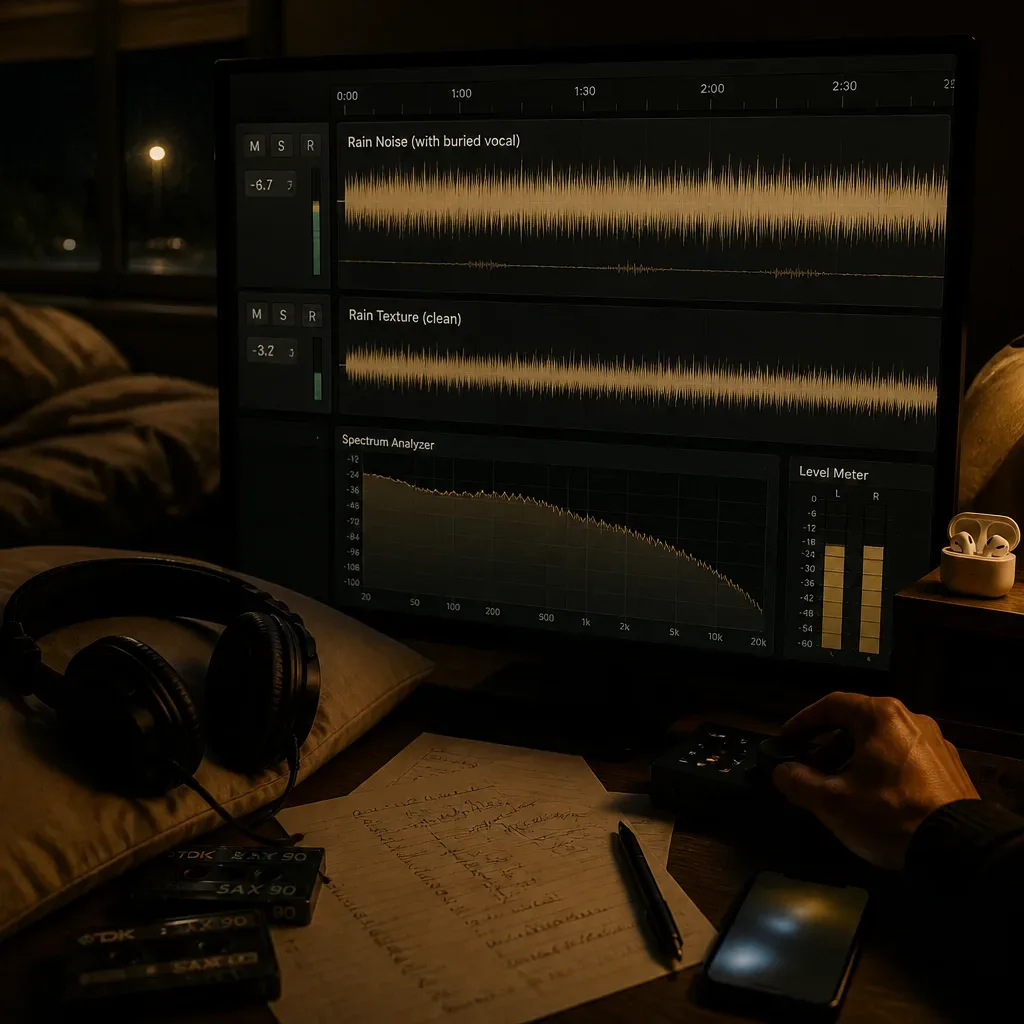
The safest creators are usually the least theatrical. They tell you what is in the file, what volume to use, and what not to expect. They don’t ask you to ignore headaches, skip sleep, or play 12 tracks at once. If a method costs you sleep, it costs more than it gives.
How is audible Dream-Self audio different from subliminals?
Audible Dream-Self audio is different because the words are clear, personal, and chosen before you repeat them.
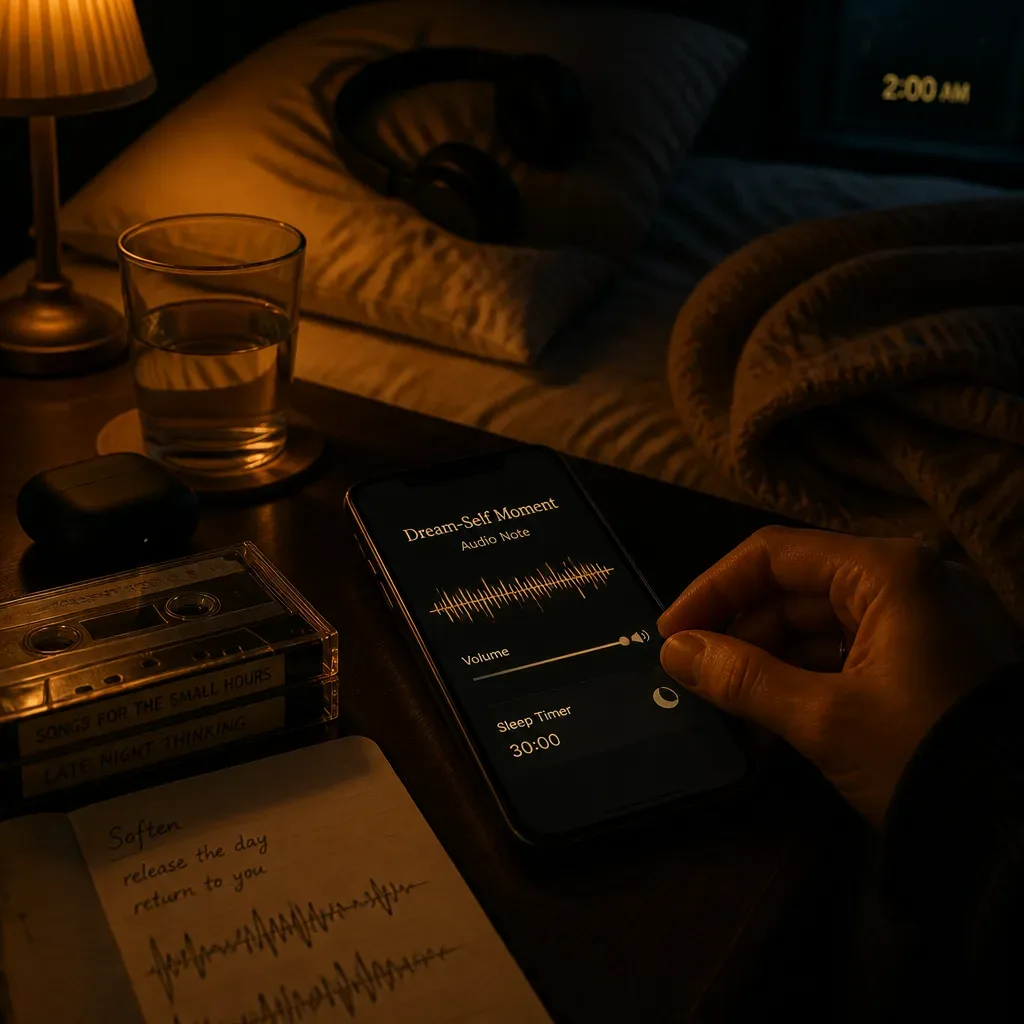
The AYA Method is a daily audio manifestation practice. Each day you listen to a short personalized recording — your Dream-Self Moment — narrated from the version of you who has already manifested the life you intend. Listening is the practice. Repetition is the work. The audio is the method.
That is not a subliminal. Nothing is hidden under rain and asking for trust. You hear the voice. You hear the tense, the scene, the details, and the emotional temperature. If a sentence feels wrong, you can change it. If the recording is too loud, too fast, or too polished, you can notice that. Consent is not a small detail in sleep audio. It is the center of the practice.
This matters because the last part of the night is not a courtroom. You are not cross-examining the words. You are softening. Dr. Andrew Huberman often points to the importance of light, timing, and routines for circadian rhythm; the same plain logic applies to sound. What you repeat near sleep becomes easier to return to, even if that is habit rather than magic.
The last ten minutes before sleep are suggestible. Choose what goes in.
Audible Dream-Self audio also fixes a technical problem. With subliminals, the listener often has to trust that the file contains what the title says. With audible audio, the method is inspectable. You can hear every word at normal volume before you make it part of your night. That doesn’t make every outcome certain. It makes the practice honest.
If you already use affirmations, compare the difference with the sleep affirmations guide. Affirmations can be short and general. A Dream-Self Moment is usually more scene-based, like a remembered future spoken back to you in first person.
What should you listen for in a safe nighttime practice?
Listen for clarity, low volume, clean wording, and a practice that protects sleep before it asks for belief.
Start with volume. A good nighttime track should sit low enough that you can fall asleep without guarding against the next syllable. The World Health Organization’s 2018 environmental noise guidance treats nighttime noise as a real health issue at population level; your bedroom is smaller, but the principle holds. Soft sound is not just aesthetic. It is sleep hygiene.
The Centers for Disease Control and Prevention says adults generally need at least 7 hours of sleep per night, and about 1 in 3 U.S. adults reports not getting enough. Any audio habit that cuts that number down is suspect. If you are replaying a subliminal because a creator says 8 hours is mandatory, but you wake every 40 minutes, the track is failing the first test.
Use this plain checklist:
- The script is visible or fully audible.
- The volume is low and comfortable, not attention-grabbing.
- The words don’t shame your current body, money, mind, or relationships.
- The track ends or loops gently, without sudden ads or loud transitions.
- You can stop for a week without feeling punished by the method.
- If insomnia is ongoing, you talk with a qualified clinician instead of adding more tracks.
There is also timing. If you’re trying to place audio near a natural sleep window, use the sleep cycle calculator to estimate wake times around 90-minute cycles. It won’t know your exact brain state, but it can keep you from setting alarms in the middle of your deepest likely sleep.
A sleep practice should make the night quieter, not turn the bed into homework.
For subliminals specifically, read the subliminals pillar and ask whether the track is built like audio or sold like a secret. You don’t need hostility. You need labels.
So, should you use subliminals or audible audio before sleep?
Use the format that lets you sleep well, know what you are hearing, and repeat words you can stand behind in the morning.
If subliminals help you settle, keep the claim modest. Treat them like a masked ritual with possible priming effects and a calming container. Don’t treat them like a device that can override biology, consent, practice, or time. The best case for subliminals is gentle: a cue, a mood, a repeated association. The weakest case is always the loudest: guaranteed results, impossible timelines, and no script.
If you want something cleaner, audible Dream-Self audio is the better engineering choice. You can inspect the content. You can adjust the pacing. You can decide whether the future-self language feels kind or false. That makes the practice less mysterious and more accountable. Joe Dispenza, Neville Goddard, and many modern manifestation teachers emphasize rehearsal and identity, but none of that requires hiding the sentence from the listener.
There is an old research-adjacent temptation here too. People sometimes cite Princeton PEAR or Global Consciousness Project work as proof that intention changes physical systems. Those projects reported small statistical anomalies and remain debated; they do not prove that a masked audio file will deliver a specific result. If you bring that material into your practice, bring humility with it.
Here is my low-volume recommendation for 14 nights:
- Pick one track only, subliminal or audible.
- Listen for 5 to 15 minutes before sleep, not all night at high volume.
- Keep the volume just above silence if it is audible, or below distraction if it is masked.
- Write one line in the morning: sleep quality, mood, and whether you want to repeat it.
- At week two, judge the practice by sleep, steadiness, and honesty, not by comment-section timelines.
What you hear while you sleep shapes the room you wake up in, even when it doesn’t control the world outside it.
The honest answer to “do subliminals work” is yes, maybe, a little, under some conditions. The better question is whether your nighttime audio respects your ear, your sleep, and your consent. Hidden words can be interesting. Clear words can be lived with.
Keep the volume low enough that morning can find you.