subliminals
How to Make Subliminals: A Safer Audible Version
Learn how to make subliminals safely by creating an audible Dream-Self track you can hear, consent to, and play softly before sleep.
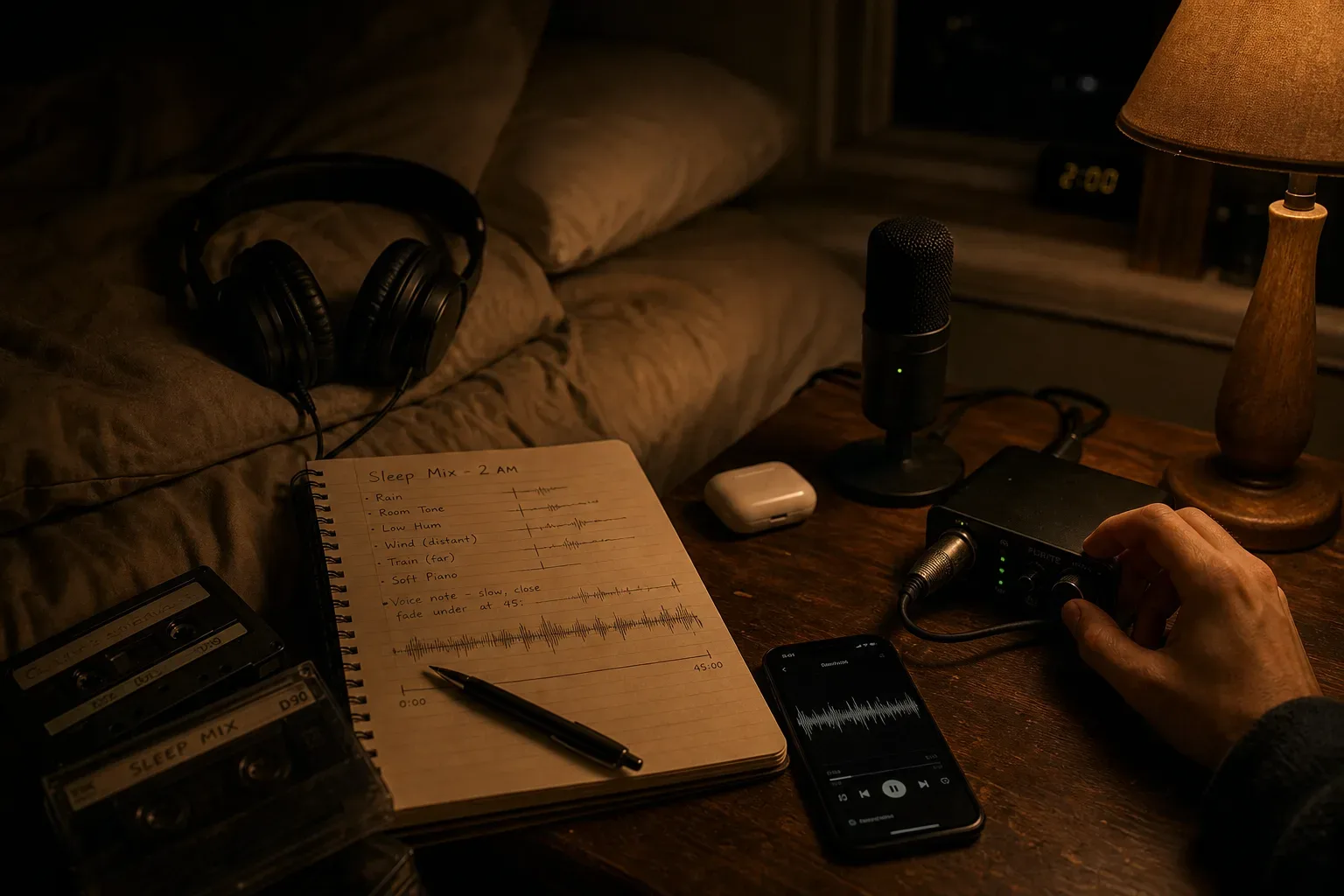
If you want to know how to make subliminals, make the safer version first: write a short first-person script, record it audibly, mix it under soft sound, and listen before sleep at a low volume. Hidden words are optional. Consent is not. A track you can hear is easier to trust.
What are you actually making when you make a subliminal?
You are making repeated verbal suggestion wrapped in audio, usually quiet enough that attention does not grab every word.
A classic subliminal puts affirmations below music, rain, noise, or another masking layer. You may hear the sound bed but not the sentence. That is the whole trick, and also the whole problem. If you cannot hear the message, you cannot easily check the message. In a 1996 paper, Greenwald, Draine, and Abrams found subliminal semantic activation effects, but the effects were small and short-lived, not the sweeping claims often attached to online tracks.
The safer home version keeps the useful part and drops the fog. You still repeat language at night. You still pair it with a relaxed state. You still use a soft voice and an ordinary routine. But the words stay audible enough that you can say yes to them. The safest suggestion is the one you can hear and consent to.
That matters because audio is intimate. It sits close to the body. The American Academy of Sleep Medicine and Sleep Research Society recommend at least 7 hours of sleep for most adults, and anything you play overnight should protect that first. If a method costs you sleep, it costs more than it gives.
For background on the traditional form, read the Subliminals pillar. For the version below, think of this as a bridge between subliminals and sleep affirmations: spoken words, repeated softly, timed for the last quiet minutes of the night.
Why make the safer version audible instead of hidden?
Audible is safer because you can verify the words, adjust them, and notice whether they help or disturb your sleep.
The evidence for subliminal priming is real, but modest. Kouider and Dehaene reviewed subliminal processing in 2007 and described how unconscious stimuli can influence simple perception and response. That is not the same as proving a masked YouTube file can change your income, face, grades, or attachment style while you sleep. The lab finding and the online promise are not the same animal.
Audible tracks also let you remove aggressive language. I have tested recordings that used lines like I must change now or I cannot fail. Those sentences made my jaw tight by night 4. A good sleep script should not argue with you. It should give the mind one clear place to return.
There is a practical reason too. If you make hidden audio badly, you may create a harsh mix: too much high frequency noise, voice artifacts, or volume jumps. The World Health Organization has warned that long exposure to loud sound can affect hearing, and NIOSH uses 85 dBA across 8 hours as a workplace exposure limit. Sleep audio should be far below that. Low is not weak. Low is how the night listens.
Use this quick comparison before you open an editing app:
| Version | What you hear | Main benefit | Main risk |
|---|---|---|---|
| Classic subliminal | Mostly masking sound | Feels effortless | You cannot check every word |
| Audible affirmation | Clear spoken lines | Easy consent and editing | Can feel repetitive |
| Dream-Self audio | A short scene in your voice | Personal and specific | Needs honest writing |
If you want the most structured audible version, the AYA Method is a daily audio manifestation practice. Each day you listen to a short personalized recording — your Dream-Self Moment — narrated from the version of you who has already manifested the life you intend. Listening is the practice. Repetition is the work. The audio is the method.
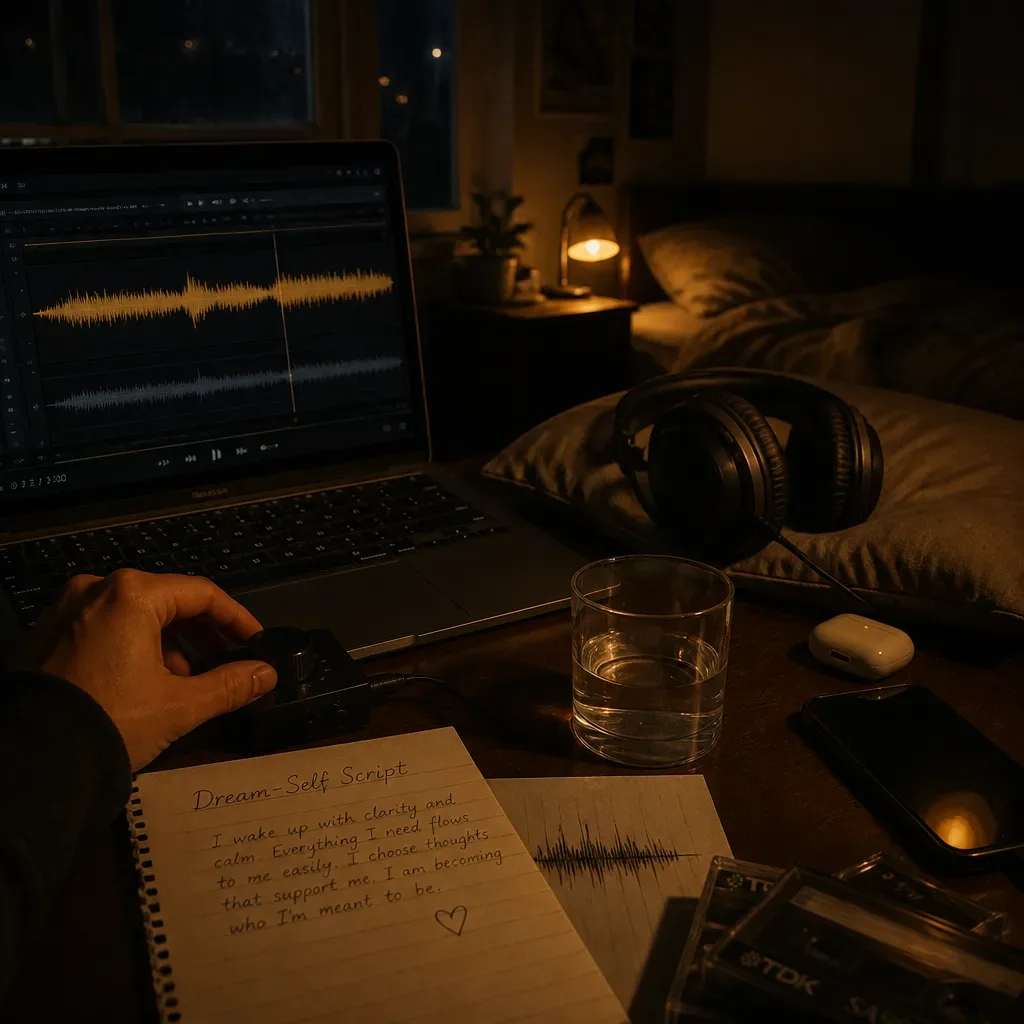
What do you need before you record?
You need one clear intention, one quiet script, one recording device, and a place to save the file without losing the original.
Start smaller than your excitement wants. One track should rehearse one lived change: sleeping with less dread, studying at the desk by 8, speaking calmly in the morning, choosing food without punishment. Sherman and Cohen’s 2006 review of self-affirmation theory notes that affirming valued identity can reduce defensiveness under threat. That does not mean any sentence works. It means wording matters.
Here is the basic setup:
- A phone microphone or USB mic
- A notes app for the script
- Free editing software such as Audacity or GarageBand
- One background sound you can legally use
- Wired speakers, a bedside speaker, or low-volume headphones used briefly
- A simple tracking note for 14 nights
Keep your materials boring. Boring is good at bedtime. I still name files with dates, such as dream-self-sleep-2026-09-05.wav, because after 11 years of sleep notes I have learned that future me never remembers which version was which. Version control sounds too technical until the third edit saves you from rebuilding the track.
Before recording, check your sleep window. Most adult sleep cycles last roughly 90 minutes, though individual cycles vary, so you can use the Sleep cycle calculator tool to avoid starting a new practice on a night when you already plan to cut sleep short. A new audio habit should fit the night you actually have.
How do you write a Dream-Self script that still sounds like you?
Write a short scene from the version of you who already lives the change, using plain words you would not be embarrassed to hear at midnight.
This is where many subliminal scripts go wrong. They stack 80 claims into one file: I am rich, loved, perfect, adored, disciplined, chosen, flawless. The mind may not object to each line, but the body hears the strain. A 2015 National Sleep Foundation panel recommended 7 to 9 hours for adults aged 18 to 64; your bedtime script should support rest, not start a debate.
Use a Dream-Self scene instead of a claim pile. One scene gives the mind sensory detail and sequence. Joe Dispenza often speaks about mental rehearsal, and Neville Goddard taught imaginal scenes before sleep. You do not have to accept every claim from either teacher to use the practical part: one repeated inner scene is easier to carry than a list.
Try this 5-part structure:
- Name the ordinary moment. I wake before the alarm and feel rested.
- Include one body cue. My shoulders are down. My breath is easy.
- Show one behavior. I put both feet on the floor and drink water.
- Let someone else stay optional. I answer messages after breakfast, not before.
- End with safety. I can return to this calmly tomorrow.
A good script sounds almost too simple. That is a feature. The last ten minutes before sleep are suggestible. Choose what goes in.
If you prefer affirmation language, borrow from the Sleep affirmations pillar, but keep the script personal. Replace I am always confident with I speak at a steady pace in the meeting at 10. Replace everything works out with I do the next small task before I check my phone.
How do you record and mix it safely for sleep?
Record the voice clearly first, then place the background sound under it instead of burying the words.
Find a quiet room, turn off fans if you can, and record 2 test takes. Hold the phone about 6 to 10 inches from your mouth. Speak slower than usual. A normal conversational rate often sits around 150 words per minute; for sleep audio, 100 to 120 words per minute usually feels softer and leaves room for the body to settle.
Then edit gently. Remove sharp mouth clicks only if they distract you. Normalize the voice lightly if your app offers it, but do not chase studio polish. The goal is not a perfect voice. The goal is a voice you can return to without bracing.
A safe mix follows this order:
- Import the voice file.
- Import rain, brown noise, or quiet music.
- Lower the background until every word is understandable.
- Add 2 to 5 seconds of fade-in and fade-out.
- Export as WAV or high-quality MP3.
- Listen once in daylight and once in bed before you loop it.
If you want a classic hidden version after this, duplicate the project and label it clearly. Keep the audible master. Masking should be an edit, not your only copy. This is also where a lot of online tutorials drift into unsafe advice, such as extreme panning, very high frequencies, or overnight headphones at loud volume. You do not need any of that.
For a deeper look at masked audio claims, keep the Subliminals pillar nearby. The research can make you more careful without making you cold. Skepticism is not the enemy of practice. It is how practice stays yours.
What should you play before sleep, and for how long?
Play the track once or twice before sleep for two weeks, then judge it by sleep quality and daily behavior, not by a dramatic feeling on night one.
I like 3 to 10 minutes. Longer can work, but long files are harder to test. The CDC has reported that about 1 in 3 U.S. adults do not get enough sleep, so the first rule is not to stretch bedtime for the sake of a method. If you are already late, play it once and let sleep win.
A simple routine looks like this:
- Set your alarm before pressing play.
- Dim the room.
- Put the phone face down or across the room.
- Play the track at a low, clear volume.
- Let the words pass without forcing belief.
- Stop if you become more alert.
By week two, notice the small things. Do you remember the first line? Does the scene feel less strange? Are you doing one behavior from the script without making a ceremony of it? In habit research, Lally and colleagues found in 2010 that automaticity took a median of 66 days, with wide variation. Two weeks is not a verdict on your whole self. It is just enough to see whether the track deserves another edit.
If insomnia is persistent, frightening, or tied to anxiety or depression, talk to a qualified professional. Audio can be part of sleep hygiene, but it is not care.
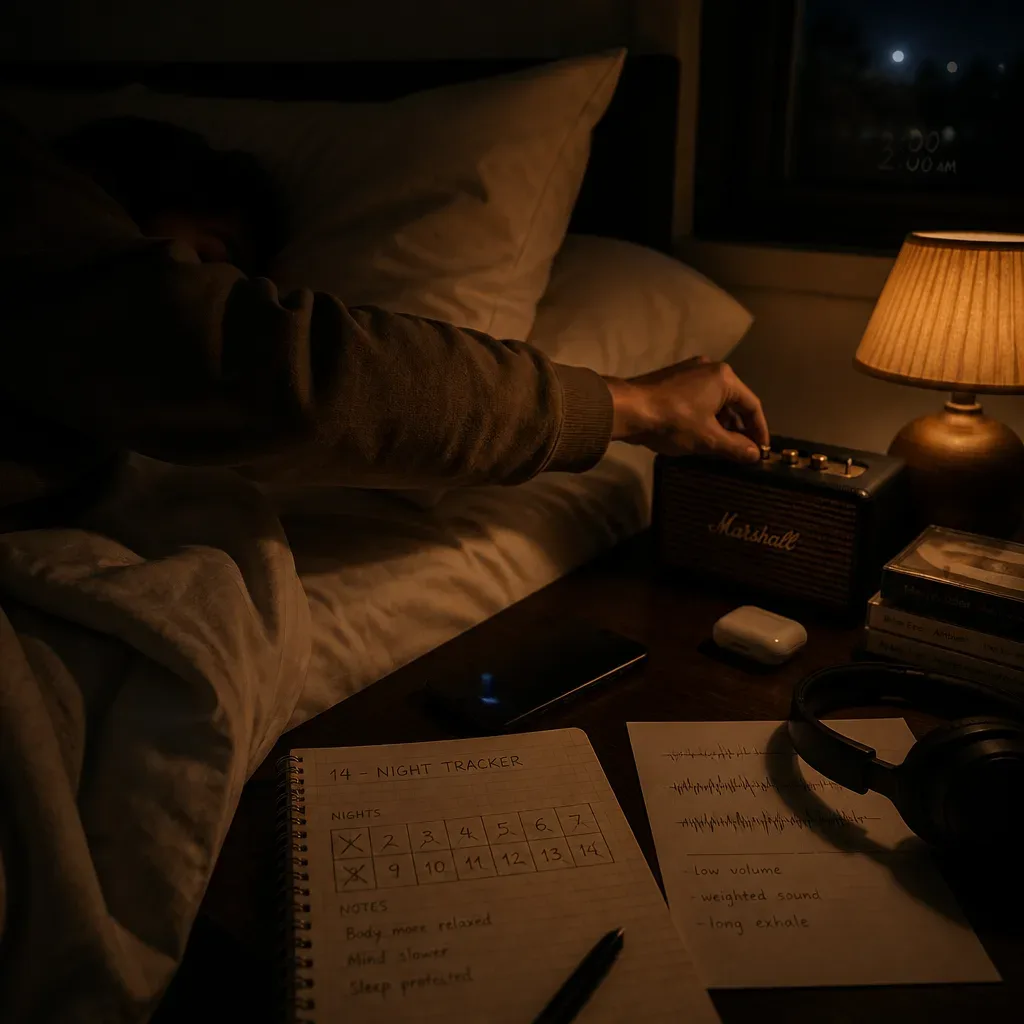
How do you know whether it is helping?
You know it is helping when sleep stays protected and one small waking behavior becomes easier to repeat.
Do not measure this by chills, dreams, or whether you woke up convinced. Those can happen, but they are noisy data. Measure boring signals. My spreadsheet has used the same 1-to-5 sleep quality score for years because boring numbers are kind to tired people. The Pittsburgh Sleep Quality Index, widely used in sleep research, also relies on practical reports such as sleep duration, latency, and disturbance across the past month.
Track only four things for 14 nights:
| Signal | What to write | Why it matters |
|---|---|---|
| Sleep onset | Fast, medium, slow | The track should not keep you alert |
| Wake mood | 1 to 5 | Morning tone is easier to compare |
| Script recall | None, some, clear | Repetition leaves traces |
| Daily action | Yes or no | The practice should touch behavior |
If the track makes you tense, edit the words. If it makes you sleepy but does nothing else, you may still keep it as a sleep cue. Placebo is not a dirty word when the result is rest and no one is selling you fear. Sleep does not check receipts.
If you want a more personal audio structure, return to the AYA Method and compare it with your file. The daily affirmation and Manifestation Board can support the practice, but they are complements. The audio is the method. That distinction keeps the work clean.
You can also compare your script with sleep affirmations when the wording feels too sharp, and use the sleep calculator on nights when timing is the issue rather than motivation. A night practice should make the night simpler.
Keep the voice low, and let it be yours.