subliminals
Layered Subliminals: What Stacked Hidden Words Mean
Layered subliminals stack multiple hidden affirmation tracks at once. Learn what that means, what evidence says, and how to listen safely at night.
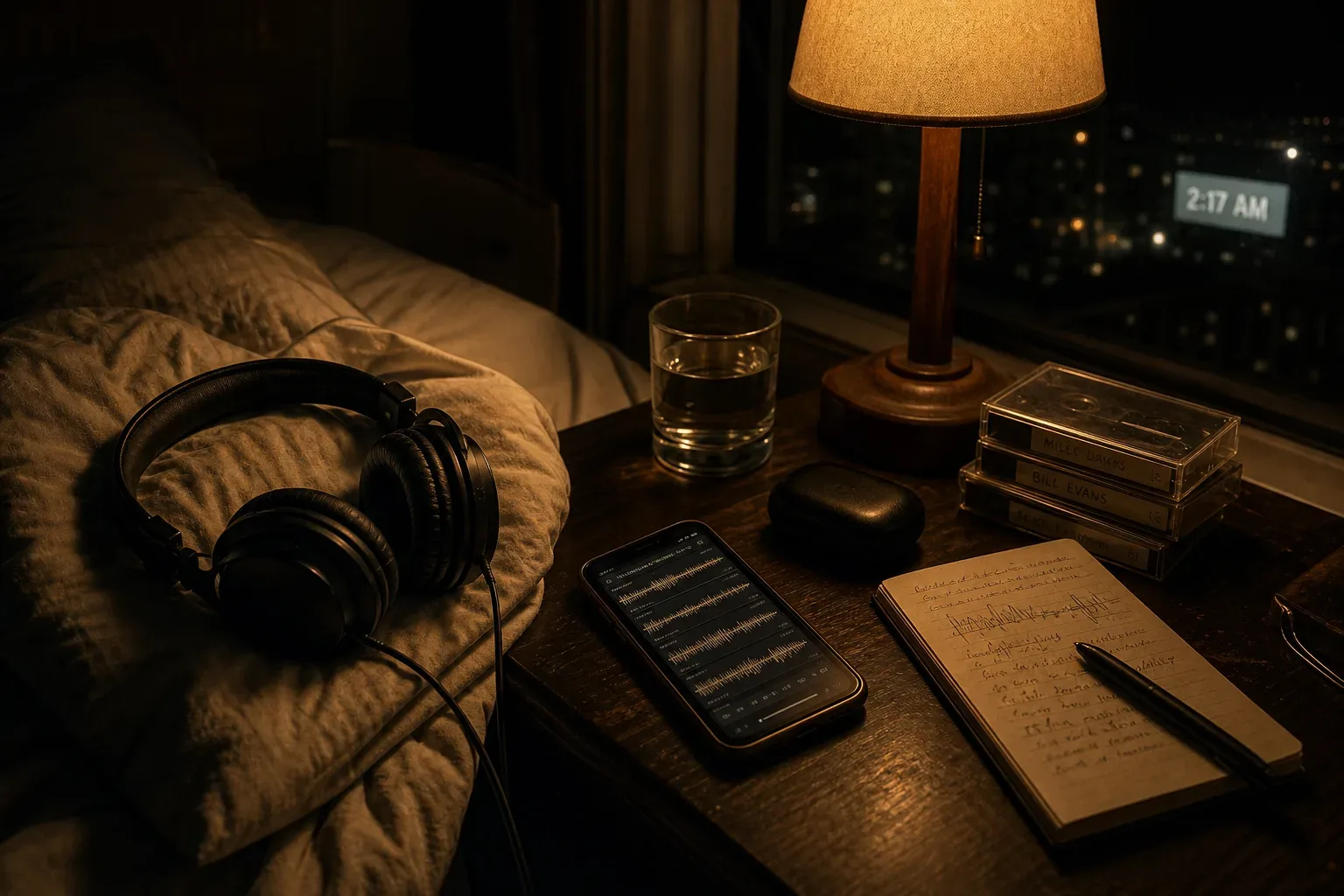
Layered subliminals are subliminal audio tracks made by stacking several hidden affirmation recordings under one sound bed. People use them to fit more repeated phrases into one listen, but more layers don’t automatically mean more effect. The real question is whether the words stay intelligible enough to be processed, and whether the audio protects your sleep.
What are layered subliminals, exactly?
Layered subliminals are tracks where two or more affirmation recordings play at the same time, usually beneath music, rain, static, or ambient sound.
A simple subliminal might contain one voice track saying a phrase like, I feel calm before sleep, mixed below a rainfall loop. A layered one may use 3, 10, or 50 copies of similar phrases, sometimes sped up or split between the left and right channels. On YouTube, descriptions often mention 8 layers, 432 Hz, ultrasonic vocals, or thousands of affirmations. Those details sound technical, but they don’t prove the audio is easier for your mind to use.
A subliminal is an affirmation you can’t consciously hear. That’s the whole trick, and the whole problem. If the words are too loud, the track stops being subliminal. If they’re too buried, you may be listening mostly to rain. The useful middle is narrower than many creators admit.
The basic audio issue is masking. When two sounds share similar frequencies, one can hide the other. Speech carries a lot of meaning between roughly 300 Hz and 3,400 Hz, which is why old telephone systems could carry voices in that band. If several voice tracks occupy the same space, they can blur into texture rather than language.
Layering usually means one of four things:
- Duplicate layering: the same affirmation repeats in several copies.
- Topic layering: different affirmations about one theme play together.
- Channel layering: one script plays on the left, another on the right.
- Speed layering: words are sped up, pitched, or compressed to fit more lines.
For a wider grounding in the category, read the Subliminals pillar. Layered tracks sit inside that larger family. They are not a separate law of mind. They are a mixing choice.
Why do people stack hidden words in subliminal audio?
People stack hidden words because repetition feels efficient, especially when the listening window is limited to one night, one nap, or one study session.
The logic is easy to understand. If one affirmation repeated 100 times may help, then ten layers repeated 100 times each feels like 1,000 chances. The community often calls this a booster effect. In shifting spaces, stacked subliminals also became part of the folklore around method lists, scripting templates, and overnight playlists. I first saw teens trading 30-minute layered audios in 2020, during the first large TikTok shifting wave.
There is a softer reason too. Hidden audio lets people practice without feeling watched by themselves. Hearing a clear affirmation can bring up resistance: that isn’t true, that sounds awkward, I don’t believe myself. When the words are under rain, the conscious argument gets quieter. That can make the practice feel easier, even if the science doesn’t support every claim attached to it.
The research closest to this is subliminal priming, not YouTube subliminals. In a 2002 study by Strahan, Spencer, and Zanna, thirst-related subliminal words influenced drink choice mainly in people who were already thirsty. That matters. Priming tends to work best when it nudges an existing state, not when it tries to create a whole new life from nowhere.
Stacking may also satisfy the part of you that wants to do enough. A 10-hour playlist can feel like devotion. But devotion is not the same as signal quality. A quiet sentence repeated clearly may give you more to return to than a wall of hidden speech.
Here is the plain comparison:
| Audio type | What you hear | Main strength | Main limit |
|---|---|---|---|
| Spoken affirmation | Clear words | Easy to know the message | Can feel forced |
| Single subliminal | Sound bed with one hidden script | Simple mix | Message may be too quiet |
| Layered subliminal | Sound bed with many hidden scripts | More repetition per minute | Words may mask each other |
| Sleep affirmation | Clear or soft words before sleep | Conscious rehearsal | Needs comfort with hearing words |
If you want audible night practice, the Sleep affirmations pillar is the closer neighbor. If you want hidden input, keep the stack simple enough that the audio still feels calm.
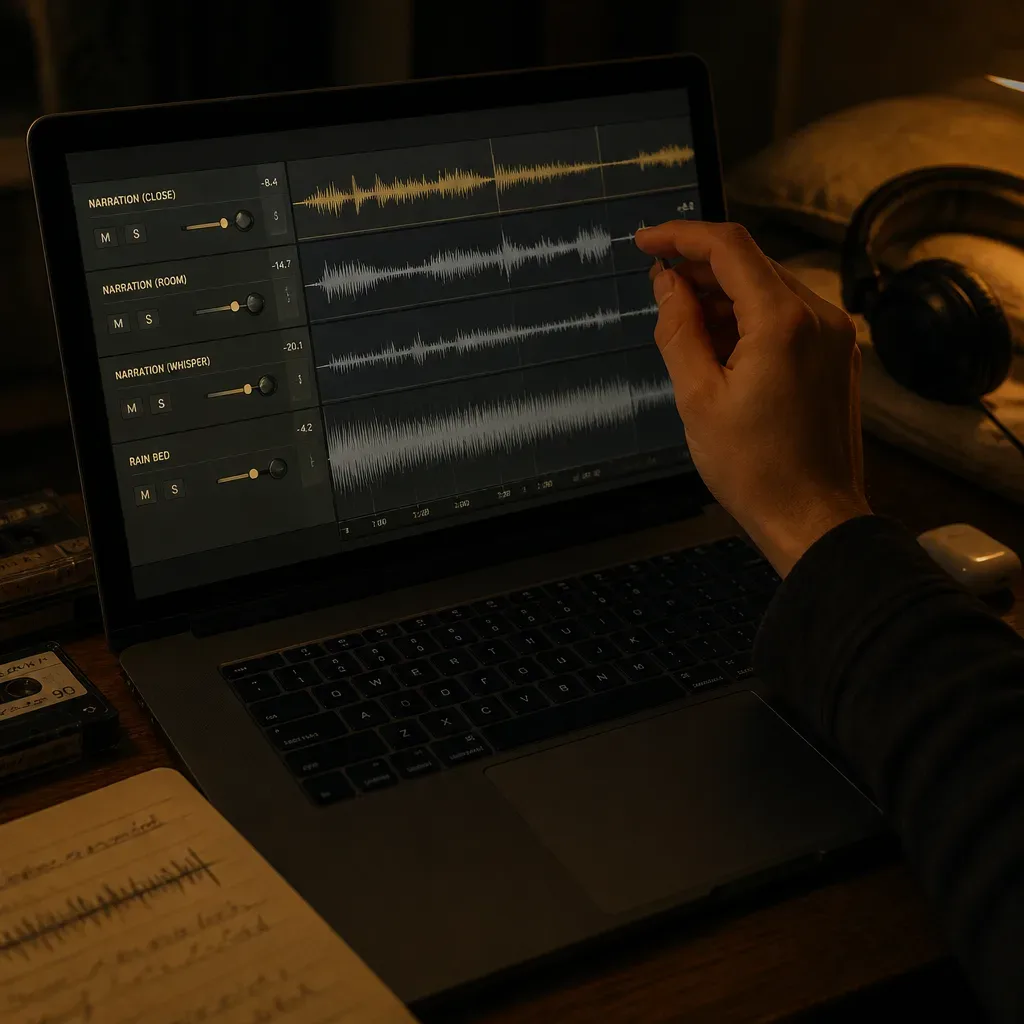
Can your mind process several subliminal layers at once?
Your mind can register more than you consciously track, but it does not follow that it cleanly receives every hidden sentence in a dense stack.
Attention has limits. Colin Cherry’s 1953 dichotic listening experiments, the early work behind the cocktail party problem, showed that when people shadowed one spoken message in one ear, they missed much of another message in the other ear. They might notice a change from speech to tone, or a switch to their name, but they generally did not report the unattended content in detail.
That doesn’t mean unattended sound is useless. It means you should be careful with the claim. The nervous system can respond to volume, rhythm, emotional tone, and familiar words without your full attention. But language is not just sound. It needs timing, separation, and pattern. When 20 sped-up affirmation tracks overlap, the result may be less like hidden instruction and more like a soft crowd.
Greenwald, Spangenberg, Pratkanis, and Eskenazi published a well-known 1991 study in Psychological Science on commercial subliminal self-help tapes. Participants thought they improved in the area printed on the label, even when the labels were switched. The finding is often summarized as a placebo effect, but the kinder reading is this: expectation matters, and expectation can be part of practice.
The honest position is not that subliminals are fake. It is that the research supports modest, conditional effects, while the internet often sells certainty. A small cue can matter. A buried choir of 80 affirmations is not automatically a stronger cue.
If you want a daily practice where every word is known, the AYA Method is a daily audio manifestation practice. Each day you listen to a short personalized recording — your Dream-Self Moment — narrated from the version of you who has already manifested the life you intend. Listening is the practice. Repetition is the work. The audio is the method.
That contrast is useful. Subliminals hide the words and ask you to trust the mix. The AYA Method makes the words audible and personal. Neither needs to be mocked. They simply ask different kinds of listening from you.
Are layered subliminals better, worse, or just louder?
Layered subliminals are not automatically better or worse; they are better only when the mix stays gentle, coherent, and easy to sleep through.
Think like an audio editor for a minute. A track with three low voice layers, each separated in timing or stereo position, may still leave room for the background sound. A track with 40 voice layers, heavy compression, high-frequency hiss, and sudden volume changes may feel busy even if you can’t hear words. Your body still hears the busyness.
For sleep, that matters. The American Academy of Sleep Medicine recommends 7 or more hours of sleep for adults, and the National Sleep Foundation gives a similar 7 to 9 hour range for most adults. A subliminal that makes you check your phone at 2:13 a.m. has already become too expensive. If a method costs you sleep, it costs more than it gives.
There is also the issue of volume safety. The World Health Organization has warned about long exposure to loud personal audio, often using 85 dB over 8 hours as a common occupational reference point. Your night audio should be nowhere near that. You should be able to turn away from it, breathe normally, and forget it is playing.
Use this small test before sleeping with a stacked track:
- Play it at the volume you plan to use at night.
- Sit still for 3 minutes without scrolling.
- Notice your jaw, shoulders, and breathing.
- Lower the sound until it feels forgettable.
- If the track contains sudden ads, harsh panning, or sharp frequencies, don’t use it overnight.
Layered audio can be fine. But the best sleep track is often the one you stop noticing. Night is not a contest for how much input you can survive.
How should you choose a layered subliminal for sleep?
Choose a layered subliminal by checking the script, the creator’s transparency, the sound quality, and your sleep response over at least one week.
Start with the words if the creator shares them. You don’t need a perfect script, but you do need consent. Avoid tracks that refuse to name the theme, promise impossible body changes in 24 hours, or use fear as pressure. A trustworthy creator can say what the audio is for in plain language.
Then check the format. A 10-minute loop is not automatically weaker than an 8-hour file. Many people sleep in cycles of about 90 minutes, though cycle length varies. If your audio restarts with a click every 10 minutes, your body may notice. If you use the Sleep cycle calculator tool, you can plan listening around wake time instead of letting a playlist decide your whole night.
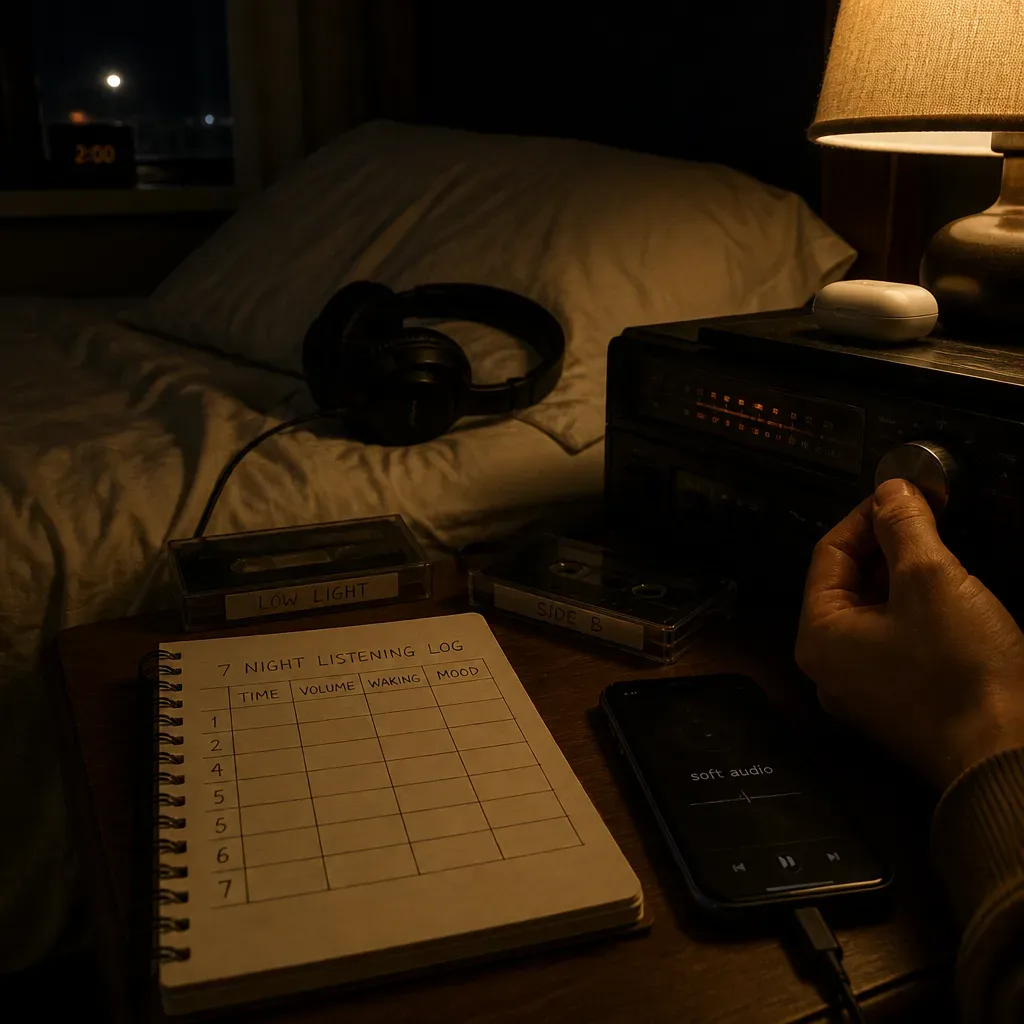
Keep a simple record for 7 nights. Not a dramatic one. Just enough to notice patterns.
- Time you started the audio
- Approximate volume, from 1 to 10
- Whether you woke during the night
- Mood on waking, in one sentence
- Any headache, tension, or urge to keep checking results
By night 3 or 4, you may know whether the track is calming or irritating. By night 7, the pattern is usually clearer. If you are using subliminals for study, confidence, or shifting, avoid stacking five different themes at once. Mixed instructions can become mental noise.
For shifting listeners, I say this with care: a script should be a pleasure, not a second job. The same is true for audio. If the method makes you anxious, shortens your sleep, or pulls you into 3 a.m. checking, pause it. You can return later with a softer file.
If insomnia is persistent or affecting your days, talk with a qualified professional. Subliminals are not treatment, and sleep loss deserves real support.
What should you expect after two weeks of listening?
After two weeks, expect familiarity, mood cues, and possible shifts in attention, not guaranteed results from hidden words alone.
Two weeks is a useful window because it is long enough to repeat a cue and short enough to stay honest. In habit research, Phillippa Lally and colleagues reported in 2009 that automaticity took a median of 66 days, with wide variation. That study was about daily behaviors, not subliminals, but it helps correct the 24-hour promise. Repetition often works slowly.
By week two, you may notice that the sound bed itself becomes a cue for sleep. Your shoulders drop when the rain begins. Your mind recognizes the first chord. The hidden script may be less important than the ritual around it: dim room, low volume, phone down, same time. That still counts as listening practice, even if the mechanism is simpler than the comments section claims.
You may also notice nothing. That is useful data. Not every voice, frequency, or mix fits your nervous system. The absence of a dramatic sign is not failure. It may mean the track is too busy, too quiet, too emotionally distant, or simply not yours.
A grounded two-week approach looks like this:
| Week | What to do | What to notice |
|---|---|---|
| Days 1 to 3 | Test volume and comfort | Sleep interruptions, tension |
| Days 4 to 7 | Keep the same track | Morning mood, urge to replay |
| Days 8 to 14 | Continue only if sleep is steady | Familiarity, calm, resistance |
If you want to compare hidden and audible practice, try one week of a layered subliminal and one week of soft spoken words from the Sleep affirmations pillar. Keep bedtime, volume, and wake time as similar as you can. A tiny personal trial won’t prove universal truth, but it will tell you more than switching tracks every night.
The last ten minutes before sleep are suggestible. Choose what goes in.
What is the clearest way to use layered subliminals without overdoing it?
The clearest way is to use one trusted layered subliminal at low volume, on one theme, for a set number of nights, while protecting sleep first.
Make the practice smaller than your curiosity. One theme. One track. One volume. Seven to fourteen nights. That sounds plain, but plain is often what makes a listening practice usable. The moment you add boosters, bundles, forced repetition counts, and comment-section rules, the audio stops being the method and becomes a monitoring system.
Here is a quiet rule I use in community spaces: if you need three extra apps to feel safe using a subliminal, the subliminal isn’t simple enough yet. A good file should not require constant checking. It should sit beside your night, not take it over.
You can also pair the track with one clear conscious sentence before sleep. Say it once, not 40 times. For example: I am listening softly, and I can rest. That gives your conscious mind a clean handle while the audio plays low. In cognitive terms, you are reducing ambiguity. In practice terms, you are being kind to yourself.
The Subliminals pillar can help you sort claims from basics, and the Sleep cycle calculator tool can keep the night anchored to actual rest. If you use subliminals alongside audible practice, remember the difference: hidden audio can be a cue, but audible words can be chosen, checked, and revised.
Use this boundary list when a layered track starts feeling too important:
- Stop if it wakes you repeatedly.
- Stop if you feel panic when you miss a night.
- Stop if the creator uses threats or shame.
- Stop if the audio has harsh peaks or sudden ads.
- Stop if you are sleeping less to listen more.
Layered subliminals don’t need fear to work as a ritual. They need a quiet place in your night, and permission to be ordinary.
Let the sound be low enough that sleep can still find you.