sleep hypnosis affirmations
Self Hypnosis for Sleep: A 3-Minute Audio Method
Use self hypnosis for sleep with a quiet 3-minute Dream-Self audio script, honest expectations, safe volume, and a nightly repeatable routine.
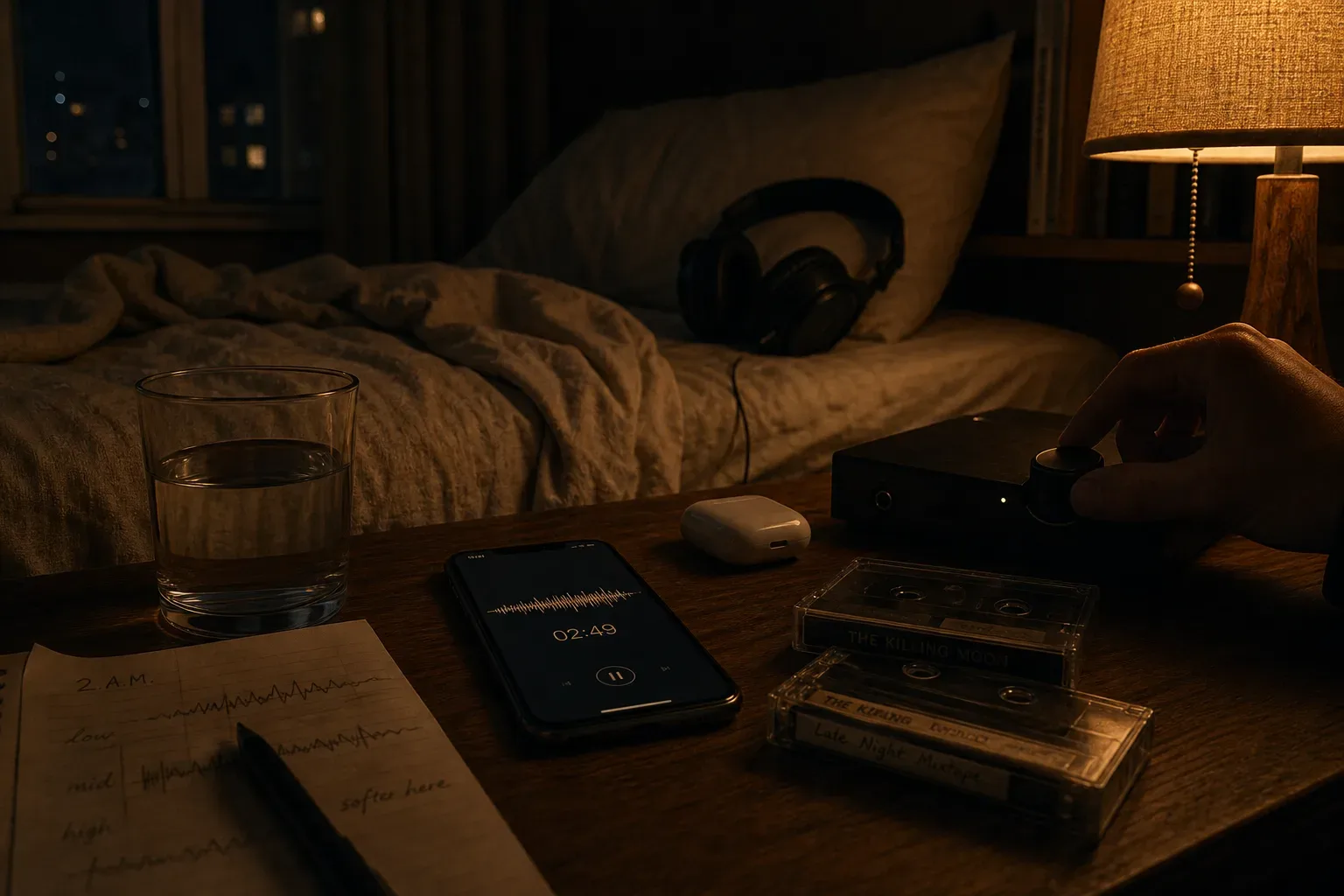
Self hypnosis for sleep is a short, guided way to lower arousal before bed by listening to simple repeated cues. A 3-minute Dream-Self audio works best when the words are audible, personal, and calm: you hear your own future-self script once, at low volume, then let sleep take over.
What is self hypnosis for sleep, really?
Self hypnosis for sleep is a voluntary attention practice that uses suggestion, repetition, and bodily quiet to help you cross from wakefulness into sleep.
It is not stage hypnosis. It is not losing control. At bedtime, it usually looks ordinary: you lie down, hear a slow voice, relax the face and jaw, repeat a few sentences, and stop negotiating with the day. The American Academy of Sleep Medicine says most adults need at least 7 hours of sleep per night, and a short pre-sleep cue is useful only if it protects that time rather than steals from it.
Hypnosis research is real, but it is not the same as the claims attached to many sleep videos online. A 2014 study by Cordi and colleagues found that hypnotic suggestion increased slow-wave sleep in highly suggestible young women during a nap protocol. That is interesting. It does not prove every 8-hour track on YouTube changes your brain overnight.
A good sleep hypnosis script does 3 things:
- Narrows attention to one soft cue, such as breath or voice.
- Reduces threat signals in the body, such as clenched jaw or shallow breathing.
- Repeats a few believable sentences until they feel familiar.
The last ten minutes before sleep are suggestible. Choose what goes in.
If you want a wider foundation before building a script, the Sleep affirmations pillar explains why short first-person lines usually work better at night than grand declarations. For hidden-message audio, the Subliminals pillar covers the quieter, less verifiable cousin of this practice.
Why use a 3-minute Dream-Self audio instead of a long hypnosis track?
A 3-minute Dream-Self audio is short enough to repeat nightly without turning your bedtime into another task.
Long tracks can be useful, especially if you like a 20- or 30-minute voice guiding you through the body. But length has a cost. If an audio keeps changing scenes, adding music, or asking you to imagine detailed outcomes, it may hold attention when attention should be fading. Sleep onset is helped by lower arousal, and the National Heart, Lung, and Blood Institute describes regular timing and a relaxing routine as basic sleep hygiene, not a luxury.
A Dream-Self audio is different from a generic sleep hypnosis recording because the speaker is you, or a voice built from your own intake, speaking as the version of you who already lives the change you are practicing. The AYA Method is a daily audio manifestation practice. Each day you listen to a short personalized recording — your Dream-Self Moment — narrated from the version of you who has already manifested the life you intend. Listening is the practice. Repetition is the work. The audio is the method.
A short audio also respects the sleep cycle. A full sleep cycle is often described as about 90 minutes, though it varies from person to person. If you play voice content all night, you may hear it during lighter sleep or brief awakenings. That can be fine for some people, but for others it becomes noise.
Use 3 minutes because it is enough to cue the body and too short to become a performance.
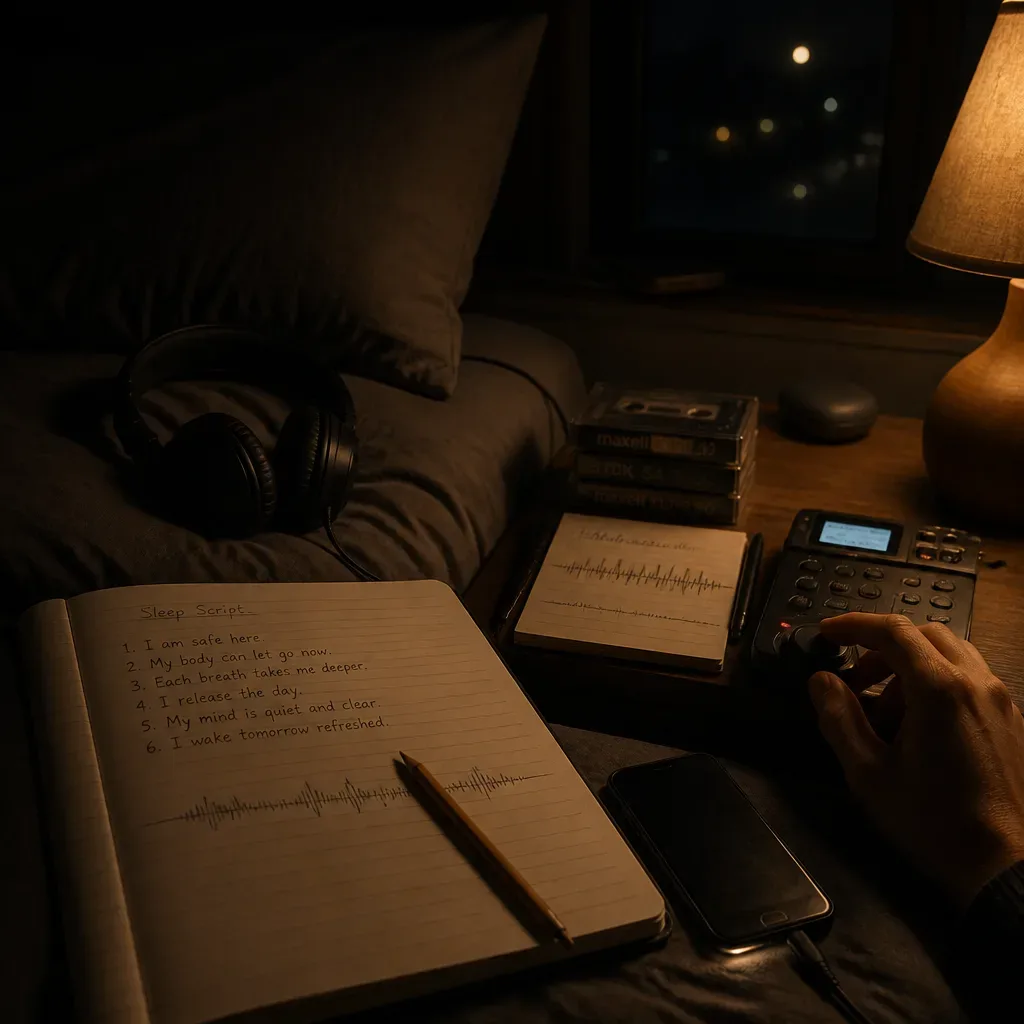
How do you write a sleep hypnosis script your mind will accept?
Write the script in first person, present tense, and plain language you would not be embarrassed to hear at 2 a.m.
The mind rejects flattery it cannot locate in the body. If your line says, I am completely fearless, and you feel your stomach tighten, the sentence has failed the night test. A better line is smaller: I can soften one part of my body now. In clinical hypnosis and cognitive-behavioral approaches, believable suggestion matters. A 2017 review in the International Journal of Clinical and Experimental Hypnosis noted that hypnotic response varies widely across people, so fit is not a side issue.
Use this 6-line structure for a 3-minute recording:
- Arrival: I am in bed, and the day is finished enough.
- Body cue: My jaw loosens, and my shoulders drop by one degree.
- Safety: Nothing needs to be solved in the dark.
- Dream-Self line: I am becoming someone who returns to herself gently.
- Future evidence: Tomorrow I take one small action from a rested place.
- Release: I can hear this once and let the rest happen in sleep.
The line should feel like a hand on the railing, not a speech from a stage.
Here is a quick comparison you can use while drafting:
| Too big for bedtime | Better for sleep |
|---|---|
| I am unstoppable | I can take the next small step after rest |
| My whole life changes now | Tonight, my body practices safety |
| I never worry | I can set this thought down until morning |
| I always sleep perfectly | I give sleep a fair chance tonight |
If you want the script to blend with audible affirmations, read the Sleep affirmations pillar before recording. If you are comparing audible words with hidden suggestions, keep the Subliminals pillar nearby and stay honest about what you can actually hear.
What is the exact 3-minute method before bed?
The exact method is to prepare the room, play one short audible recording, and stop adding effort once the voice ends.
Set up the practice before you are tired. The Centers for Disease Control and Prevention has reported that about 1 in 3 U.S. adults do not get enough sleep, which means many people arrive at bed already overdrawn. Do not make your night routine elaborate. Put the recording where you can start it without scrolling. If your phone becomes a doorway to messages, use airplane mode.
Follow this 3-minute sequence:
- Minute 0:00 to 0:30: Lie down, start the audio, and take 3 slow exhales. Do not force deep breathing. Let the exhale be a little longer than the inhale.
- Minute 0:30 to 1:30: Hear the body cues. Face, jaw, tongue, shoulders, hands. Keep the words concrete.
- Minute 1:30 to 2:30: Hear the Dream-Self lines. These are not orders. They are rehearsals.
- Minute 2:30 to 3:00: Hear a closing phrase and silence. No checking. No rating the session.
Volume matters. Keep it just loud enough to understand the words. The World Health Organization has warned that prolonged loud listening can risk hearing health; your bedtime audio should be nowhere near that category. Low is part of the method.
If you want to protect your wake time too, use the Sleep cycle calculator tool to choose a bedtime that gives you a realistic sleep window. A 3-minute practice cannot make a 5-hour night behave like an 8-hour night.
Words before sleep should not ask you to become more awake than you need to be.
What should you expect by night one, week one, and week two?
Expect a cue, not a cure: the recording may feel soothing on night one, familiar by week one, and easier to believe by week two.
On the first night, you may simply notice the voice. That is enough. Some people fall asleep before the final line. Some hear every word and still stay awake. Hypnosis studies often find that suggestibility differs by person, and Stanford researchers have used scales such as the Stanford Hypnotic Susceptibility Scale for decades to measure that variation. You are not failing if your response is quiet.
By night 7, the main change to watch is not whether you sleep instantly. Watch for smaller signs:
- You stop editing the day while the audio plays.
- Your body recognizes the first line.
- The script feels less strange in your own voice.
- You reach for the practice without bargaining.
- You wake with one phrase still nearby.
By week 2, edit only what keeps catching. If one sentence feels false every time, soften it. If the music pulls focus, remove it. If the recording is too interesting, make it plainer. The Journal of Behavioral Medicine has published work on relaxation and stress practices showing that repetition and adherence often matter more than novelty. Bedtime is the wrong place to chase novelty.
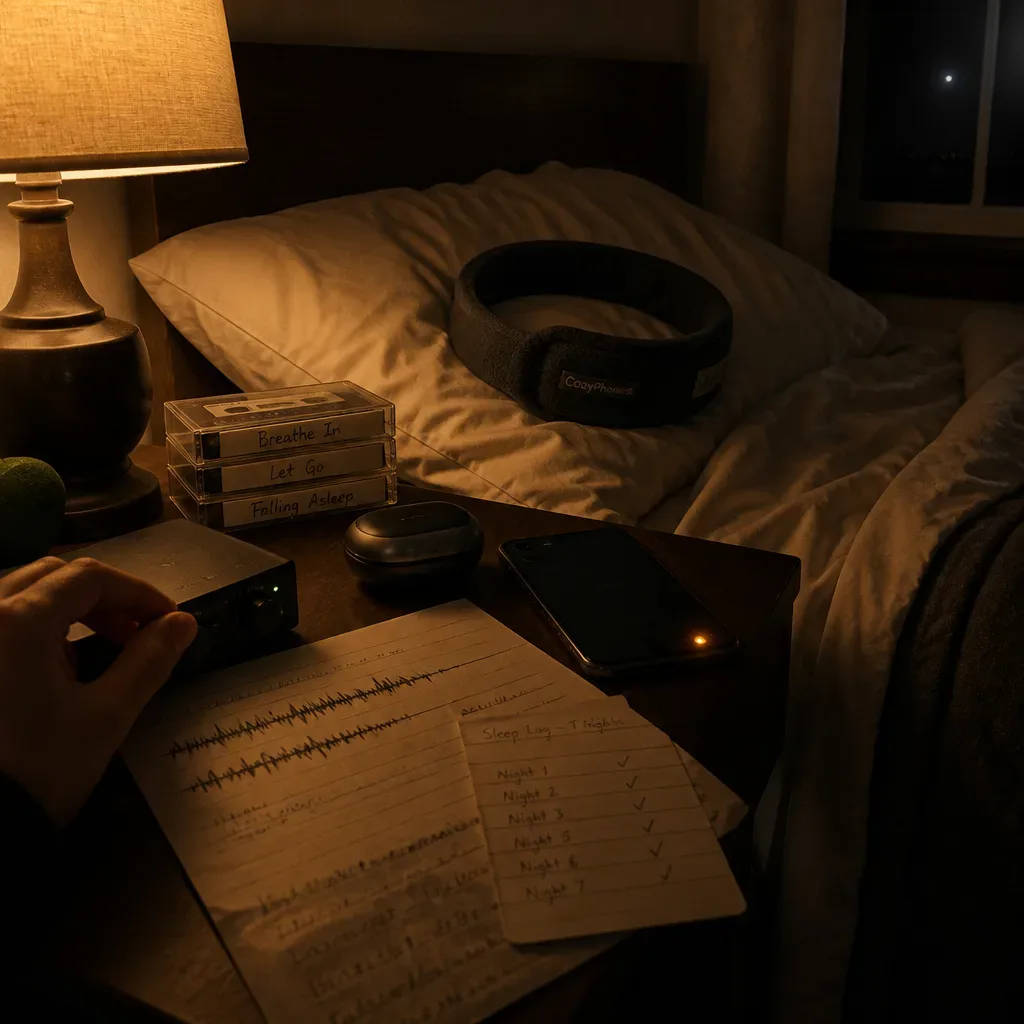
Keep a tiny log for 14 nights: bedtime, audio played yes or no, sleep onset estimate, night wake-ups, and one note. Do not turn it into a spreadsheet you dread. Two minutes in the morning is enough.
How is this different from sleep affirmations, subliminals, and hypnosis apps?
The difference is audibility, ownership, and length: you can hear the words, they are yours, and the practice ends quickly.
Sleep affirmations are usually direct statements repeated before sleep. They can be spoken, read, or played as audio. Subliminals hide the statements under sound, which makes them attractive when you do not want conscious resistance, but also hard to verify. Hypnosis apps often use longer guided sessions with induction, imagery, and background sound. Each format can be helpful. None deserves a blank check.
A 2023 Pew Research Center report found that 90% of U.S. adults owned a smartphone, which is one reason sleep audio has become so easy to start and so easy to overuse. The same device that plays your calming track also holds every interruption. The method needs a boundary: play once, screen down.
Here is the honest map:
| Practice | You hear the words | Typical length | Best use |
|---|---|---|---|
| Sleep affirmations | Yes | 1 to 10 minutes | Simple self-talk before sleep |
| Subliminals | Usually no | 10 minutes to 8 hours | Background repetition, with less verification |
| Hypnosis apps | Yes | 10 to 45 minutes | Guided relaxation and imagery |
| Dream-Self audio | Yes | About 3 minutes | Personal nightly rehearsal |
A subliminal is an affirmation you cannot consciously hear. That is the whole trick, and the whole problem.
If you like hidden audio, use it with care and read the Subliminals pillar so you know what is evidence, what is hope, and what is marketing. If you want the words to be yours and audible, return to the AYA Method and keep the audio at the center.
When should you skip self hypnosis for sleep?
Skip it when it costs you sleep, raises anxiety, or turns bedtime into a self-improvement test.
This practice should make the night simpler. If you keep rewriting the script at midnight, comparing tracks, checking whether it worked, or looping audio because you are afraid to sleep without it, pause. Stimulus control therapy for insomnia, used in cognitive behavioral therapy for insomnia, often asks people to keep the bed linked with sleep rather than wakeful effort. That principle matters here.
You should also skip intense future-self scripts when you are emotionally raw. A bedtime recording about a major life change can feel stirring at 8 p.m. and too bright at 12:30 a.m. For sleep, choose the plain version. Save planning, vision work, and strong emotional rehearsal for daytime. The daily affirmation and Manifestation Board can complement audio practice, but they are not the pillars at night. Listening is the practice.
Use professional support if insomnia is persistent, distressing, or linked with panic, trauma symptoms, medication changes, breathing pauses, or unsafe daytime sleepiness. The Mayo Clinic and AASM both point to cognitive behavioral therapy for insomnia as a first-line non-drug treatment for chronic insomnia. A 3-minute audio belongs in the sleep hygiene drawer, not the medical drawer.
Try this boundary for one week: one recording, once per night, no edits after 9 p.m., no looping after you wake. If the method helps, it will still help inside limits. If it only works when it eats the night, it is taking too much.
If a method costs you sleep, it costs more than it gives.
Turn the volume low, hear the line once, and let the room go quiet.