subliminals
Silent Subliminals: What They Are and a Safer Swap
Silent subliminals hide affirmations below conscious hearing. Learn what they can and cannot prove, plus a safer audible nightly practice.
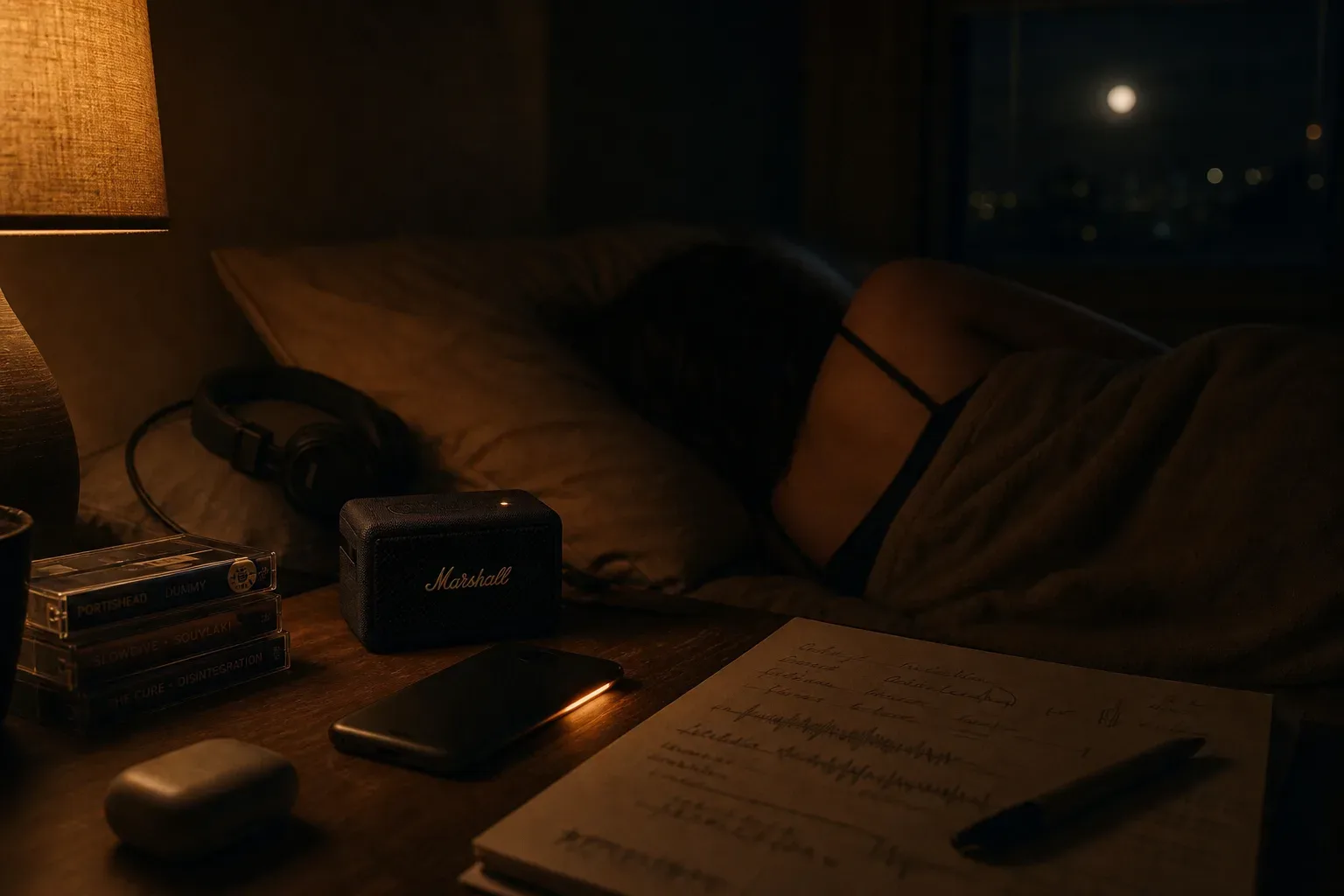
Silent subliminals are audio tracks that hide spoken affirmations below conscious hearing, often under music, rain, or high-frequency tones. They may create small priming effects, but the large claims are not proven. A safer swap is audible, personal sleep audio you can hear, review, and repeat before sleep.
What are silent subliminals, exactly?
Silent subliminals are recordings designed so the suggested words are not clearly heard by your conscious attention.
Most silent subliminals use one of three tricks: the voice is mixed very low under another sound, filtered into a narrow frequency range, or shifted with software so it becomes difficult or impossible to understand. On YouTube and TikTok, these tracks may be labeled silent, ultrasonic, forced, layered, or booster. The names change faster than the research does.
A subliminal is not the same as a quiet affirmation. If you can make out the sentence, it is not subliminal in the strict sense. That distinction matters because reviewability matters. When the words are hidden, you cannot check whether the track says what the title promises. A 2015 Pew report found that 72 percent of online adults used YouTube, and sleep-audio claims have only multiplied since then; scale is not the same as verification.
The scientific root is real but modest. Subliminal priming studies have shown that cues presented below conscious awareness can briefly influence reaction time, preference, or attention. A classic 1996 meta-analysis by Trappey reviewed consumer subliminal advertising research and found weak, inconsistent effects. Later lab work on masked priming is more careful, but it usually tests milliseconds, not months of identity practice.
The quiet truth is simple: a hidden message is harder to consent to than a message you can hear.
For a broader grounding, start with the Subliminals pillar. It separates masking, affirmations, repetition, and community claims without treating listeners like fools.
Why do people listen to silent subliminals at night?
People use silent subliminals at night because sleep feels private, suggestible, and easier than forcing a new thought during the day.
The last minutes before sleep have always attracted ritual. Neville Goddard called the drowsy edge the state akin to sleep, and shifting communities later gave similar timing to methods like raven, pillow, and countdown scripts. Modern sleep science uses different language, but it agrees on one practical point: the transition into sleep changes attention. Your grip on ordinary planning loosens.
That does not mean every hidden sentence becomes a belief. It means bedtime is a good time for repetition because the room is quiet and you are less busy defending your old story. The American Academy of Sleep Medicine recommends adults get at least 7 hours of sleep per night, and any practice that cuts into that number costs more than it gives.
Listeners also choose silent tracks because they feel discreet. A teenager can play rain sounds without explaining affirmations to family. A roommate can hear brown noise instead of a voice saying I am chosen. The privacy is understandable. I have been in shifting chats where privacy was the whole point, especially for people still figuring out what they wanted to name.
Here is the honest split:
- Useful: a low, familiar sound can cue relaxation and routine.
- Uncertain: hidden words may prime attention in small ways.
- Unsupported: a silent track can reliably change physical traits, grades, money, or another person’s feelings.
- Risky: listening all night at high volume or using tracks you cannot audit.
Your night practice should leave you more rested, not more dependent.
What does the evidence say about hidden audio suggestions?
The evidence says subliminal cues can influence small, short-term responses, but it does not support most viral claims about silent subliminals.
Laboratory subliminal research often involves controlled flashes, masked words, or brief auditory cues. The effects are usually measured in milliseconds, percentages, or small preference shifts. In a 2006 Nature Neuroscience paper, Kouider and Dehaene described limits of unconscious semantic processing; the brain can register some meaning without awareness, but that processing is constrained. It is not a blank check for any sentence you bury under rain.
Sleep adds another layer. Studies show the sleeping brain can respond to sound. Research from Andrillon and colleagues in 2016 found that people could process some auditory information during sleep stages, though responses varied by stage and depth. Other work on targeted memory reactivation suggests that cues paired with learning can affect later recall. Those studies are interesting, careful, and narrow.
A silent subliminal playlist is not the same as a sleep laboratory. You do not know the decibel level of the voice, the exact words, the compression, or how the track interacts with your phone speaker. You also move through sleep cycles roughly every 90 minutes, with lighter and deeper stages across the night. If you want to time bedtime audio without stealing rest, the Sleep cycle calculator tool can help you protect the basics.
| Claim you may hear | What research can support | What to treat carefully |
|---|---|---|
| Subliminal cues can affect attention | Yes, in small controlled tasks | Effects are usually brief |
| Sleep can process some sounds | Yes, especially simple or familiar cues | Sleep stage matters |
| Hidden affirmations can reshape your life | Not proven | Treat as community belief, not fact |
| Audible repetition can support habit | Plausible and easier to inspect | Still needs action and sleep |
The stronger the promise, the more visible the method should be.
What are the safety concerns with silent subliminals?
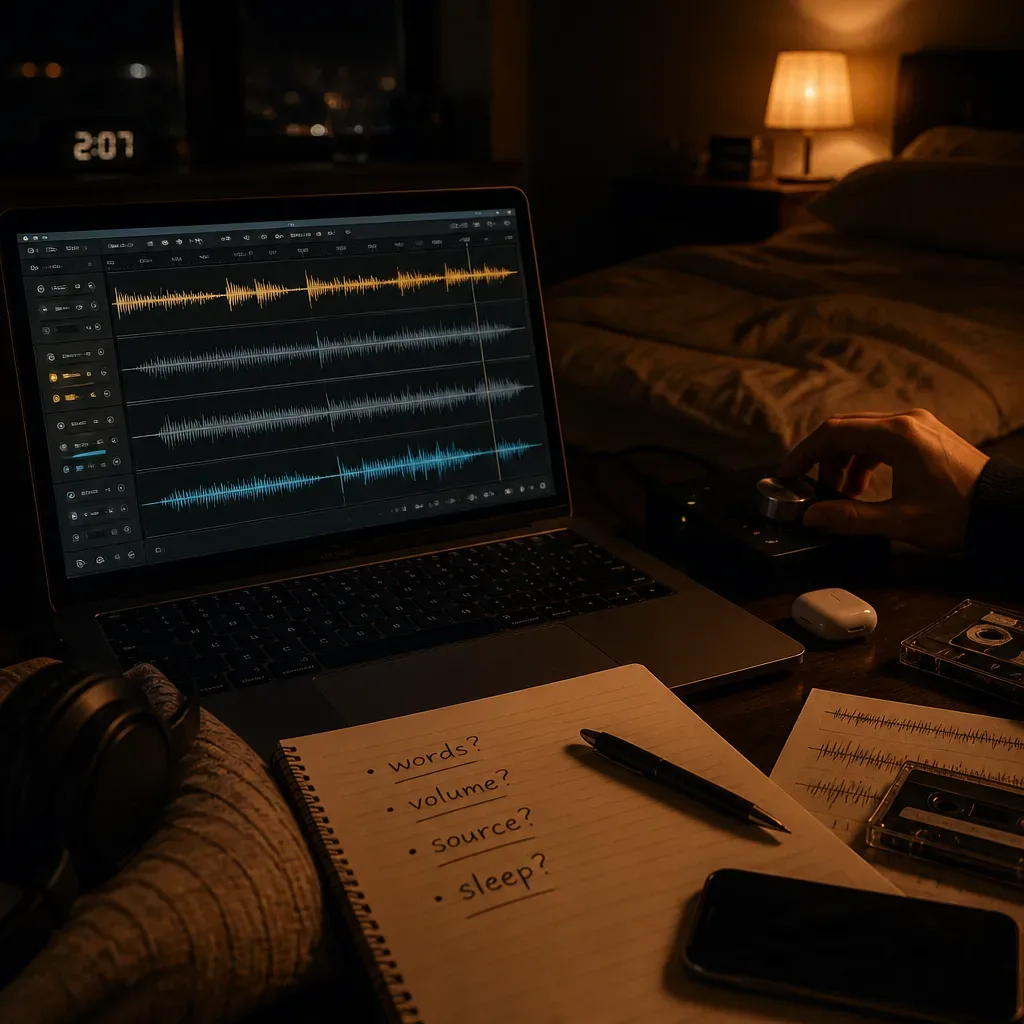
The main safety concern is not mystery frequency; it is unreviewed content paired with sleep loss, anxiety, or obsession.
There are several practical problems. First, you cannot consent clearly to words you cannot hear. A creator may be kind and honest, or may not be. Second, the audio can be mixed badly. Sudden peaks, harsh tones, or high volume can disturb sleep even if the track feels quiet at the start. The World Health Organization has warned about recreational listening volume and hearing risk; that concern becomes more relevant when people use earbuds for hours.
Third, online communities can turn repetition into checking. If you listen to three boosters, two flushes, and a silent playlist for eight hours, you are no longer doing a soft bedtime practice. You are building a nightly obligation. In the shifting community, I have watched good methods become heavy when people chase signs at 3 a.m. The method was not always the problem. The loss of sleep was.
Use this simple safety screen:
- Can you verify the words? If no, choose a trusted creator or audible audio.
- Does it protect sleep? If no, shorten it or stop.
- Does it make medical claims? If yes, avoid it.
- Does it increase checking? If yes, take a week off.
- Can you still function tomorrow? If no, the cost is too high.
If insomnia is ongoing, or if night audio becomes compulsive, talk with a qualified professional. Sleep hygiene advice is not medical care.
What is the safer audible swap?
The safer audible swap is a short, personal recording you can clearly hear, approve, and repeat at a low volume before sleep.
This is where the AYA Method fits naturally. The AYA Method is a daily audio manifestation practice. Each day you listen to a short personalized recording — your Dream-Self Moment — narrated from the version of you who has already manifested the life you intend. Listening is the practice. Repetition is the work. The audio is the method.
The difference is not that audible audio is magical and silent audio is bad. The difference is consent and clarity. You can hear every word. You can notice if a line makes your body tighten. You can change wording that feels false, harsh, or borrowed. A personal recording does not need to trick you to matter.
A good audible sleep track is usually short. Think 2 to 7 minutes, not an eight-hour command loop. It should be low enough that you could ignore it if you wanted to. Dr. Andrew Huberman has often emphasized regular sleep timing, morning light, and lower stimulation at night; an audio practice should sit inside those basics, not replace them.
For comparison, Sleep affirmations pillar explains how audible statements before bed can support rehearsal without hiding the message. If you still like subliminals, you can keep them as atmosphere. Put the clear words first, then let the room go quiet.
A voice you can hear is easier to trust than a promise you have to decode.
How can you use audible sleep audio without ruining your sleep?
Use audible sleep audio like a bedside note, not like a command center.
Start with one track for two weeks. Play it once while you are already in bed, lights low, phone face down. If you fall asleep during it, fine. If you stay awake analyzing every word, shorten the recording. In sleep research, consistency often matters more than complexity; even cognitive behavioral therapy for insomnia protects regular timing before adding extra tools.
A simple routine can look like this:
- Put your phone on do not disturb 20 minutes before bed.
- Open one recording only.
- Set volume around 10 to 30 percent, lower with earbuds.
- Listen once while breathing normally.
- Stop the audio or let a short timer end it.
- Notice one sentence in the morning, then live the day.
Do not stack ten tracks because one did not make you feel different by Wednesday. Most mental rehearsal works through repetition, not intensity. In habit research, Lally and colleagues found in 2009 that automaticity often took a median of 66 days, with wide variation. That does not map perfectly onto manifestation audio, but it is a useful reminder: stable practice is slow.
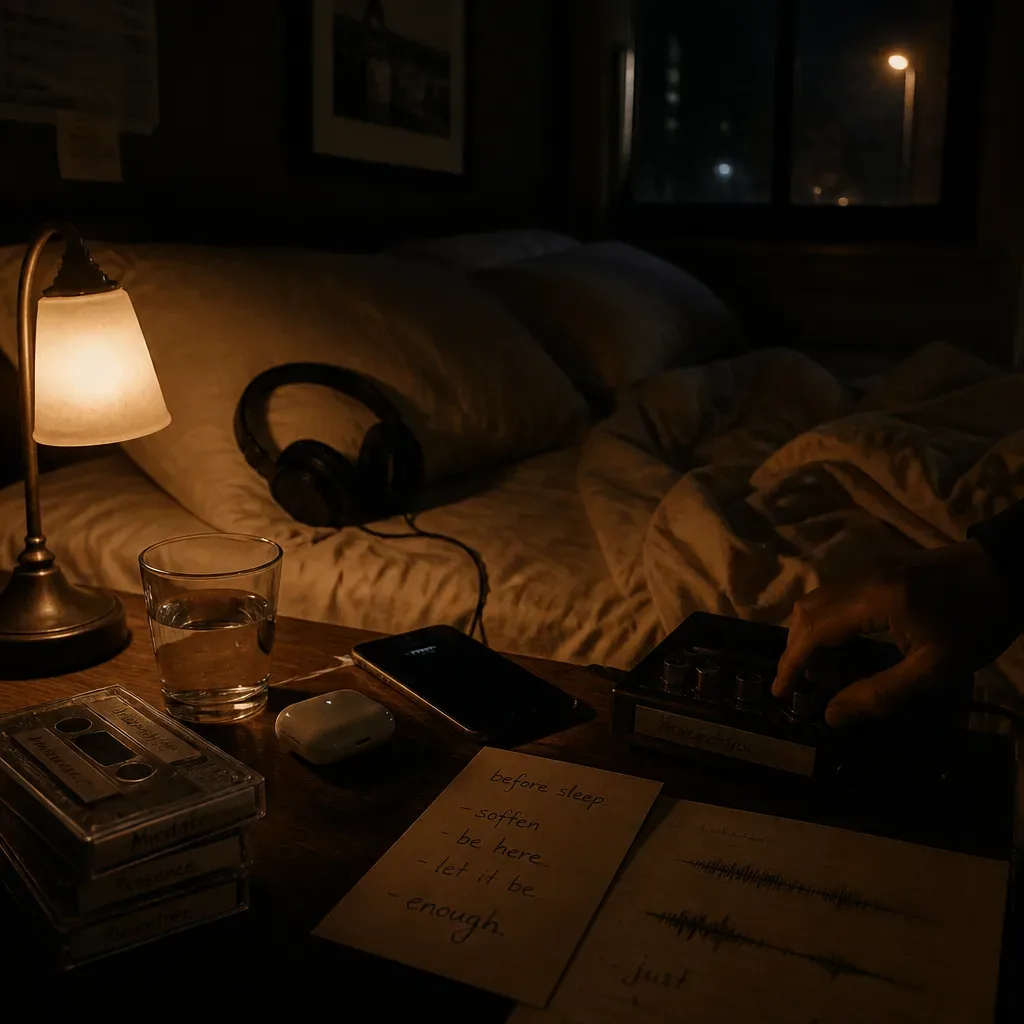
If you want structure, pair your bedtime listening with daytime clarity. The daily affirmation and Manifestation Board can complement the audio, but they are not the center. The audio is the method. For a wider map of sleep-based language practices, return to the Subliminals pillar and compare it with sleep affirmations before you choose what belongs beside your bed.
The point is not to fill the night with words. The point is to choose the few words you are willing to hear again.
How do you decide whether to keep using silent subliminals?
Keep using silent subliminals only if they protect your sleep, come from a source you trust, and do not make claims you would reject in daylight.
A practice can be meaningful without being scientifically settled. That is true of a lot of internet spirituality, including shifting scripts, pillow methods, and nightly affirmation loops. Community language can give shape to private hope. Still, your standards should become stricter at night because sleep is not spare time. The Centers for Disease Control and Prevention has reported that about 1 in 3 U.S. adults do not get enough sleep; a practice that worsens that number needs a hard look.
Ask yourself these questions after seven nights:
- Am I sleeping at least as well as before?
- Do I feel calmer, or more preoccupied?
- Do I know what the track says?
- Would I recommend this source to a younger listener?
- Am I using audio as support, or as avoidance?
If the answers feel uneasy, switch to audible wording for a month. You can write three sentences in your notes app and record them in your own low voice. You can also use a personalized method that keeps the message clear from the start. Either way, let the words be yours enough that you can stand behind them in the morning.
The quietest practice is not always the hidden one. Sometimes it is the one that says exactly what it means, once, and lets you sleep.