subliminals
Study Subliminals: 3-Minute Focus Audio Before Sleep
Study subliminals can cue calmer focus before sleep when the audio is short, low, and repeated nightly. Here is a 3-minute practice.
Study subliminals are quiet focus cues played before sleep to rehearse the feeling of sitting down, starting, and staying with your work. A 3-minute track is enough: choose one study intention, play it low after screens are off, repeat it for 14 nights, and judge it by sleep quality plus next-day study behavior.
What are study subliminals supposed to do before sleep?
Study subliminals are meant to pair bedtime calm with repeated focus-related words, not to teach material while you sleep.
A subliminal is an affirmation you can’t consciously hear. That’s the whole trick, and the whole problem. The hope is that words such as I return to the page or I remember what I review slip under soft sound and nudge attention later. Research on priming is real, but modest: effects often depend on timing, context, and measurement. A 2012 replication debate around social priming made the field more cautious, which is a good thing for anyone listening at night.
Sleep learning is also narrower than the internet makes it sound. In a 2012 Nature Neuroscience study, Arzi and colleagues showed that people could form simple sound-odor associations during sleep. That isn’t the same as absorbing calculus, vocabulary lists, or an exam chapter. Your sleeping brain can process some cues. It doesn’t become a silent classroom for 8 hours.
So the honest use is behavioral. You listen before sleep, when the house is quiet and your attention has fewer exits. The last 10 minutes before sleep are suggestible because they’re repetitive, low-stimulus, and close to memory consolidation. If the track helps you approach tomorrow’s work with less friction, it’s doing something useful.
The audio doesn’t study for you. It lowers the noise around the part of you that already agreed to study.
If you’re new to the wider practice, start with the Subliminals pillar before picking a track. It explains the difference between masked speech, low-volume affirmations, and ordinary suggestion in plain terms.
How do you make a 3-minute study subliminal that stays sleep-friendly?
You make it short, narrow, and boring enough that your nervous system doesn’t treat it as content to follow.
Three minutes matters because bedtime practices fail when they start asking too much. The American Academy of Sleep Medicine recommends adults get at least 7 hours of sleep, and students are often already below that. A focus audio should not steal 25 minutes from sleep or turn into a playlist hunt. If a method costs you sleep, it costs more than it gives.
Use one target. Not motivation, memory, confidence, discipline, grades, language learning, and exam success all at once. Pick the first behavior that tomorrow depends on. For most students, that behavior is starting. A good 3-minute script can repeat 6 to 10 short lines slowly, with 10 to 15 seconds of quiet between clusters.
Here is a simple structure:
- Minute 1: settle the body. Use breath-paced lines like my shoulders drop or the day is done.
- Minute 2: name the study behavior. Repeat lines about opening the notes, reading one page, or beginning the first problem.
- Minute 3: connect to tomorrow. Use soft future cues like when I sit down, I start with one clear task.
Keep the wording ordinary. The brain seems to prefer familiar, concrete cues over grand claims, and cognitive psychology has backed this for decades through implementation intention research. Peter Gollwitzer’s work from the 1990s found that if-then plans improve follow-through because they tie behavior to a cue. A study subliminal can borrow that shape: when my timer starts, I return to the page.
The file can be true subliminal, where the words sit under rain or brown noise, or it can be barely audible. I prefer barely audible for testing because I can verify the words. Hidden words require trust in the maker. Audible words require honesty from you.
What should the 3-minute script actually say?
The script should describe the next small study action in present-tense, sensory language.
Don’t write like a poster. Write like a tired person who still knows how to begin. The best lines are short enough to survive sleepiness: I open the notebook. I read the question once. I start with the first line. In working-memory research, Miller’s famous 1956 paper described limits around 7 items, plus or minus 2; newer estimates are often closer to 4 chunks. That matters here. A sleepy mind doesn’t need 18 layered ideas.
Use this table to keep the wording clean:
| Goal | Better line | Line to avoid |
|---|---|---|
| Start studying | When I sit down, I begin with one page. | I become the most productive student alive. |
| Stay with it | When I drift, I return to the next sentence. | I never get distracted again. |
| Remember | I review, recall, and write what I know. | I memorize everything instantly. |
| Reduce dread | I can begin before I feel ready. | Studying is always effortless. |
A 3-minute track needs about 80 to 120 spoken words if the voice is slow. Many guided meditation scripts run faster than that, around 130 to 160 words per minute, but sleep audio should leave more air. Silence is not wasted. Silence tells the body that nothing urgent is happening.
You can also record it in your own voice. This is where the AYA Method sits close to subliminals but isn’t the same thing: The AYA Method is a daily audio manifestation practice. Each day you listen to a short personalized recording — your Dream-Self Moment — narrated from the version of you who has already manifested the life you intend. Listening is the practice. Repetition is the work. The audio is the method.
A subliminal hides the words and hopes they land. Personal audio lets you hear every word and decide whether it belongs in your night.
When should you play it in your bedtime routine?
Play it after your practical sleep routine is done, with screens off and no more decisions left.
Timing is less mystical than people make it. The useful window is the handoff between wakefulness and sleep, usually the last 5 to 15 minutes you remember. Dr. Andrew Huberman often talks about light timing because bright light late at night can delay melatonin; Harvard Health has also noted that blue light exposure in the evening can suppress melatonin more than dim light. So don’t play your focus audio while scrolling. The scroll wins.
A clean sequence looks like this:
- Set tomorrow’s study materials in one visible place.
- Use the Sleep cycle calculator tool to choose a wake time that doesn’t cut sleep too tightly.
- Put the phone face down or across the room.
- Start the 3-minute audio.
- Let the track end without choosing another one.
Volume should be low enough that you never brace to hear it. If it’s masked under rain, the rain should sound like a room tone, not weather arriving through the ceiling. The World Health Organization’s 2018 environmental noise guidance treats night noise as a real sleep issue; sudden changes matter more than people admit. A focus track with chimes, ads, or volume spikes is not sleep-friendly.
The last sound of the day should not ask you to perform.
If you already use Sleep affirmations pillar, don’t stack 4 practices on the same night. Choose one audio cue for 14 nights. Layering feels productive, but it makes the test unreadable. When something helps, you won’t know what helped.
How do you test whether study subliminals are helping?
Test them by tracking sleep and next-day behavior, not by asking whether the track felt special.
For 14 nights, write down 2 numbers and 1 sentence. Rate sleep quality from 1 to 5. Record focused study minutes the next day. Add one sentence about the first study block: started easily, delayed 40 minutes, quit after 12 minutes, or returned after distraction. That’s enough data. In behavioral studies, self-monitoring alone often changes behavior; a 2015 review in Psychological Bulletin found that monitoring progress increases goal attainment, especially when results are physically recorded.
Here is the tiny log I use when testing audio:
| Night | Sleep quality 1-5 | Next-day focused minutes | First block note |
|---|---|---|---|
| 1 | 3 | 25 | Started after lunch |
| 7 | 4 | 40 | Began with flashcards |
| 14 | 4 | 55 | Returned after phone break |
Don’t expect clean proof. Bedrooms are messy data. Exams, caffeine, stress, hormones, roommates, and weather all interfere. But patterns still show up. If your sleep quality drops from 4 to 2 for several nights, stop the audio. If sleep holds steady and study starts faster by week 2, keep it.
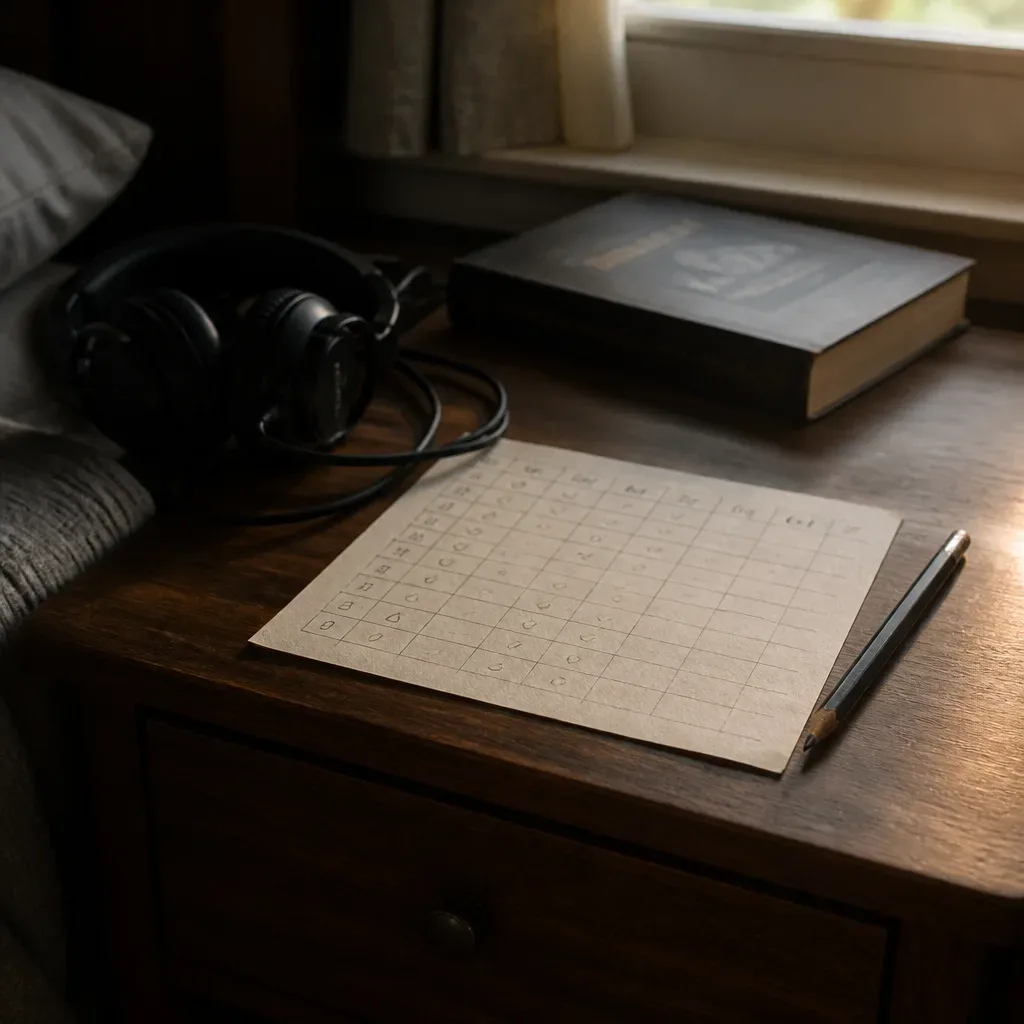
What should you notice by week 2? Usually not a movie-like change. You may notice less arguing with yourself before beginning, a clearer first task, or a shorter gap between sitting down and opening the material. Small is still data. Small is often the only honest way a night practice enters a real life.
What mistakes make study subliminals worse?
The common mistakes are playing them too loud, changing them nightly, expecting memory transfer, and using them to replace study design.
The first mistake is volume. If the track keeps you alert, it has failed the sleep part of the job. The second is novelty shopping. Changing tracks every night gives your brain a new stimulus instead of a repeated cue. In habit research, repetition in a stable context is central; a 2009 study by Lally and colleagues found habit formation averaged 66 days, with wide variation from 18 to 254 days. Two weeks won’t build every habit, but it can reveal whether the cue fits.
The third mistake is using claims that your body doesn’t believe. Lines like I remember every word perfectly can create friction because they’re too far from your day. Better: I test myself before I reread. That line agrees with learning science. Retrieval practice has strong support; a 2011 review by Roediger and Butler found that recalling information strengthens later retention more than restudying alone.
Avoid these in your track:
- binaural beats that make you tense or give you headaches
- whispered speech that feels invasive
- sudden bells, ads, or frequency sweeps
- claims that promise exam results without study
- all-night loops when your sleep gets lighter
If anxiety or insomnia is already intense, don’t try to solve it with more audio. Sleep hygiene can help, but persistent insomnia deserves a clinician who understands sleep. You don’t have to earn help by trying every track first.
A good subliminal respects the night. It doesn’t try to conquer it.
How does this compare with audible affirmations or the AYA Method?
Study subliminals hide the cue; audible affirmations and personal audio let you inspect it before you sleep.
That difference matters. With subliminals, you often trust the creator, the title, and the comments. With audible affirmations, you can hear the wording. With a personal recording, you can make the language yours. None of these bypass the need to study. They simply shape the state you bring to studying.
For focus, I use this rule: if the content is emotionally sensitive, I want to hear it. A study cue like I start with one page is low risk. A self-worth cue, fear cue, or identity cue should be audible enough to consent to. Consent is not less spiritual because it’s practical. It’s how you keep your night yours.
Here’s the comparison I wish I’d had at 23, when my spreadsheet had 31 sleep-audio trials and very little mercy in the notes:
| Practice | Words audible? | Best use | Main risk |
|---|---|---|---|
| Study subliminal | Usually no | Repeating a narrow focus cue | Unknown wording or overclaiming |
| Sleep affirmation audio | Yes | Calming the last thoughts of the day | Too many lines, too much effort |
| Personal future-self audio | Yes | Rehearsing a chosen self-description daily | Making it too long or dramatic |
If you want the broader map of spoken-word sleep practices, read Sleep affirmations pillar and the Subliminals pillar side by side. They overlap, but they’re not identical. The method is not the promise. The method is what you can repeat when you’re tired.
Keep the words low, and let sleep do what sleep does.