subliminals
Subliminal Bundle: Meaning, Risks, and Better Swap
A clear guide to what a subliminal bundle means, why stacking can get messy, and when an audible daily recording is the cleaner choice.
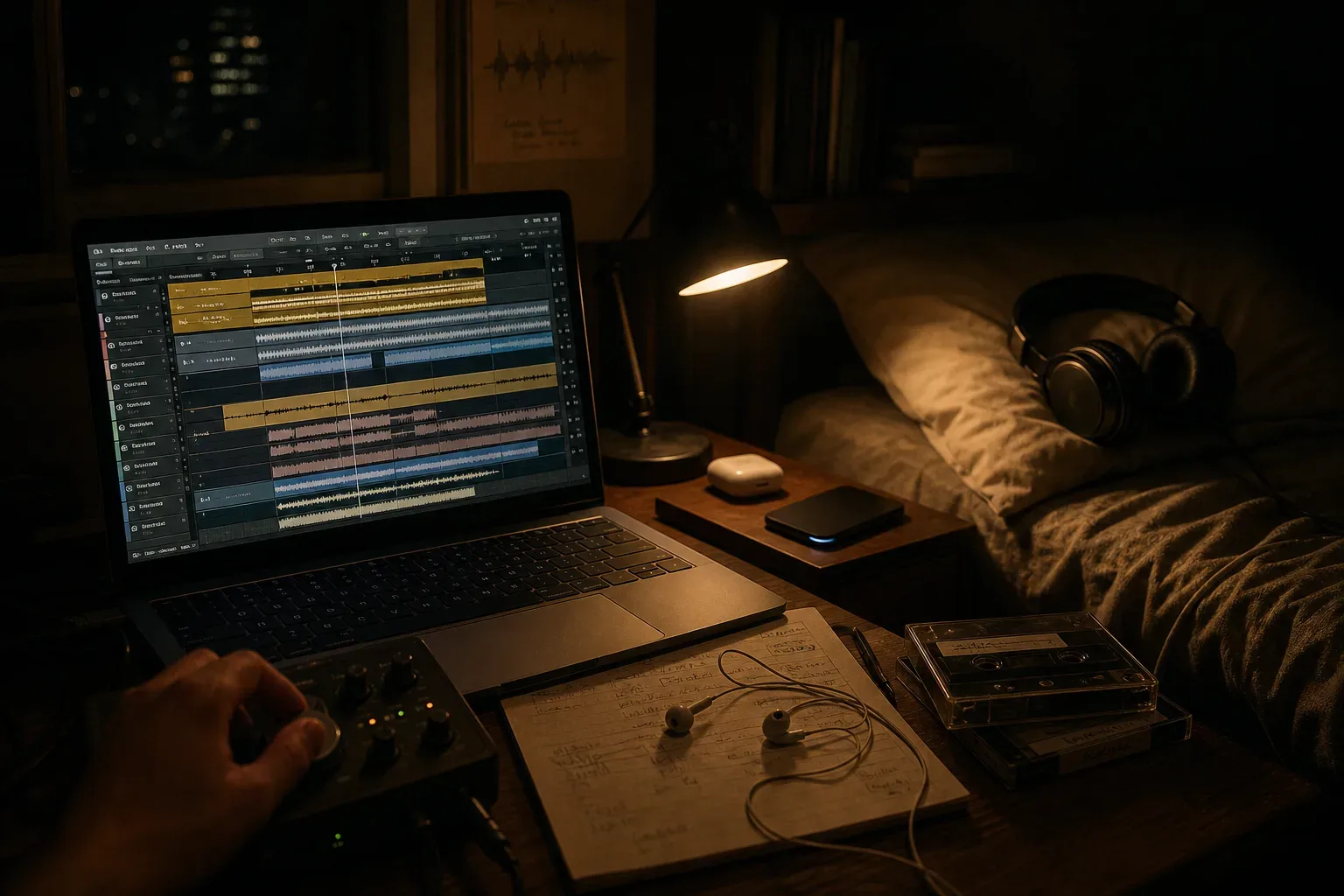
A subliminal bundle is one audio file that combines multiple subliminal topics, scripts, or layers into a single track. It can be convenient, but stacking many hidden messages raises three plain concerns: unclear contents, masked speech, and sleep disruption. A cleaner swap is a short audible recording you can verify and repeat daily.
What does a subliminal bundle actually mean?
A subliminal bundle means several hidden or low-volume affirmation tracks have been combined into one listening file.
In the subliminal world, bundle usually means one of two things. It can mean multiple topics in one script, like calm sleep, studying, and confidence. Or it can mean multiple pre-made subliminal files stacked into one export. Both are common on YouTube, where a 2024 search can return thousands of tracks labeled bundle, booster, forced, or layered. The label tells you the marketing category. It doesn’t tell you much about the audio.
Technically, a producer might take 5, 20, or even 100 vocal layers, lower them under rain, speed them up, pan them left and right, add music, then export the whole thing as a single MP3. Speech intelligibility research has long shown that masking increases when speech and noise occupy similar frequency bands. The classic cocktail party problem is not mystical. It is physics and attention. If one voice is hard to hear under noise, 30 hidden voices are not automatically easier for the mind to use.
A subliminal is an affirmation you can’t consciously hear. That’s the whole trick, and the whole problem. The practice asks you to trust that words are present, that they are the right words, and that repetition matters even when awareness is low. In small priming studies, unconscious cues can shift reaction time or preference modestly, often for minutes, not for a whole life plan. YouTube claims are much larger than that research.
Here is the useful distinction:
| Term | What it usually means | What you can verify |
|---|---|---|
| Single subliminal | One hidden topic or script | Sometimes the creator lists affirmations |
| Subliminal bundle | Many topics or layers in one file | Often hard to verify without stems |
| Playlist stack | Several separate tracks played in order | You can at least see each file |
| Audible recording | Spoken words you can hear clearly | You can verify every sentence |
If you want the broader background first, start with the Subliminals pillar. A bundle is not a new category of mind science. It is a packaging choice.
Why do people stack subliminals into bundles?
People stack subliminals because they want one quiet track to cover many intentions without extending listening time.
That motive is understandable. If you have 30 minutes before sleep and a playlist of 12 files, bundling feels efficient. The National Sleep Foundation often describes a normal sleep onset window as roughly 10 to 20 minutes for healthy sleepers. People want to use that soft border before sleep without staying awake managing tabs, ads, and volume sliders. One file feels easier.
The last ten minutes before sleep are suggestible. Choose what goes in. Many listeners use that window for repetition because the room is quiet, the phone is down, and the day is no longer arguing back. Sleep researchers do not describe this as a magic portal. They do study how memory and emotion are shaped by sleep, and targeted memory reactivation studies have shown that sound cues during sleep can influence later recall under controlled conditions. Those studies use simple cues, not 80 affirmation layers under ocean noise.
Bundling also comes from social proof. A creator posts a results thread. A commenter says a bundle worked in 3 days. Another says they listened 12 times overnight. Pew Research Center reported in 2024 that YouTube remains one of the most widely used online platforms among U.S. adults, with 80 percent plus usage in many surveys. That scale makes community practice feel like evidence, even when the evidence is anecdote.
There are sane reasons to use a bundle:
- You want one bedtime track instead of a playlist.
- The topics are related, like sleep, calm, and self-talk.
- The creator lists the script clearly.
- The volume is low enough not to wake you.
- You stop if it makes your sleep worse.
Convenience is not a flaw. Mystery is the flaw. Respect the listener’s ear, and label what’s on the tape.
What are the real risks of stacking too many subliminals?
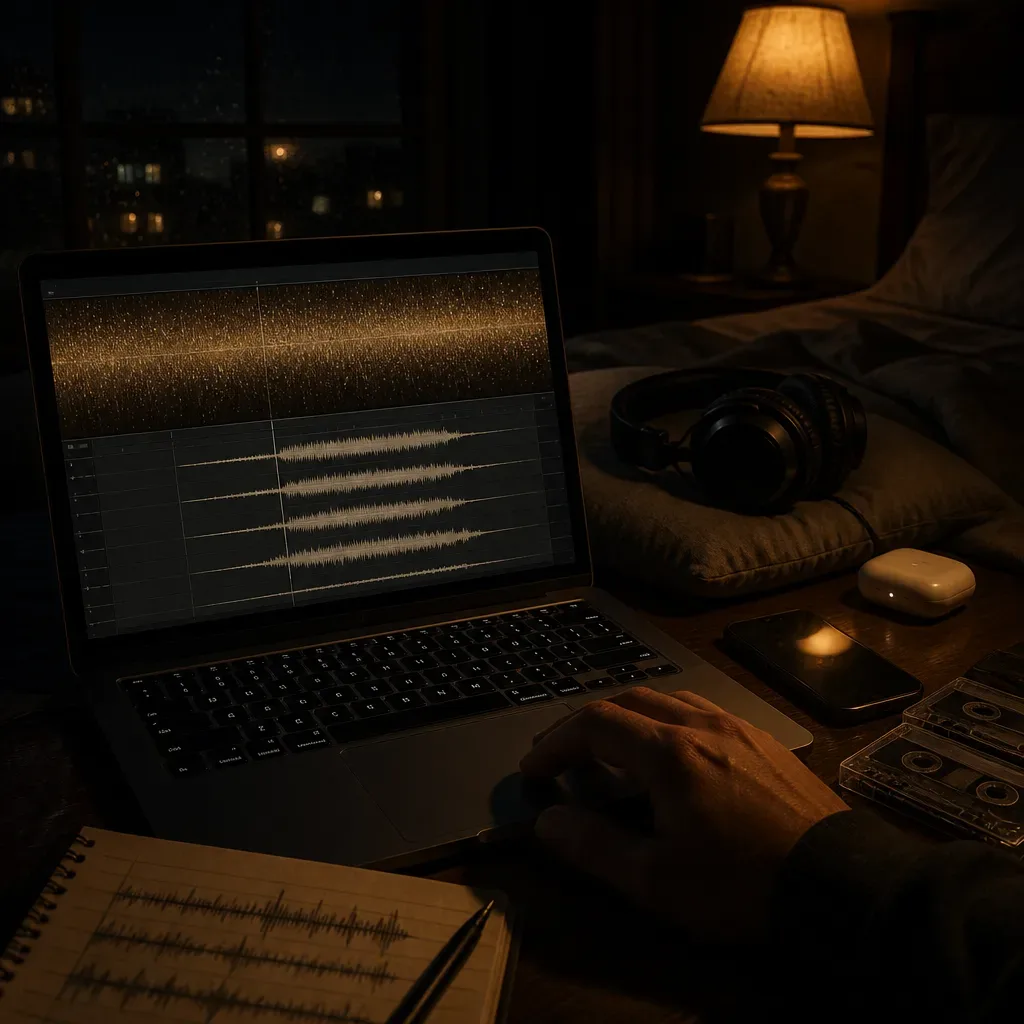
The real risks are not supernatural overload; they are masking, fatigue, conflicting scripts, and poorer sleep.
Start with masking. If you hide one voice under rain, that voice may still leave traces in the midrange, especially around 1 to 4 kHz where speech carries much of its intelligibility. If you hide 20 voices, compress them, speed them up, and export to a lossy format, you may have made texture more than language. MP3 encoders often remove information judged less audible, and low-bitrate files can smear transients. That doesn’t prove the track is useless. It means the claim should get smaller, not bigger.
Then there is loudness. Stacked audio can become dense even when each layer seems quiet. Consumer earbuds often vary by 10 dB or more in perceived output depending on fit, seal, and device volume. A file that feels soft on laptop speakers can feel sharp in sealed earbuds at 2 a.m. The World Health Organization has warned for years about unsafe listening habits, especially long duration and high volume. A bedtime track should be low, boring, and easy to sleep through.
Conflicting scripts are another issue. A bundle that says rest deeply, wake at 5, detach completely, obsess over results, study all night, and sleep now is not a coherent rehearsal. Your nervous system does not need a committee meeting under rainfall. Even audible affirmations work better when they are simple enough to remember by week two.
A practical risk list looks like this:
- Too many layers mask the speech you meant to repeat.
- Fast or reversed speech makes verification harder.
- Compression and export settings may damage hidden layers.
- Long playlists can reduce sleep time.
- Conflicting goals can make the practice feel noisy.
- Unknown scripts ask for more trust than a listener should have to give.
If a method costs you sleep, it costs more than it gives. The Sleep cycle calculator tool can help you set a realistic bedtime, but it can’t fix a track that keeps you half-awake all night.
Can your brain process a subliminal bundle while you sleep?
Your sleeping brain processes sound, but that does not mean it absorbs unlimited hidden language with precision.
Sleep is not a mute state. Polysomnography separates sleep into stages, and the American Academy of Sleep Medicine uses N1, N2, N3, and REM scoring rules in clinical sleep work. Sound can wake you, shift sleep depth, or become part of dream content. Some research on targeted memory reactivation suggests that carefully timed cues can support memory consolidation. The cue is usually a tone or simple sound paired with prior learning, not a dense speech bundle nobody can hear.
Language during sleep is more complicated. Studies have found signs that the brain can discriminate certain sounds during sleep, especially familiar voices or emotionally salient cues. But the leap from sound discrimination to absorbing a hidden 40-topic script is large. Honest evidence does not support that leap. Priming research is real and modest. Subliminal video titles are often confident and not modest.
Volume matters here. If the words are loud enough to be understood, they may keep part of you listening. If they are too low, they may be physically present but functionally masked. If they are ultrasonic, above about 17,000 Hz, many adults will not hear them at all, and many phone speakers or earbuds won’t reproduce them cleanly. Age-related high-frequency hearing loss is common; the National Institute on Deafness and Other Communication Disorders notes that hearing loss increases with age, especially in higher frequencies.
This is why I prefer audible sleep work when the goal is daily repetition. You don’t have to blast it. You can keep it soft. But you should be able to check the words in daylight. Sleep affirmations are not automatically better because they are audible. They are better when the wording is calm, specific, and yours.
When is an audible swap better than a subliminal bundle?
An audible swap is better when you want clarity, consent, and repeatable language more than mystery.
This is where the AYA Method sits close to sleep audio without hiding inside it. The AYA Method is a daily audio manifestation practice. Each day you listen to a short personalized recording, your Dream-Self Moment, narrated from the version of you who has already manifested the life you intend. Listening is the practice. Repetition is the work. The audio is the method.
Notice the difference. A subliminal bundle hides the words under sound and asks you to trust the mix. The AYA Method makes the words fully audible and personal. You can hear every sentence. You can reject a sentence that doesn’t sound like you. The daily affirmation and Manifestation Board can support the practice, but they are complements. The recording is not decoration. The audio is the method.
In behavior change research, repetition and cueing matter. A 2009 study in the European Journal of Social Psychology by Phillippa Lally and colleagues found that habit formation varied widely, with an average of 66 days for a behavior to feel automatic in that sample. That number is often misquoted as a promise. It is better read as a warning: repetition is slow, human, and uneven.
An audible swap also reduces technical doubt. You don’t need a spectrum analyzer to know whether the words exist. You don’t need to wonder if a high-frequency layer survived phone compression. You can play the track once in the afternoon, check the language, then play it low before sleep.
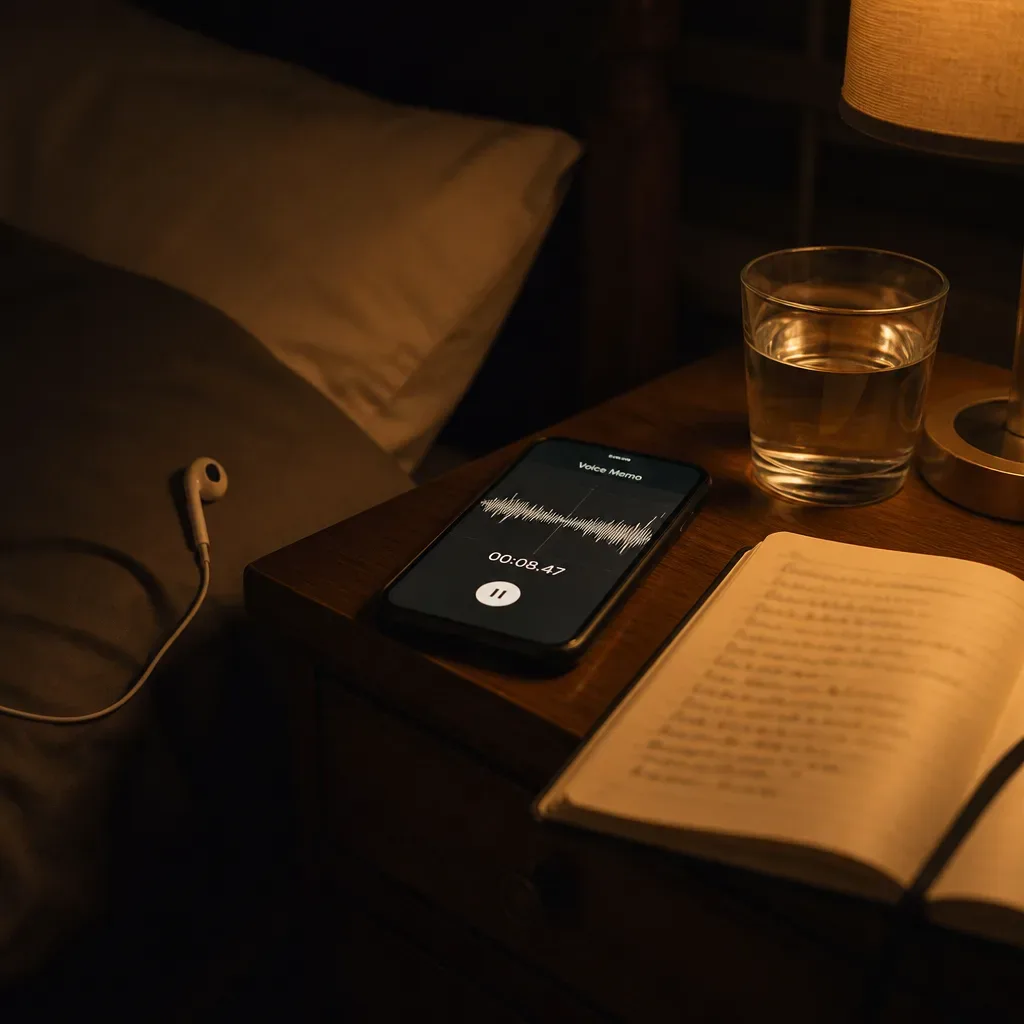
A simple audible swap can be as short as 90 seconds. Use first person. Use present tense if it feels natural, or near-future language if present tense makes you tense. Keep it boring enough for night. The nervous system often trusts what is repeated quietly more than what is declared dramatically.
How should you test a subliminal bundle before sleeping to it?
Test a subliminal bundle like an audio file first and a belief practice second.
Begin in daylight. Play the file through the same speaker or earbuds you use at night. Set the volume lower than speech level, then raise it briefly to check for harsh frequencies, sudden ads, clipped peaks, or strange jumps. Many streaming tracks are normalized, but not all uploads behave the same. A sudden 6 dB jump at night can be enough to wake a light sleeper.
Next, read the description. Does the creator list the topics? Do they list exact affirmations or only outcomes? Do they say how many layers are present? Do they mention speed changes, reverse audio, ultrasonic content, or frequencies like 17,500 Hz? None of those details proves harm. They simply tell you what kind of trust you’re being asked to give. In audio work, hidden process is not the same as better process.
Use this quiet test before any overnight bundle:
- Play it once while awake from start to finish.
- Check the comments for reports of volume spikes or ads.
- Keep your device volume below normal speaking level.
- Use a sleep timer for 20 to 45 minutes on the first night.
- Track sleep quality for 7 nights, not results claims.
- Stop if you wake more often, feel anxious, or get headaches.
The CDC recommends adults sleep at least 7 hours per night. That number is not romantic, but it is the floor many people are already missing. If a bundle makes you bargain with that floor, choose sleep. For insomnia that continues beyond basic sleep hygiene, talk with a qualified professional.
If you still like subliminals, use them plainly. One topic. One creator you trust. One low track. The Subliminals pillar can help you separate audio facts from claims. If you want spoken words instead, the Sleep affirmations pillar is the better shelf.
What should you choose tonight if you already have a bundle playlist?
Choose the option that protects sleep first and gives you words you can stand behind in the morning.
If your current playlist is working for you and not costing sleep, you don’t have to throw it away. Reduce the load before you add more. Pick one bundle, not six. Set a timer. Keep it low. Write down how you slept, not whether you felt signs by breakfast. A 2023 Gallup report found that many U.S. adults say they would feel better with more sleep, which is a plain reminder: most people don’t need more nocturnal stimulation. They need fewer reasons to stay awake.
If the playlist feels compulsive, switch to audible. Record 60 to 120 seconds in your own voice, or use a clean generated voice if hearing yourself keeps you alert. Say only what you’d be comfortable hearing 30 nights in a row. The best night script is not the most intense one. It is the one you can return to without bracing.
You can use this decision rule:
| If tonight you want… | Choose… | Keep it to… |
|---|---|---|
| Background comfort | One soft subliminal | 20 to 45 minutes |
| Clear repetition | Audible recording | 60 to 120 seconds |
| Sleep support | Calm spoken affirmations | Low volume, timer on |
| Bedtime timing | Sleep planning | Use the sleep calculator |
| Personal daily practice | the AYA Method | One Dream-Self Moment daily |
A subliminal bundle is not good because it contains more. It is only useful if it helps you return, quietly, to what you meant to practice. More layers do not make a clearer message. A voice you can hear is sometimes the braver choice.
Keep the night simple enough to keep.