subliminals
Subliminal Frequencies: What Hz Claims Mean
Subliminal frequencies sound scientific, but Hz labels in sleep audio usually mean tone, carrier, or pitch, not proof of hidden influence.
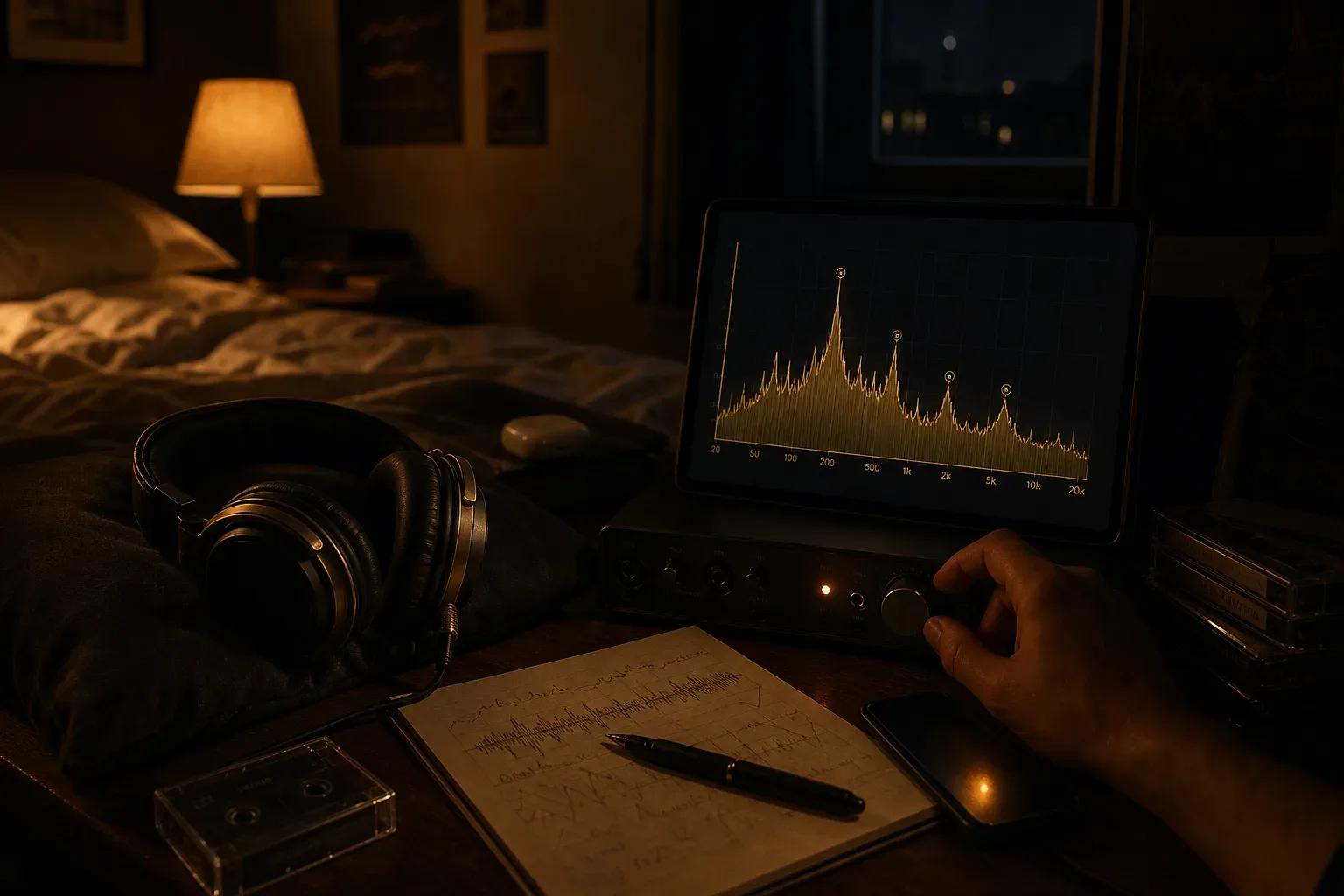
Subliminal frequencies are Hz labels used to sell or describe sleep audio, but they don’t prove a hidden message works. A frequency can mean pitch, tuning, beat difference, or carrier tone. The useful question is quieter: can you sleep with it, repeat it, and notice any change without losing rest?
What do subliminal frequencies actually mean?
Subliminal frequencies are usually sound-design labels, not scientific guarantees.
A hertz, or Hz, is simply cycles per second. A 100 Hz tone vibrates 100 times per second. Middle A in modern concert tuning is commonly 440 Hz. Human hearing is often described as about 20 Hz to 20,000 Hz in young healthy ears, though the upper end declines with age; many adults hear far less than 17,000 Hz. That number matters because a lot of “ultrasonic subliminal” claims sit exactly where ordinary phones, earbuds, and adult ears become unreliable.
The word subliminal means below conscious detection. In audio, that can happen in at least 3 ways: the voice is too quiet, the voice is masked by music or noise, or the signal is outside the listener’s audible range. A frequency claim might refer to any of these, or to none of them. A 528 Hz track can have fully audible affirmations. A 10 Hz binaural beat can carry no words at all. A rain track may hide a spoken layer under broadband sound.
A Hz number tells you what the file is doing acoustically; it does not tell you what your mind is doing psychologically.
The older subliminal advertising story is also worth keeping clean. James Vicary’s famous 1957 popcorn-and-Coca-Cola claim was later exposed as unreliable and widely treated as a hoax. Modern subliminal perception research is real, but modest. Reviews such as Kouider and Dehaene’s 2007 work on subliminal processing describe brief, measurable effects under controlled conditions, not overnight personality edits.
If you’re new to the category, start with the broader Subliminals pillar before trusting a label. The honest frame is simple: hidden audio can affect attention in limited ways, bedtime ritual can affect sleep and expectation, and marketing often adds more certainty than the evidence can hold.
Are 432 Hz and 528 Hz subliminal frequencies?
432 Hz and 528 Hz are tuning or tone claims, not subliminal mechanisms by themselves.
The most common confusion is between frequency as musical pitch and frequency as hidden suggestion. A track tuned to 432 Hz usually means the music is tuned slightly lower than standard 440 Hz concert pitch. A 528 Hz track may include a tone at that frequency or be marketed through “Solfeggio” language. Neither number makes words subliminal. Neither number proves the sleep audio can make a specific outcome happen.
There are small studies on music tempo, relaxation, and sleep quality, but they rarely support one sacred number. A 2018 meta-analysis in PLOS ONE by de Witte and colleagues found music interventions were associated with reduced stress markers, yet the mechanism was not one exact Hz value. The more ordinary variables tend to matter: tempo, loudness, predictability, emotional association, and whether you like the sound enough to play it for 7 to 14 nights.
Here is the clean comparison:
| Claim on the track | What it usually means | What it does not prove |
|---|---|---|
| 432 Hz | Music tuned below 440 Hz | Better subliminal absorption |
| 528 Hz | A tone or tuning used in the file | Guaranteed healing or manifestation |
| 7.83 Hz | Often refers to Schumann resonance language | That your brain matches the Earth’s frequency |
| 10 Hz binaural beat | Two tones differ by 10 Hz | That you’ll enter a fixed mental state |
| Ultrasonic subliminal | Hidden material placed very high | That your device plays it or your brain uses it |
This doesn’t mean your preference is fake. If 432 Hz feels less sharp to you, that matters. Sleep audio is a compliance practice, and comfort changes compliance. The American Academy of Sleep Medicine and Sleep Research Society recommend at least 7 hours of sleep for most adults; any audio habit that costs you sleep costs more than it gives.
A softer track you’ll actually use is better than a dramatic claim you can’t sleep through.
Can the sleeping brain hear hidden messages?
The sleeping brain can respond to sound, but complex subliminal instruction during sleep has much weaker support.
Sleep isn’t a shutoff switch. The brain keeps monitoring the room. Parents wake to a baby’s cry. Your name can cut through noise. Sleep researchers have shown that sound cues can influence memory consolidation in narrow conditions. Targeted memory reactivation studies, including work by Rasch and Born in 2013, suggest that cues linked to prior learning can bias recall after sleep. That is interesting. It is not the same as learning a new self-concept from a hidden overnight script.
The limits matter. In many sleep-learning studies, participants first learn something while awake, then receive a cue during sleep. The cue nudges a trace already formed. It does not install a new language, skill, or belief from scratch. A 2015 review by Schreiner and Rasch described targeted memory reactivation as promising but specific. That word, specific, is the part most sales pages leave out.
Subliminal perception while awake has its own limits. Greenwald, Spangenberg, Pratkanis, and Eskenazi published a well-known 1991 study in Psychological Science testing commercial self-help tapes. Participants often thought the tapes worked when labels suggested they should, even when the labels were swapped. Expectation did a lot of the work.
That finding doesn’t make your practice worthless. Expectation is part of human change. Ritual is part of human change. Repeating a chosen sentence before sleep is different from being tricked by a hidden command. If your aim is identity rehearsal, audible words may be cleaner than buried words. The Sleep affirmations pillar explains why hearing the line can be a feature, not a flaw.
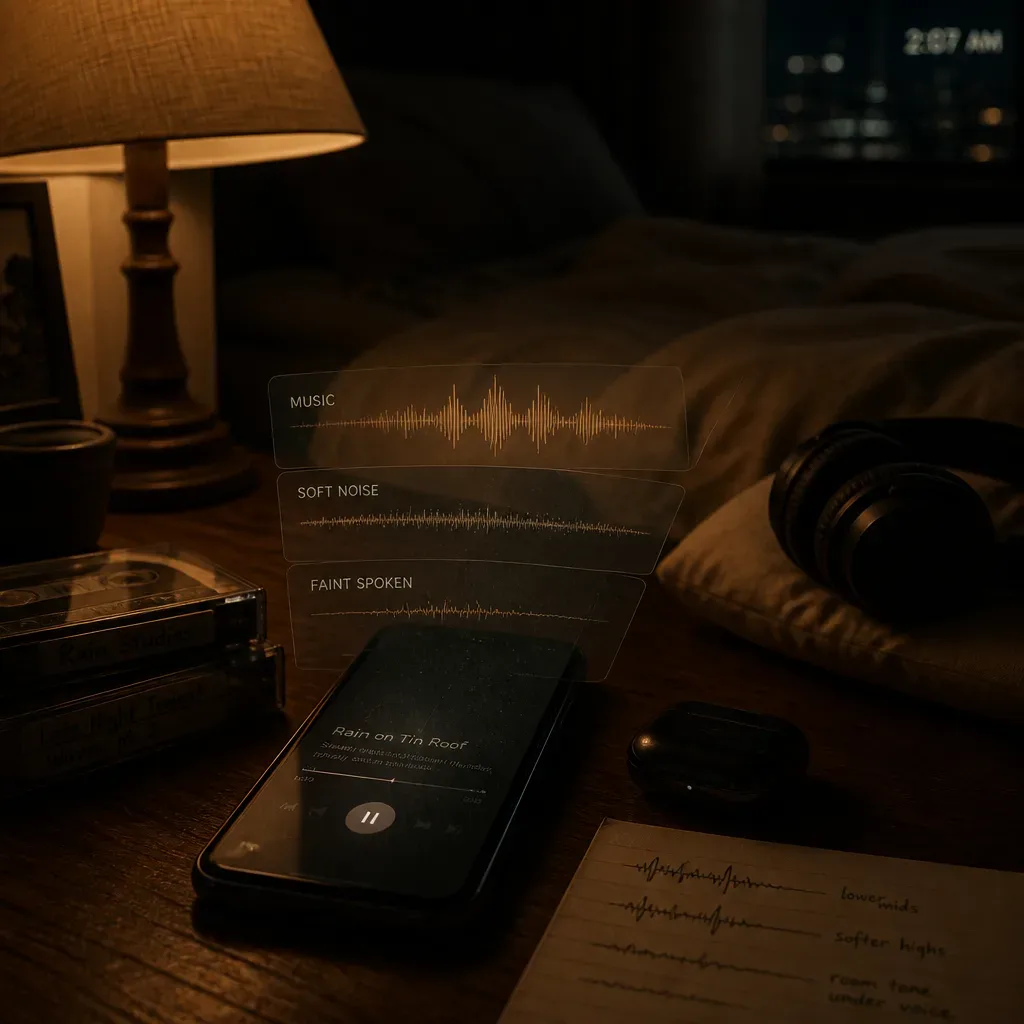
A hidden message may be quieter than a spoken one, but quieter isn’t automatically deeper.
How are binaural beats different from subliminal frequencies?
Binaural beats use a frequency difference between ears; subliminals use hidden or masked messages.
A binaural beat happens when each ear receives a slightly different tone. For example, if the left ear hears 200 Hz and the right ear hears 210 Hz, the brain may perceive a 10 Hz beat. Because the effect depends on separate input to each ear, headphones are usually required. Isochronic tones, by contrast, pulse on and off and can work through speakers. Neither format requires affirmations.
Research on binaural beats is mixed. A 2019 meta-analysis by Garcia-Argibay, Santed, and Reales found small-to-moderate effects on anxiety, attention, memory, and pain perception across studies, with large variation in methods. That’s a cautious signal, not a blank check. A theta-labeled track may feel sleepy because it is slow, repetitive, and low in volume, not because your cortex obeyed the label.
If you’re choosing sleep audio, separate the layers:
- Carrier sound: rain, brown noise, music, drone, or silence.
- Voice layer: audible, masked, whispered, or absent.
- Beat layer: binaural, isochronic, monaural, or none.
- Tuning claim: 432 Hz, 528 Hz, 639 Hz, or standard tuning.
- Use pattern: 10 minutes before sleep, first sleep cycle, or all night.
This separation keeps you from giving one number too much authority. A file can be 528 Hz, include a 6 Hz binaural beat, and bury affirmations under rain. If it works for you, you still won’t know which layer helped without changing one variable at a time.
For sleep timing, use your body more than the label. Many people do better with 10 to 30 minutes before sleep than with audio running for 8 hours. If you want to pair listening with sleep cycles rather than guesswork, the Sleep cycle calculator tool can help you plan a wake time that respects 90-minute sleep architecture.
What should you check before playing Hz-based sleep audio?
Check volume, audibility, source claims, and next-morning sleep quality before you trust the frequency label.
The first test is physical. If a track has piercing highs, sudden sweeps, or pressure in the ears, don’t use it overnight. The World Health Organization has warned about unsafe listening through personal audio devices, especially at high volume and long duration. Sleep audio is long-duration by nature. That means low volume isn’t a nice detail; it’s part of the practice.
The second test is psychological. Ask what the creator claims. “This track uses a 10 Hz binaural beat with masked affirmations” is a technical description. “This will make someone text you in 24 hours” is not. You don’t need to sneer at desire to stay honest about mechanism. Wanting comfort at night is human. Pretending a file has proof it doesn’t have is avoidable.
Use this 5-night check:
- Night 1: Play the track for 10 minutes while awake. Notice irritation, fear, pressure, or calm.
- Night 2: Play it at the lowest useful volume before sleep only.
- Night 3: Keep the same volume and write down wakeups in the morning.
- Night 4: Turn off autoplay so the file doesn’t loop all night by accident.
- Night 5: Ask whether you slept better, worse, or about the same.
A simple log beats a dramatic promise. The Pittsburgh Sleep Quality Index, a standard sleep questionnaire used since 1989, asks about duration, disturbances, latency, and daytime function. You don’t need the full form to borrow the spirit: measure the morning, not the marketing.
If insomnia is persistent, severe, or tied to anxiety, pain, medication, or trauma, talk with a qualified clinician. Audio can be a bedtime tool. It should not be asked to do medical work.
Is audible manifestation audio better than subliminal frequency tracks?
Audible personal audio is often clearer because you know what you’re rehearsing and can decide whether the words are yours.
This is where the AYA Method sits close to sleep audio without pretending to be the same thing. The AYA Method is a daily audio manifestation practice. Each day you listen to a short personalized recording — your Dream-Self Moment — narrated from the version of you who has already manifested the life you intend. Listening is the practice. Repetition is the work. The audio is the method.
That difference matters. A subliminal hides the words under sound and hopes. A Dream-Self Moment makes the words audible and personal. You can reject a sentence that doesn’t fit. You can hear the tone. You can return to the same identity cue every day without wondering whether a masked layer says something strange.
There is also better psychological footing for conscious rehearsal than for hidden command. Mental practice research, including Driskell, Copper, and Moran’s 1994 meta-analysis, found that mental practice can improve performance, especially when paired with physical practice. The effect varies, but the direction is clearer than most subliminal marketing. Joe Dispenza and Neville Goddard are often named in manifestation spaces for rehearsal and assumption; the clinical literature would phrase it more cautiously, as imagery, expectation, attention, and repetition.
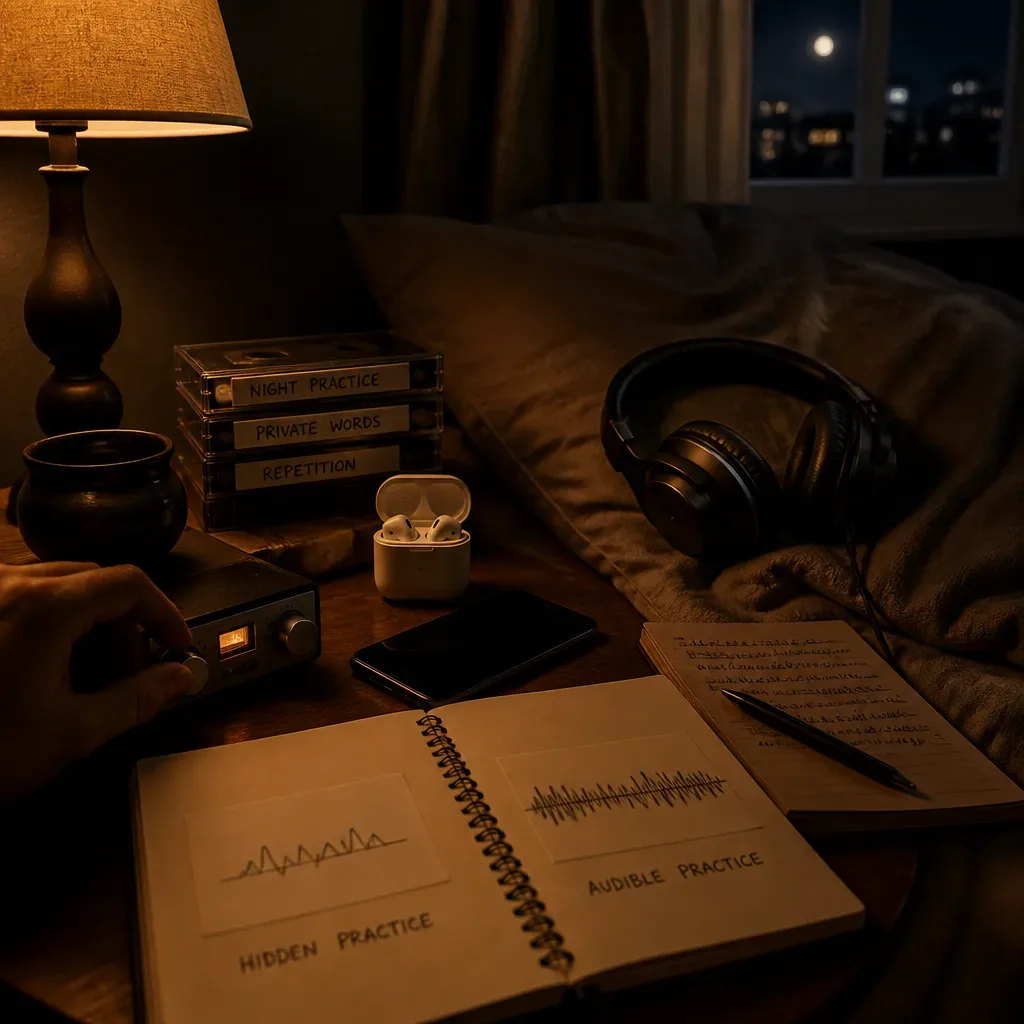
The daily affirmation and Manifestation Board can support the habit, but they are complements. The audio is the method. If you already like hidden tracks, you don’t have to throw them away. You can place them in the right category: atmosphere, comfort, a cue to turn toward the self you’re practicing. Then use audible words when precision matters.
The last ten minutes before sleep are suggestible. Choose what goes in.
A practical split looks like this: use rain, brown noise, or a gentle frequency track as the bed; use audible personal words as the message. The Sleep affirmations pillar is useful here because it keeps the sentence simple enough for a tired mind. The Subliminals pillar is useful when you want to check the claim before you press play.
How should you use subliminal frequencies without fooling yourself?
Use subliminal frequencies as sleep-friendly sound design, then judge the practice by rest, repetition, and behavior.
The cleanest approach is experimental but kind. Pick one track. Keep the time, volume, and device steady for 7 nights. Don’t stack 12 audios, 4 frequencies, and a playlist that runs until morning. If you change everything, you learn nothing. If the file interrupts sleep, stop. Sleep hygiene is not a small footnote. It is the floor under the whole practice.
By week two, look for ordinary signs rather than dramatic ones. Did you fall asleep faster by 5 or 10 minutes? Did you avoid late scrolling 3 nights out of 7? Did the words you heard before sleep show up in your choices the next day? These are humble metrics, but they are real enough to track. Pew Research Center has reported for years that large shares of adults keep phones near the bed; changing that one habit can matter more than choosing between 432 Hz and 528 Hz.
If you want a quiet protocol, use this:
- Choose audio with no sudden volume changes.
- Set a 10-to-30-minute timer.
- Keep volume low enough that the room still feels safe.
- Use audible words for anything important.
- Track sleep quality for 7 nights.
- Keep the track only if your mornings stay steady or improve.
There is no shame in liking a number. Rituals often need a handle, and Hz labels can be a handle. Just don’t hand the number your judgment. A frequency can make a track feel softer, stranger, or more sleepable. It cannot carry proof that no study has earned.
The honest question is not “Which frequency controls me?” It is “Which voice can I sleep beside and still wake up more myself?”
Keep the volume low, and let the night stay yours.