subliminals
Subliminal Headache: Volume, Looping, and Reset
A subliminal headache can come from volume, looping, tension, or sleep loss. Learn a safer reset, what to change, and when to stop listening.
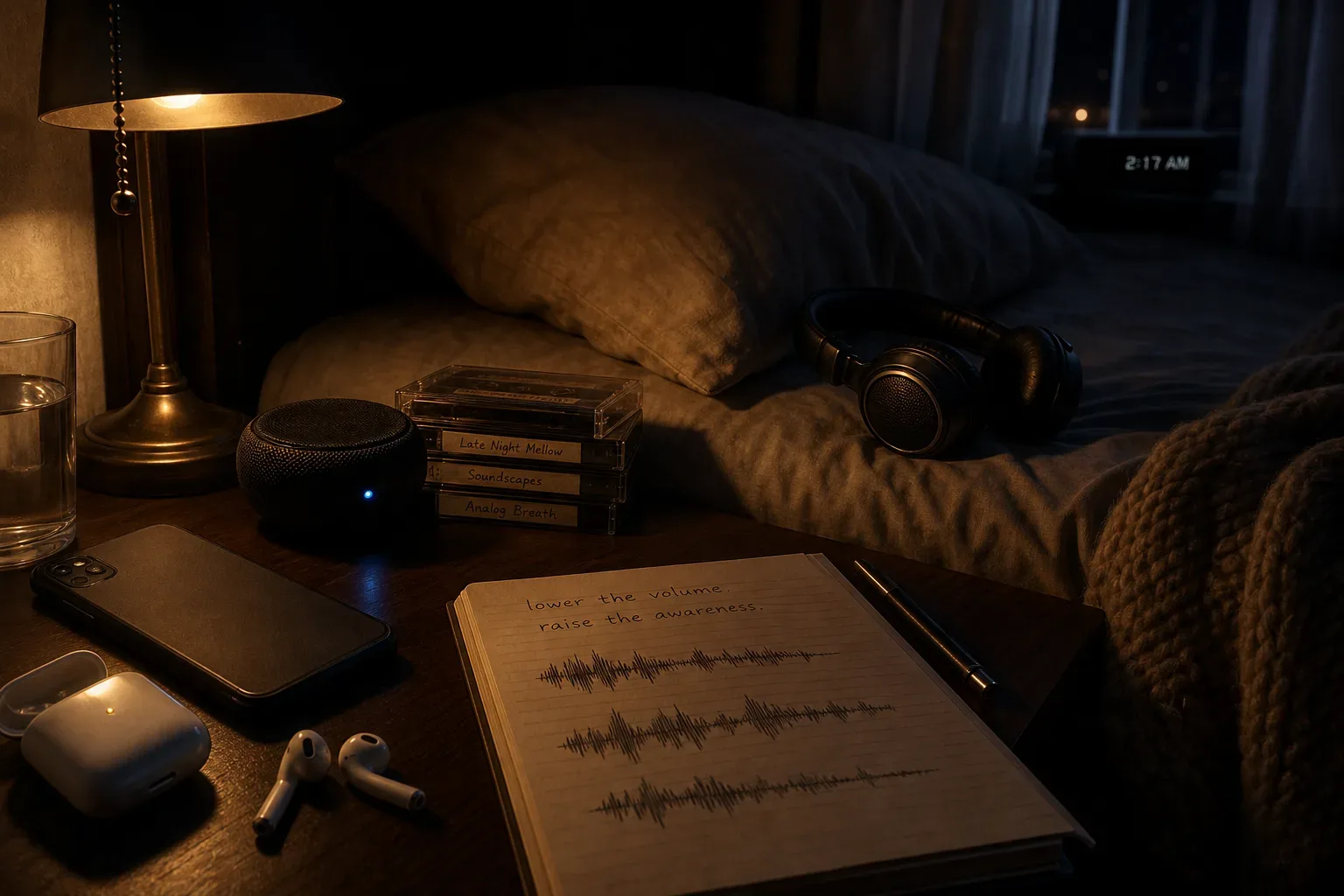
A subliminal headache usually means your listening setup needs less volume, less time, or more quiet. It is not proof that affirmations are working. Pause the track, lower the audio, stop overnight loops for a few nights, and watch sleep quality first. If pain persists or feels unusual, ask a professional.
Is a subliminal headache a sign the audio is working?
No, a subliminal headache is not a trustworthy sign that the audio is working.
That answer matters because online comments often turn discomfort into folklore. Someone gets pressure behind the eyes after a three-hour loop, then another listener says it means the subconscious is accepting the message. That sounds comforting. It also skips the boring causes: loud audio, clenched jaw, dry room, blue light at midnight, skipped water, or sleeping with earbuds pressed into one ear. The body is allowed to complain without becoming a symbol.
A subliminal is an affirmation you can’t consciously hear. That’s the whole trick, and the whole problem. Research on subliminal priming does exist, but it tends to show small, context-dependent shifts in attention or choice, not dramatic overnight change. A 2015 review in Neuroscience of Consciousness described unconscious processing as real but limited by attention, motivation, and timing. YouTube claims often travel far beyond that research.
Pain is not a receipt. A headache after a track is information about load, not proof of progress. The American Migraine Foundation lists sleep disruption, stress, dehydration, and sensory input as common headache factors. A subliminal session can touch all four if you play it late, loud, and with pressure to feel something by morning.
A safer frame is simple:
- If the headache starts during listening, pause.
- If it starts after a night loop, shorten the next session.
- If it repeats with one creator’s audio, change the track.
- If it repeats with all audio, take several quiet nights.
- If symptoms feel severe or unfamiliar, talk to a clinician.
The last ten minutes before sleep are suggestible. They are not a reason to bully your nervous system.
For a clearer foundation on what subliminals are and what they are not, keep our Subliminals pillar nearby. It separates the modest science from the comment-section mythology without sneering at either.
What volume is most likely to trigger a headache?
The risky volume is the one that keeps asking for your attention when you’re trying to sleep.
You don’t need exact decibels to notice this, but numbers help. The World Health Organization’s safe-listening guidance often cites about 80 dB for 40 hours per week for adults as a risk-management reference. NIOSH uses 85 dBA over 8 hours as an occupational exposure limit, with safer exposure time cut in half for every 3 dB increase. Sleep audio should sit well below those lines because you’re not actively monitoring it.
Subliminal users often raise volume for one of two reasons. First, they want to make sure the hidden words are getting in. Second, the track is masked under music, rain, or frequencies, so the listener keeps turning it up to hear evidence of something. Both habits can make a soft practice physically loud. Quiet is not weakness in sleep audio; quiet is the point.
Try this low-volume check tonight:
- Start your phone at the lowest audible setting.
- Place it where you normally sleep, not directly under your pillow.
- Raise it one step only if the masking sound disappears completely.
- Lie down for 2 minutes and notice your face, jaw, forehead, and shoulders.
- If you keep tracking the sound, lower it again.
If you use earbuds, be stricter. Consumer earbuds can produce levels above 100 dB at high settings, according to CDC hearing-loss education materials, and sealed tips add pressure for some listeners. Over-ear headphones can also press the jaw joint or temple. For overnight listening, a speaker across the room is often kinder than anything inside or on the ear.
Here is a practical volume table:
| Listening setup | Safer starting point | Headache clue |
|---|---|---|
| Phone speaker | 1-3 volume clicks | You keep checking the sound |
| Pillow speaker | Lowest audible level | One-sided temple pressure |
| Earbuds | Avoid overnight use | Ear fullness or jaw tension |
| Headphones | Short sessions only | Scalp or temple pressure |
| Smart speaker | Low room tone | Track wakes you between cycles |
If a track needs to be loud to feel believable, it may not be the right track for sleep.
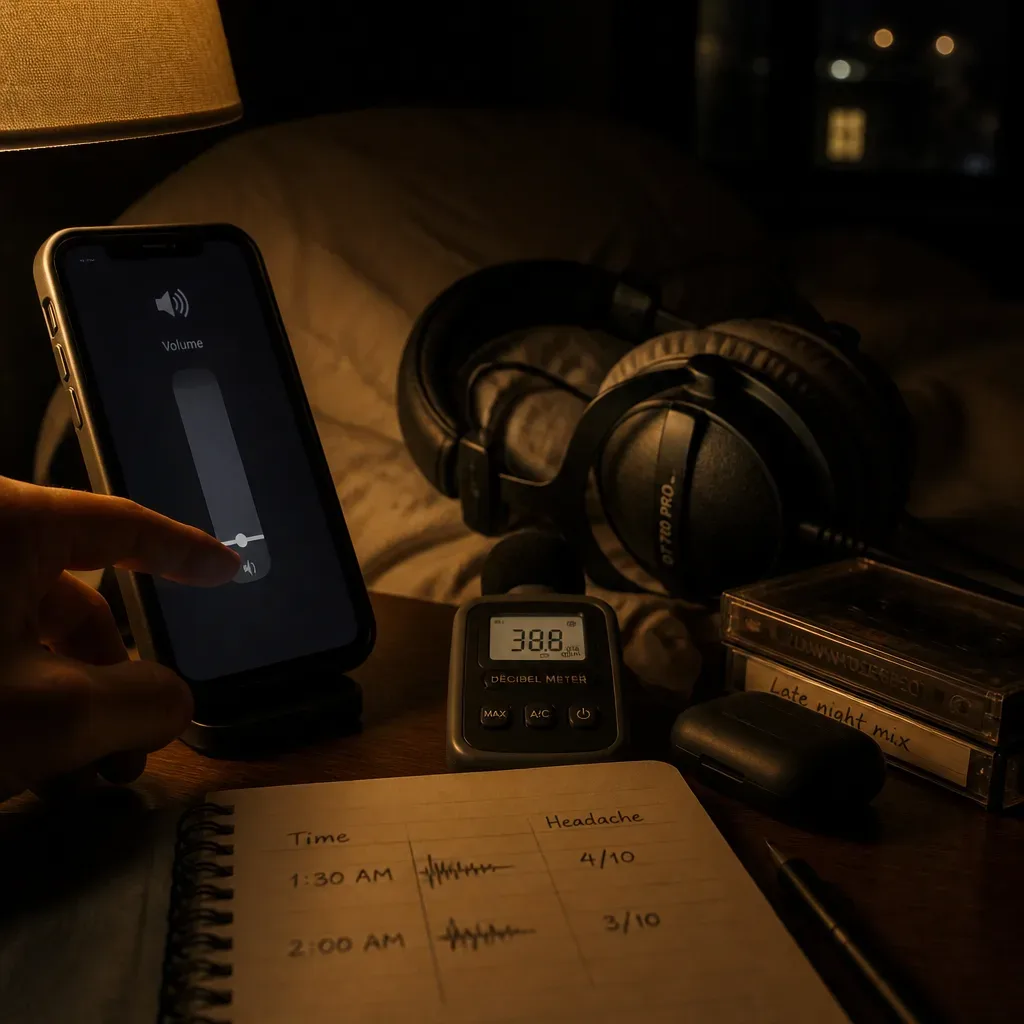
Can looping subliminals all night disturb sleep?
Yes, looping all night can disturb sleep, especially when the audio changes, brightens, or keeps your attention half-awake.
Adults generally need at least 7 hours of sleep, according to the American Academy of Sleep Medicine and the Sleep Research Society. That number isn’t a personality test. It is a baseline for memory, mood, immune function, and attention. If a subliminal habit cuts sleep to 5 or 6 hours because you’re restarting playlists, checking comments, or waking up to ads, the practice is costing more than it gives.
All-night looping has a special pull in subliminal culture. It feels efficient. You don’t have to make time during the day. The phone does the repeating while you rest. But sleep is not empty space. Across a typical 90-minute sleep cycle, your brain moves through lighter sleep, deeper sleep, and REM. Sound can be folded into that process, but sudden changes can also wake you or lighten sleep without you fully remembering it.
The safest reset is boring, which is why it works:
- Take 2 quiet nights with no subliminals.
- On night 3, play one track for 20 minutes before sleep.
- Keep the volume low enough that you could ignore it.
- Use the same track for 7 nights before judging it.
- Stop all-night loops for 14 days if headaches return.
Repetition works best when your body doesn’t have to defend against it.
If you care about timing, pair your audio with a realistic bedtime. The Sleep cycle calculator tool can help you choose a wake time that respects full cycles instead of guessing at midnight. It won’t fix every sleep problem, but it can stop the common mistake of adding a two-hour subliminal loop to a night that was already too short.
A subliminal that costs you sleep is charging too much.
What else can cause headaches during subliminal use?
Most subliminal headaches come from the whole routine around the audio, not the hidden words alone.
Start with the body. Jaw clenching is common when you’re concentrating, even with your eyes closed. Forehead tension can build when you try to visualize intensely. Neck strain comes from curling around a phone or sleeping with headphones. Dehydration is ordinary and still relevant; even mild dehydration has been linked with headache in clinical discussions, and many listeners start night routines after hours without water.
Then look at the track itself. Some subliminals use high, bright music, layered whispers, frequency tones, or aggressive panning between left and right channels. None of those are automatically unsafe, but they can be annoying to a tired nervous system. A 2020 Pew Research Center report found that 85% of U.S. adults owned a smartphone; the phone is now the most common sleep-audio device, and it also brings alerts, light, and scrolling into bed.
The mind adds another layer. If you’re listening with fear that one missed night will ruin your results, your body may stay vigilant. This is common in shifting and subliminal communities, especially among younger listeners trying to follow long rule lists. Renata note from the community side: the method posts get loud, but your body has the final vote.
Use this quick audit before blaming yourself:
- Did you drink water in the last 2 hours?
- Did you scroll for more than 20 minutes in bed?
- Are earbuds pressing into one side?
- Is the track brighter than your usual sleep sound?
- Are you trying to force images or sensations?
- Did you sleep under 7 hours last night?
For gentler spoken-word practice, compare subliminals with audible wording in our Sleep affirmations pillar. Hearing the sentence can reduce the urge to turn volume up, because you don’t have to chase proof that the words exist.
How do you do a safer audio reset after a subliminal headache?
A safer audio reset means you stop the trigger, return to quiet, then rebuild the practice with shorter sessions and lower volume.
Think of it as a listening reset, not a punishment. You are not quitting because you’re weak. You’re removing noise so you can hear what your body is saying. In behavioral medicine, symptom tracking often works because it turns a vague fear into a pattern. You don’t need a lab notebook. You need 7 days of honest notes.
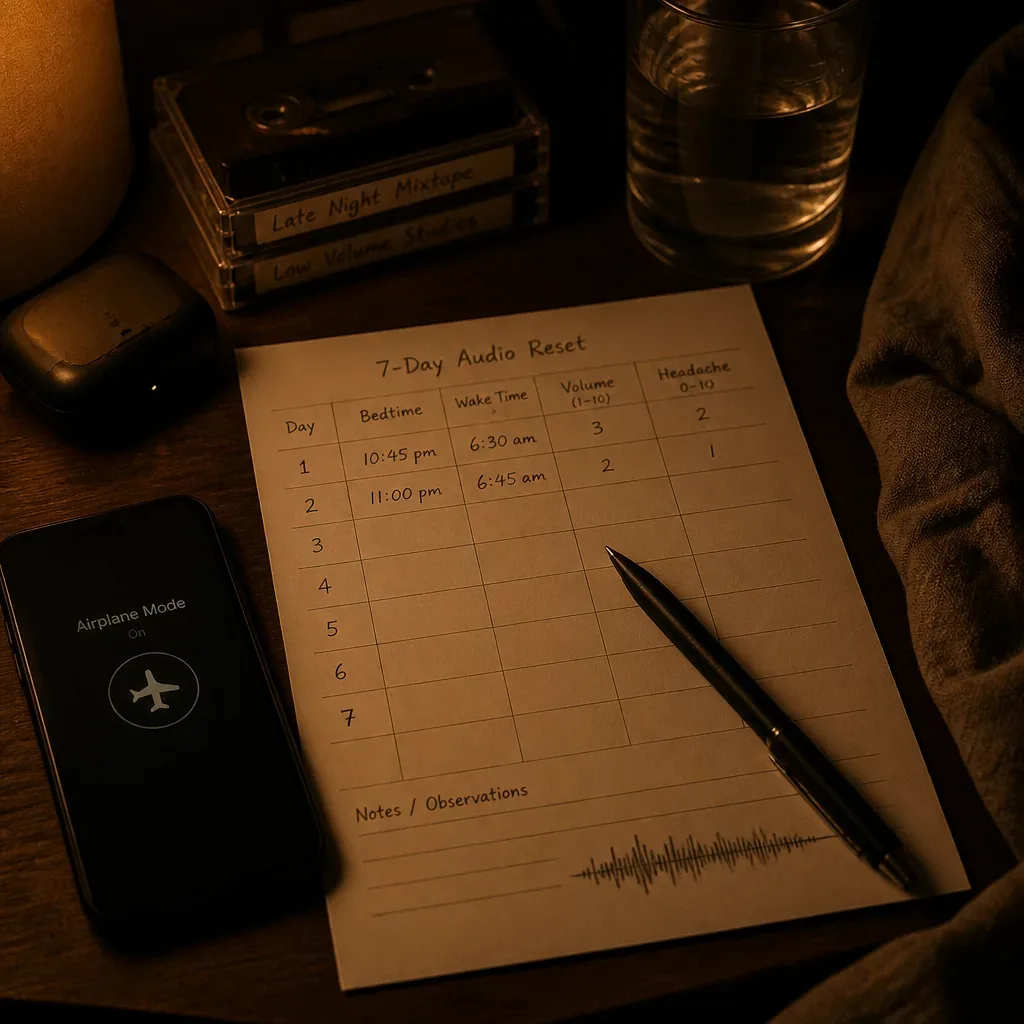
Use this reset plan:
- Stop for 48 hours. No subliminals, no frequency stacks, no overnight playlists.
- Keep sleep boring. Use silence, a fan, or steady rain if quiet feels too sharp.
- Track three numbers. Bedtime, wake time, and headache intensity from 0 to 10.
- Return with one variable. One track, low volume, 20-30 minutes.
- Repeat for one week. Don’t change creator, topic, volume, and timing all at once.
- Decide from data. If headaches return twice, pause that track for longer.
The 0-to-10 scale is plain, but it helps. Pain clinics use numeric rating scales because they are quick and repeatable, even though they are subjective. Your goal isn’t scientific perfection. Your goal is to stop arguing with a headache at 1 a.m.
This is also where audible, personal audio can be kinder than hidden audio. The AYA Method is a daily audio manifestation practice. Each day you listen to a short personalized recording, your Dream-Self Moment, narrated from the version of you who has already manifested the life you intend. Listening is the practice. Repetition is the work. The audio is the method.
The difference is not that one practice is magic and the other is foolish. The difference is that with the AYA Method, you can hear every word. You don’t need to raise the volume to prove the message is there. The daily affirmation and Manifestation Board can support the practice, but they are complements. The audio is the method.
Are certain subliminal tracks more likely to cause headaches?
Yes, some tracks are more likely to irritate you because of their sound design, not because their topic is stronger.
A subliminal for confidence, shifting, beauty, study, or sleep can all be gentle or harsh depending on the file. Watch for bright treble, sudden volume changes, dense layering, binaural-style tones, and long playlists with ads between videos. The U.S. Federal Trade Commission has warned for years that health and self-improvement claims need evidence; subliminal titles online rarely meet that standard. A dramatic title doesn’t mean a safer track.
Frequency labels deserve care too. Some creators list 432 Hz, 528 Hz, theta waves, or morphic fields as if the label guarantees a result. Audio frequency is measurable; the claim attached to it may not be. Dr. Andrew Huberman has discussed how light, timing, and nervous-system arousal influence sleep, but that isn’t the same as proof that a specific YouTube frequency will change your face, grades, or life by Friday.
Choose tracks the way you’d choose something to sleep beside:
- steady volume from start to finish
- no harsh panning between ears
- no ads in the middle of the night
- no fear-based warnings in the description
- no demand to loop for 8 hours
- no comment culture that shames rest days
You can also use the Subliminals pillar to check the gap between subliminal priming research and online claims. The gap is not a reason to mock listeners. It is a reason to listen with more care.
If a creator says headaches prove the track is working, be cautious. If a creator tells you to lower volume, take breaks, and protect sleep, that is a better sign. The safer voice is usually the quieter one.
When is a headache a stop sign instead of a tweak?
A headache is a stop sign when it is severe, repeated, unusual for you, or paired with other symptoms.
Most mild headaches pass with quiet, water, food, sleep, and less sensory input. But you don’t need to diagnose yourself to pause an audio practice. Stop listening right away if you notice dizziness, ringing, hearing changes, nausea, panic, visual disturbance, numbness, confusion, or pain that feels sudden and intense. Medical groups such as the American Migraine Foundation and Mayo Clinic both advise urgent care for severe sudden headache or headache with neurological symptoms.
Also stop if the practice is changing your sleep behavior. If you’re staying up to restart loops, sleeping with painful earbuds, hiding your routine because it feels compulsive, or feeling scared to miss a night, the issue is no longer just audio. Sleep hygiene has a firm line: if a method costs you sleep, it costs more than it gives.
For shifting listeners, this matters. The raven method, Julia method, void-state attempts, and subliminal stacks can become long nighttime rituals. They can also be meaningful, creative, and comforting. Both can be true. A rich inner practice still needs a healthy schedule. Five years watching community patterns has made that plain: the people who last are usually the ones who rest.
If insomnia, recurring headaches, panic, or hearing symptoms continue beyond basic changes, speak with a qualified professional. Subliminals, affirmations, and manifestation audio are not medical care. You deserve help that doesn’t depend on guessing in a comment section.
Keep the rule small enough to remember: lower first, shorten second, stop when your body says stop.
Play less, hear more, and let the night stay yours.