subliminals
Subliminals All Day: When to Stop for Dream-Self Audio
Listening to subliminals all day can turn into noise. Learn when to stop, reset your ears, and use Dream-Self audio before sleep instead.
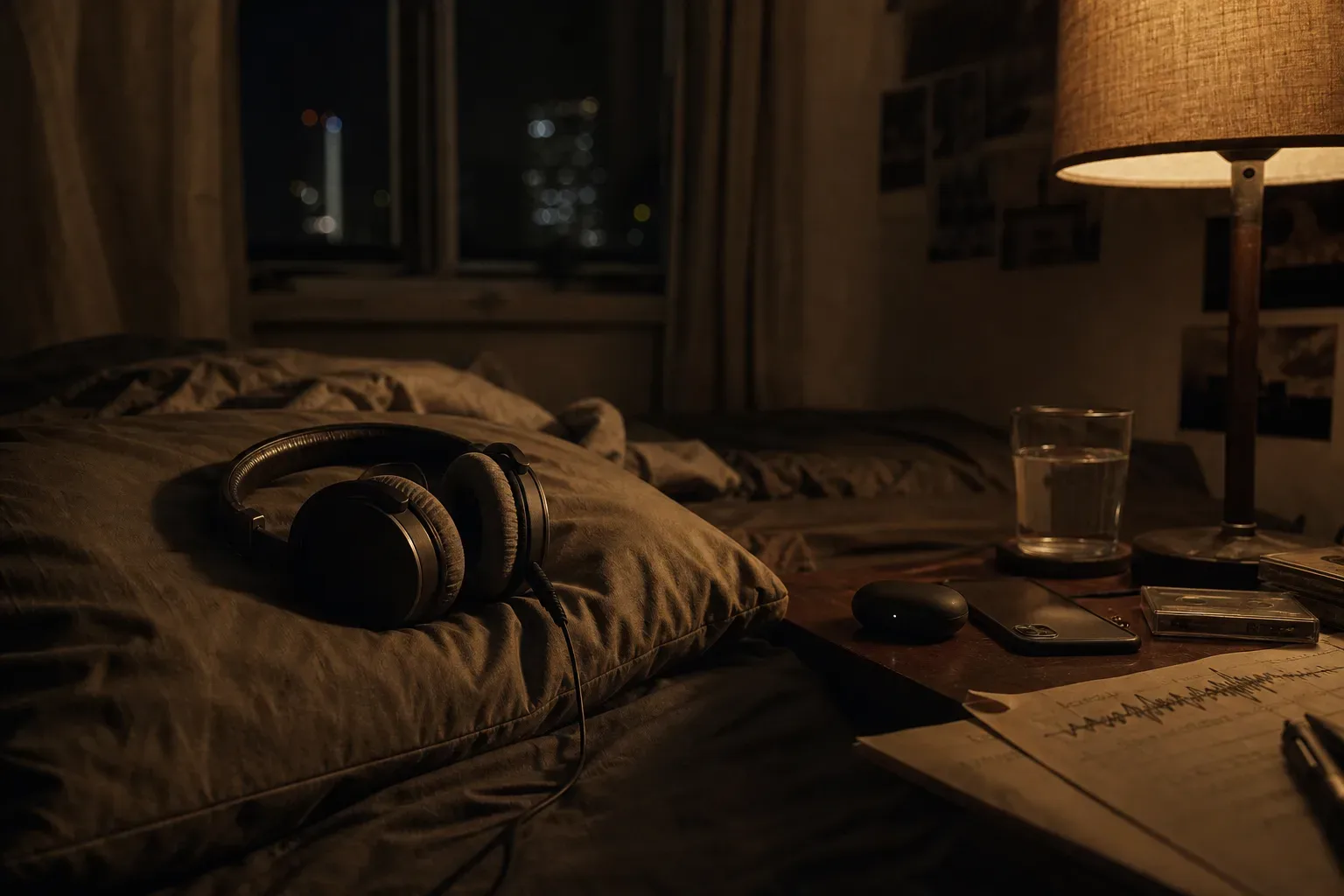
Subliminals all day are usually too much when the audio starts stealing attention, tiring your ears, disturbing sleep, or making silence feel unsafe. Use subliminals in bounded sessions, then switch to audible Dream-Self audio when you want a clearer nightly practice: words you can hear, repeat, and choose on purpose.
How much is too much when you play subliminals all day?
Too much is the point where listening stops being a practice and becomes a background compulsion.
A subliminal is an affirmation you cannot consciously hear, usually masked under music, rain, brown noise, or another sound bed. That is the whole trick, and the whole problem. If the message is hidden, you have less ability to judge the wording, notice your response, or decide whether it still belongs in your head at 4 p.m. The Subliminals pillar goes deeper into that tradeoff: subliminals can feel easy because they do not ask for full attention, but ease can slide into overuse.
The research does not support the idea that more hours always means more change. In a well-known 1991 study, Anthony Greenwald and colleagues tested commercial subliminal self-help tapes and found no evidence that the tapes produced their advertised memory or self-esteem effects, even when listeners believed they had improved. Later masked-priming studies do show effects, but they are usually small and short-lived. That matters. A 20-minute exposure is not the same thing as an 8-hour identity edit.
Your ears also need ordinary care. The World Health Organization has warned that long duration, high volume headphone use can increase hearing risk over time, especially when people listen above safe levels for hours. Even if your subliminal is quiet, constant sound can create listening fatigue. You may notice a dull headache, clenched jaw, impatience, or a strange hunger for more tracks.
A practice that cannot tolerate silence has stopped being a practice.
Use this quick check before another loop:
- Can you stop the track without anxiety?
- Do you know what the hidden affirmations say?
- Did your sleep get lighter after using it overnight?
- Are you listening because you chose it, or because stopping feels risky?
- Would 30 minutes of quiet feel like relief?
If the answer points toward pressure, stop for the day. Silence is not a failed manifestation. Silence is how you hear what the audio has been doing.
What signs tell you to stop a subliminal session?
Stop a subliminal session when your body, sleep, or attention starts giving you cleaner information than the track does.
The first signs are usually physical. Ear warmth, forehead pressure, jaw tension, ringing, or a tired feeling behind the eyes are enough reason to pause. You do not need to prove harm before you rest. Occupational hearing guidance often uses 85 decibels over 8 hours as a risk reference point, but many people feel fatigued far below that if the sound is constant. Volume is only one part of the load; repetition and lack of silence matter too.
The second signs are behavioral. You replay the same track while working, then stack another while walking, then sleep with a playlist because missing a night feels dangerous. That is not discipline. It is fear wearing headphones. If a method costs you sleep, it costs more than it gives. The Sleep cycle calculator tool can help you plan a realistic bedtime window instead of letting a playlist decide when the night ends.
The third signs are emotional. You feel flat after listening. You compare results every few hours. You keep switching topics: beauty, money, confidence, revision, detachment, social ease. By evening, your nervous system has heard 40 different promises and none of them feel yours.
Here is a simple stop-light guide:
| Signal | What it sounds like | What to do |
|---|---|---|
| Green | Calm, low volume, chosen session | Continue up to your planned limit |
| Yellow | Mild fatigue, checking, distraction | Pause for 30 to 60 minutes |
| Red | Headache, poor sleep, anxious looping | Stop for 24 hours or longer |
A clean boundary is more useful than a heroic streak. Try this three-part rule for one week:
- Pick one subliminal topic.
- Play it for one planned window of 20 to 60 minutes.
- Leave at least 2 silent hours before bed.
In small studies of habit formation, consistency tends to matter more than intensity. A 2009 study by Phillippa Lally and colleagues found that automaticity rose over time and often took longer than the popular 21-day claim. Quiet repetition beats frantic saturation.
Why does all-day listening start to feel foggy?
All-day listening gets foggy because attention, hearing, and expectation are all being taxed at once.
Your brain is not a passive bucket. Even when you are not consciously decoding words, you are still processing sound: rhythm, volume, pattern, emotional tone, and prediction. Dr. Andrew Huberman often points to 90-minute ultradian cycles as a useful way to think about focus and rest. You do not have to treat that as a rigid rule to see the practical point. A system that works in cycles needs off-cycles.
Subliminal communities often talk as if the unconscious mind can absorb unlimited input. The evidence is less dramatic. Subliminal priming research suggests that hidden cues can bias perception or response under narrow conditions, sometimes for seconds or minutes. That is not the same as saying 10 hours of layered affirmations will reliably change body, personality, or life circumstances. The YouTube claims are not the research. The research is real, modest, and worth respecting.
Fog also comes from message conflict. One track says you are detached. Another says you are desired. Another says you are intensely focused. Another says you are sleepy. Even if each one is beautifully made, the combination can feel like several people whispering instructions through the same wall. You may not hear the words, but you can feel the crowding.
Hidden words can still create visible pressure.
This is where audible audio has an advantage. You can hear whether the sentence is kind. You can reject wording that feels false, rushed, or harsh. You can notice whether the voice makes you soften or brace. The Sleep affirmations pillar is useful here because affirmations before sleep work best when they are simple enough to repeat without strain.
If you feel foggy, do not add a clarity subliminal on top. Do less. Drink water, step outside for 5 minutes if you can, remove headphones, and let the room be ordinary. Then choose one message for the next session, not twelve.
When should you switch from subliminals to Dream-Self audio?
Switch when you want a personal, audible script more than a hidden suggestion.
The the AYA Method is a daily audio manifestation practice. Each day you listen to a short personalized recording — your Dream-Self Moment — narrated from the version of you who has already manifested the life you intend. Listening is the practice. Repetition is the work. The audio is the method.
That difference is not cosmetic. With a subliminal, you are trusting a concealed message. With Dream-Self audio, you are rehearsing a chosen one. You hear every word. The scene is yours. The voice can be yours. The practice does not need to run all day because the point is not saturation; the point is return.
Night is a sensible place for that return. The last 10 minutes before sleep are often more suggestible because attention loosens and inner imagery becomes easier. Hypnagogia, the border state between waking and sleep, has been studied for more than a century; sleep researchers still describe it as a phase where images, fragments, and associations can become vivid. That does not make it magic. It makes it a good time to be careful.
The last words before sleep should not be random.
Use Dream-Self audio when one of these is true:
- You want to know exactly what is being repeated.
- You are tired of stacking tracks with different aims.
- You respond better to story than to hidden commands.
- You want a practice that can be done in under 10 minutes.
- You need your nighttime audio to support sleep, not compete with it.
Neville Goddard called attention to the drowsy state before sleep because, in his view, imaginal scenes land more easily there. You do not have to accept every claim to use the timing wisely. A short audible recording, played low and once, is cleaner than a playlist that runs until morning.
How do you build a safer daily listening schedule?
Build your schedule around sleep first, then place subliminals and Dream-Self audio where they do the least harm and the most good.
Start with the night. Adults commonly need about 7 or more hours of sleep, according to the American Academy of Sleep Medicine and the Sleep Research Society. If your audio habit cuts that down, the trade is not worth it. Sleep loss changes mood, appetite, attention, and pain sensitivity faster than most audio practices can help them.
A simple schedule looks like this:
| Time | Audio choice | Limit |
|---|---|---|
| Morning or midday | One subliminal track | 20 to 60 minutes |
| Late afternoon | Silence or neutral sound | No affirmation stacking |
| Last 10 minutes before sleep | Dream-Self audio | One clear listen |
| Overnight | Quiet, fan, or sleep-safe sound | No hidden-message playlist |
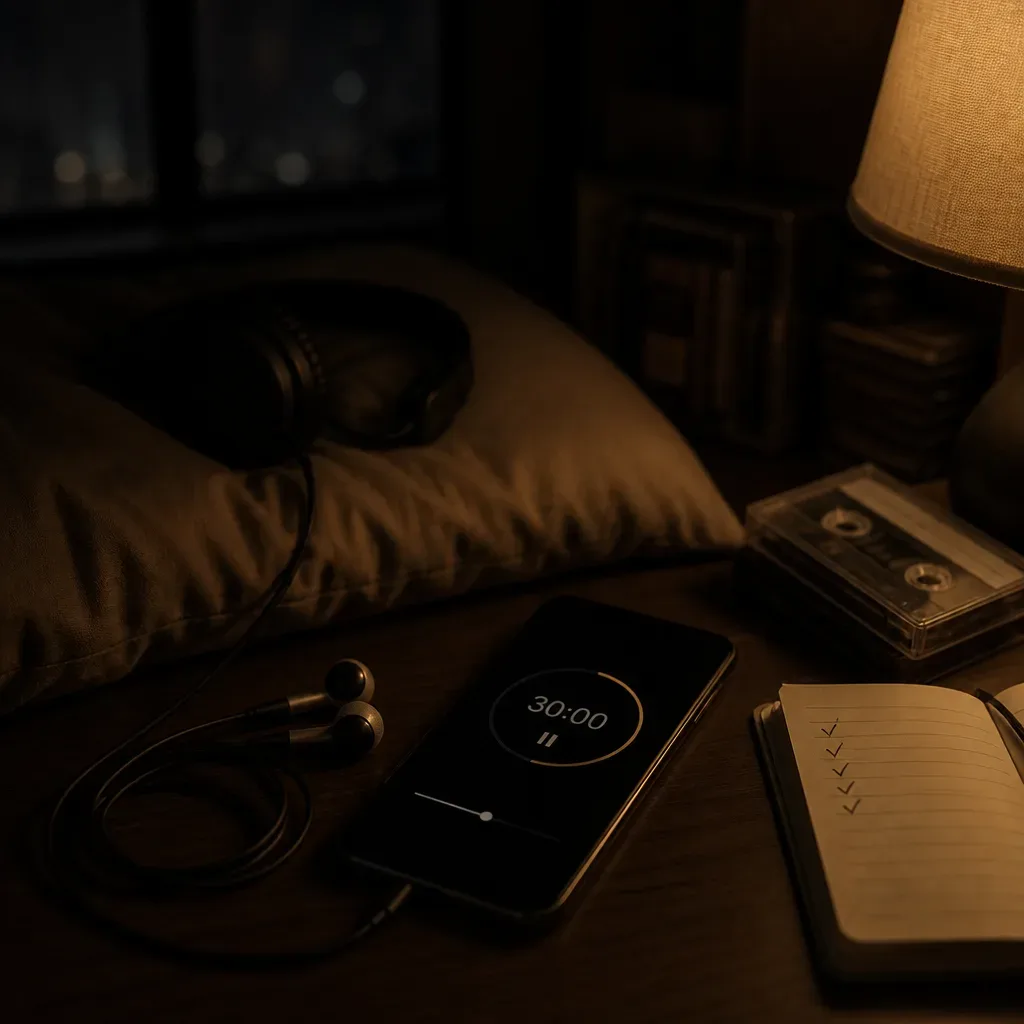
If you love daytime subliminals, keep them. This is not a purity test. The issue is drift. Drift is when the 30-minute playlist becomes 6 hours, then the 6 hours becomes a belief that stopping will ruin your results. Set a timer before you press play. Make the end part of the ritual.
Your bedtime audio should be boring in the best way. Slow pacing. Low volume. No sudden musical lift. No urgent promises. Many sleep hypnosis scripts use 60 to 80 words per minute because slower speech leaves room for the body to settle. Your Dream-Self audio does not need theatrical intensity. It needs to be repeatable at midnight when you are tired.
A 14-night test is long enough to notice patterns without turning the practice into a life audit. Track only three things: how quickly you fall asleep, how you feel on waking, and whether you resisted silence during the day. If insomnia continues beyond basic sleep hygiene, talk with a qualified professional. Audio can be part of a routine; it is not a substitute for care.
What should you expect by week two?
By week two, expect clearer preferences and steadier repetition, not guaranteed outer results.
This is the honest promise. After 14 nights of bounded listening, you may notice that some tracks make you tense and some make you softer. You may learn that rain under speech works for you, but music with lyrics does not. You may find that one audible Dream-Self recording is easier to return to than five hidden playlists. That is useful data.
Research on repetition supports the ordinary part of this. Repeated self-statements can influence self-talk for some people, but effects depend on wording, belief, mood, and context. A 2009 study in Psychological Science by Joanne Wood and colleagues found that very positive self-statements could make people with low self-esteem feel worse in some cases. That does not mean affirmations are useless. It means wording matters.
So listen for the sentence your body can accept. Not the grandest sentence. Not the most dramatic one. The one that gives you room to breathe. The Sleep affirmations pillar is a good companion if you need gentler language, and sleep hypnosis can help you understand pacing, pauses, and suggestion without hiding the script.
Here is the 14-night version I would give a friend:
- Choose one daytime subliminal, or choose none.
- Keep it under 60 minutes.
- Leave the final 2 hours before bed free of hidden affirmations.
- Play your Dream-Self audio once, low, before sleep.
- Write one line in the morning: slept better, worse, or same.
- Change only one variable every 3 nights.
Repetition works best when it has somewhere quiet to land.
If week two feels calmer, continue. If it feels obsessive, simplify further. If your sleep is worse, stop overnight audio and protect the night. The method should make returning to yourself easier, not make ordinary silence feel like a threat.
Tonight, let the last words be the ones you can hear.