subliminals
Supraliminal vs Subliminal: Audible Sleep Audio Guide
Supraliminal vs subliminal sleep audio compared clearly: what you can hear, what evidence supports, how loud to play it, and when to skip it.
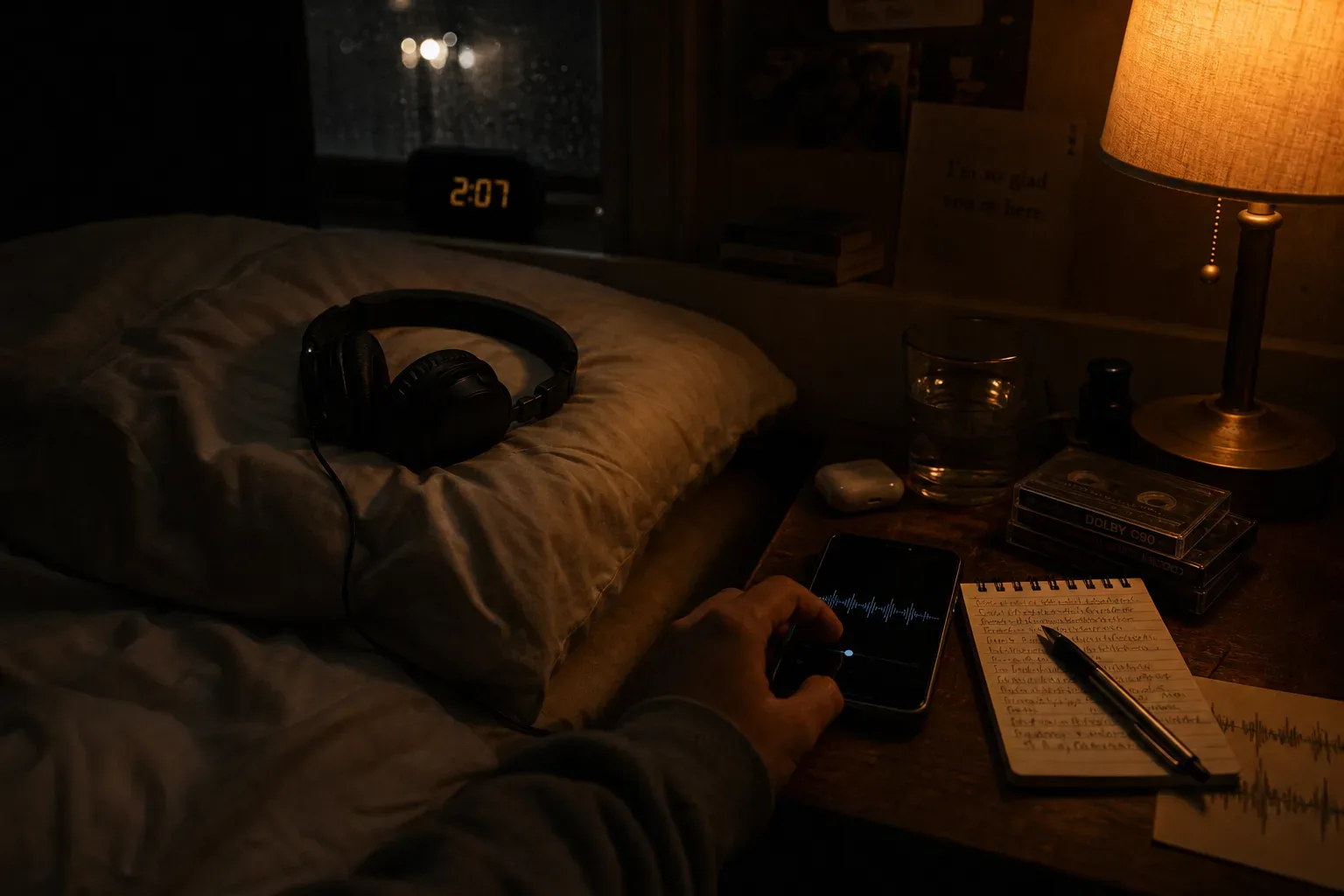
Supraliminal vs subliminal audio comes down to audibility: supraliminal messages are quiet but consciously hearable, while subliminal messages are hidden below awareness. For sleep, that difference matters. Audible words give you consent, review, and control. Hidden words may feel easier to ignore, but the research is thinner than the claims.
What does supraliminal vs subliminal mean in sleep audio?
Supraliminal sleep audio uses words you can consciously hear; subliminal sleep audio uses words you cannot clearly detect.
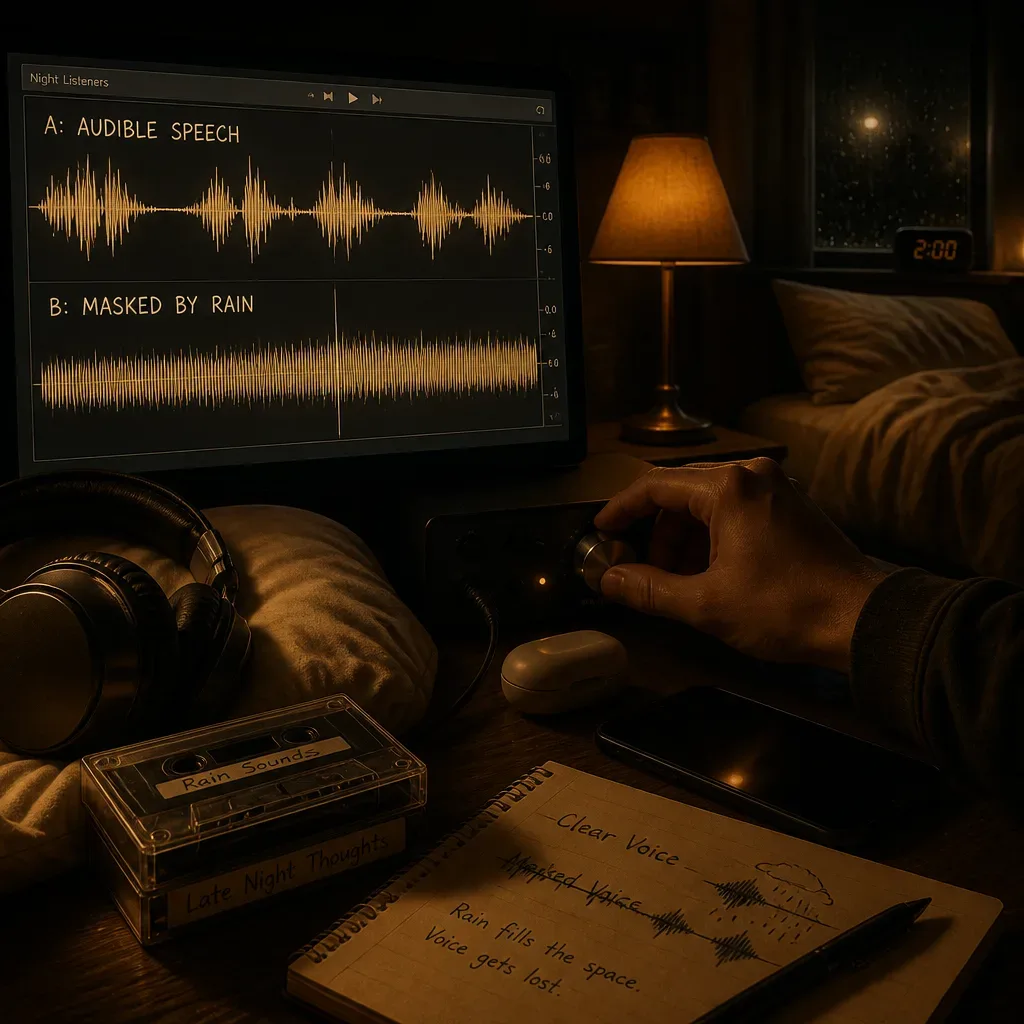
A supraliminal message sits above your perceptual threshold. You may not attend to every word once you are drowsy, but if you pause and listen, the sentence is available. A subliminal message sits below that threshold. It may be buried under rain, brown noise, music, or another voice. That is why two tracks can sound equally soft and still be different in kind.
The threshold is not fixed. A 2015 review in Neuroscience of Consciousness notes that awareness depends on attention, stimulus strength, timing, and context, not only volume. A whisper can be supraliminal in a silent room and functionally hidden next to a fan. In a bedroom at 2 a.m., the difference can be a few decibels and one tired listener.
For sleep audio, the practical question is simple: can you check the script with your own ears? If yes, you are using supraliminal suggestion, spoken affirmation, or guided sleep audio. If no, you are trusting the creator, the mix, and the label. A hidden message asks for more trust than an audible one.
Here is the clean comparison:
| Feature | Supraliminal audio | Subliminal audio |
|---|---|---|
| Word audibility | Quiet but hearable | Not consciously clear |
| Consent | Easy to verify | Hard to verify |
| Bedtime feel | Like a soft voice | Like music, noise, or ambience |
| Evidence fit | Closer to self-talk and priming | Closer to masked priming research |
| Main risk | Keeps you mentally engaged | You cannot review the words |
A subliminal is an affirmation you cannot consciously hear. That is the whole trick, and the whole problem. If you want a fuller base before comparing formats, start with the Subliminals pillar, then come back to the volume question here.
Which one has better evidence: audible or hidden messages?
Audible messages have clearer practical support for bedtime use, while subliminal self-help claims remain modest and mixed.
The research on subliminal perception is real. Laboratory studies show that unseen or unheard cues can influence reaction time, preference, and attention for a short period. Pessiglione and colleagues reported in Science in 2007 that subliminal monetary cues affected physical effort in a controlled task. That is interesting. It does not prove that a masked sleep track can change your income, body, relationship, or self-image.
Commercial subliminal audio has a more sobering history. A well-known 1991 double-blind study by Greenwald, Spangenberg, Pratkanis, and Eskenazi tested subliminal self-help tapes. The study found no objective improvement matching the tape labels, though some people believed they improved when they thought they had received a certain tape. The placebo response was not nothing. It just was not the hidden script doing what the marketing promised.
Audible audio sits closer to established practices: repeated self-talk, cognitive rehearsal, relaxation scripts, and attention training. Those are not magic words. They are repeated cues. The American Academy of Sleep Medicine and Sleep Research Society recommend at least 7 hours of sleep for most adults, and a track that helps you settle without stealing those hours has a practical role.
The honest line is this: priming research is real and modest; YouTube-level promises are usually much larger than the research. You do not have to sneer at subliminals to be careful with them. You only have to separate a small effect under lab conditions from a grand claim on a thumbnail.
Why do audible words often feel safer at night?
Audible words feel safer because you can hear what is entering the last quiet minutes before sleep.
The last 10 to 20 minutes before sleep are not empty time. They are the bridge between deliberate attention and drifting thought. Dr. Andrew Huberman often describes the pre-sleep period as a time when light, sound, and arousal can shape sleep onset. He is usually talking about biology, not manifestation, but the practical point carries: what you play before sleep is part of your environment.
With supraliminal audio, you can notice tone, wording, and pacing. You can reject a sentence that feels false or pressured. You can stop a track if it uses fear, urgency, or claims you do not want rehearsed. That matters because sleep is already a vulnerable state. Consent does not become less important because the room is dark.
This is where the AYA Method parts ways with hidden-message culture. The AYA Method is a daily audio manifestation practice. Each day you listen to a short personalized recording — your Dream-Self Moment — narrated from the version of you who has already manifested the life you intend. Listening is the practice. Repetition is the work. The audio is the method.
The difference is not only that you can hear every word. It is that the recording is personal, specific, and reviewable. The daily affirmation and Manifestation Board can support the practice, but they are complements. The audio is the method. A practice you can hear is a practice you can consent to.
If you already use sleep affirmations, supraliminal audio will feel familiar. The main change is intensity. Sleep affirmations may be broad, such as I can rest now. A personal audible recording can be narrower, calmer, and more yours.
When might subliminal audio still make sense?
Subliminal audio can make sense when audible words keep you awake and you trust the source enough to accept not hearing the script.
Some people cannot fall asleep with clear speech playing. I am one of them on certain nights. A single interesting sentence can hold my attention for 15 minutes. For those nights, rain, brown noise, or music with a masked message may feel less intrusive. The National Sleep Foundation has long advised keeping the sleep setting quiet, cool, and dark; for many bedrooms, a steady sound can cover irregular noise without demanding attention.
The catch is that subliminal audio works best as a gentle background cue, not as a loophole around attention. If the track is loud enough to wake you, it is no longer sleep support. If it is so quiet that even the carrier sound disappears, it may not be doing much at all. The useful middle is narrow.
Use this checklist before you leave a subliminal running:
- The creator provides the full written script.
- The claims are specific and modest.
- The audio does not include sudden volume changes.
- The track length fits your sleep plan.
- You can stop without feeling you have ruined anything.
- You feel calmer after 7 nights, not more watchful.
Sleep research also gives a caution. Studies on targeted memory reactivation, including work by Schreiner and Rasch in 2015, show that sounds can cue memories during sleep, but timing matters. Cues are usually brief, trained while awake, and played during specific sleep stages. An 8-hour masked affirmation loop is not the same protocol.
If a method costs you sleep, it costs more than it gives. That sentence is the rule I wish I had used at 23, before I kept a spreadsheet of every track I tried.
How should you choose between supraliminal and subliminal tonight?
Choose supraliminal audio if you want clarity and consent; choose subliminal audio only if speech prevents sleep and the source is transparent.
Start with the problem you are trying to solve. If your mind gets harsh at night, audible words may give it a softer script to return to. If your problem is noise sensitivity, a masked track may be less disruptive. If your problem is insomnia that lasts more than a few weeks or affects daily life, bring in a qualified professional; audio can support sleep hygiene, but it is not medical care.
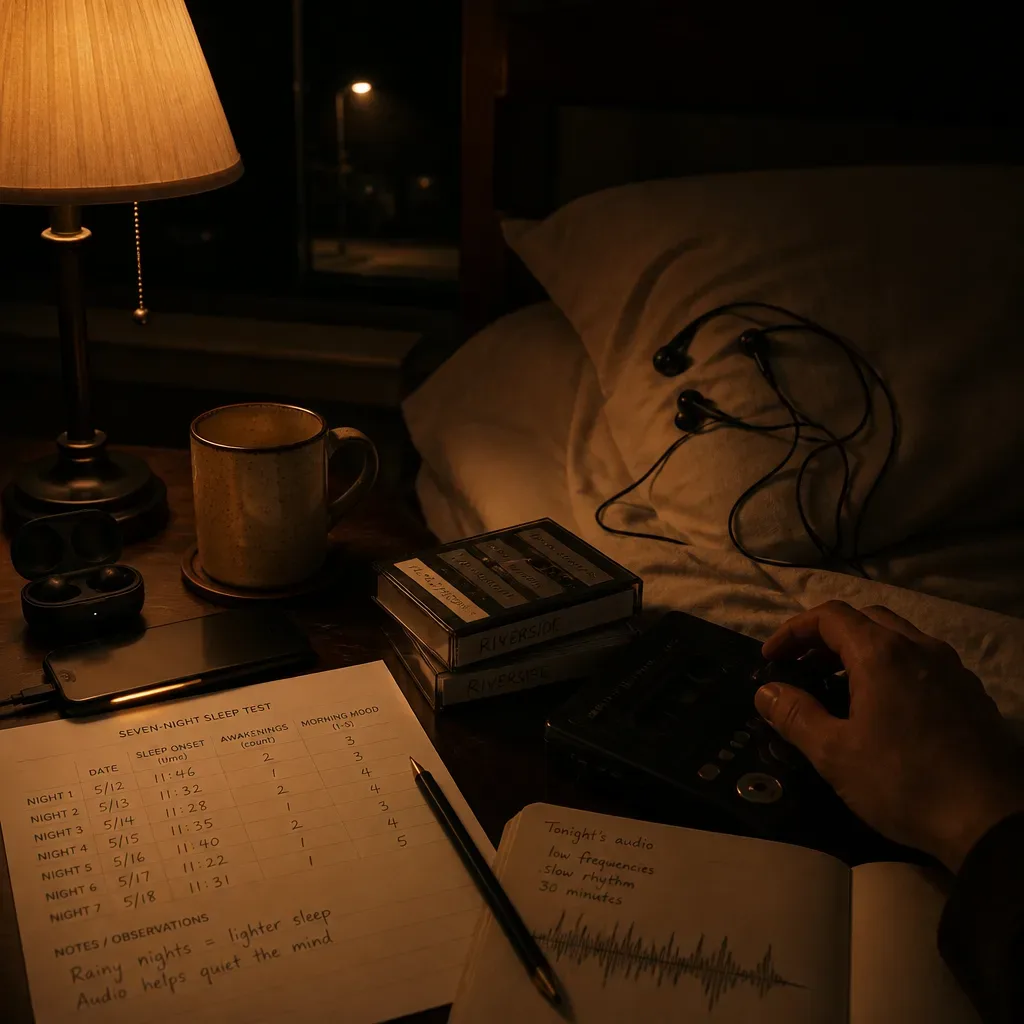
Here is a simple 7-night test that has served me better than strong opinions:
- Pick one track only.
- Set a timer for 20 to 45 minutes, not the whole night.
- Keep volume lower than a normal podcast.
- Write down sleep onset, awakenings, and morning mood.
- Change nothing else for the first 7 nights.
- Stop early if you feel tense, watched, or annoyed.
- Repeat with the other format only after 2 quiet nights.
A small sleep diary beats a dramatic claim. In clinical sleep work, diaries are often used for 1 to 2 weeks because one night is noisy data. Your bedroom is not a lab, but you can still collect enough information to avoid fooling yourself.
If timing is part of the problem, use the Sleep cycle calculator tool before choosing a track length. A 90-minute sleep cycle is an average, not a law, but it is useful. I would rather hear 25 minutes of words and sleep 7 hours than run an 8-hour loop that keeps me half-alert.
What should the best audible sleep track actually sound like?
The best audible sleep track is slow, low, predictable, and honest about what it is doing.
Speech matters technically. A resting adult heart rate often falls somewhere around 60 to 100 beats per minute, according to the American Heart Association, and many calming tracks pace speech below normal conversation speed. That does not mean every sentence must be sleepy. It means the recording should not surprise you. No sudden bells. No sharp stereo movement. No whispered urgency in one ear.
Good supraliminal sleep audio usually has these traits:
- Sentences under 12 words when possible.
- A stable voice level from start to finish.
- Background sound lower than the voice.
- No commands that create pressure.
- No claims that promise a result by morning.
- Enough silence to let the body lead.
For subliminal audio, the production checklist is different. The carrier sound should be steady, the script should be published, and the volume should be safe. If the maker will not show the words, that is a useful answer. Trust is part of the product.
You can also pair audible audio with other soft spoken practices. Sleep hypnosis uses suggestion, relaxation, and guided attention in a way you can usually hear. It is not the same as subliminal audio. The voice is the point. You listen, then you let go.
Words before sleep do not need to conquer you. They need to become familiar enough that the body stops bracing against them. The best night audio is not the track that impresses you. It is the one you can return to without effort.
What is the quiet verdict on supraliminal vs subliminal?
Supraliminal audio is the better first choice for most sleep listeners because it keeps the words audible, reviewable, and yours.
Subliminal audio is not fake by definition. The brain can respond to stimuli outside awareness, and controlled priming studies have shown small effects for decades. But commercial sleep subliminals often stretch that fact far past the evidence. The hidden part is not proof of depth. Sometimes it is just a production choice.
Supraliminal audio asks less blind trust from you. You know the sentences. You know the voice. You can decide whether the track is kind or manipulative, calming or busy, true enough or too far away. That is why I start there when someone asks me what to play tonight.
Here is the shortest rule I know:
| If you need… | Start with… |
|---|---|
| Consent and clear wording | Supraliminal audio |
| Less attention on speech | Transparent subliminal audio |
| A personal future-self script | The AYA Method |
| General bedtime softness | Sleep affirmations |
| Help timing your night | Sleep calculator |
The last ten minutes before sleep are suggestible. Choose what goes in.
Keep it low enough to rest, clear enough to trust, and familiar enough to let go.